
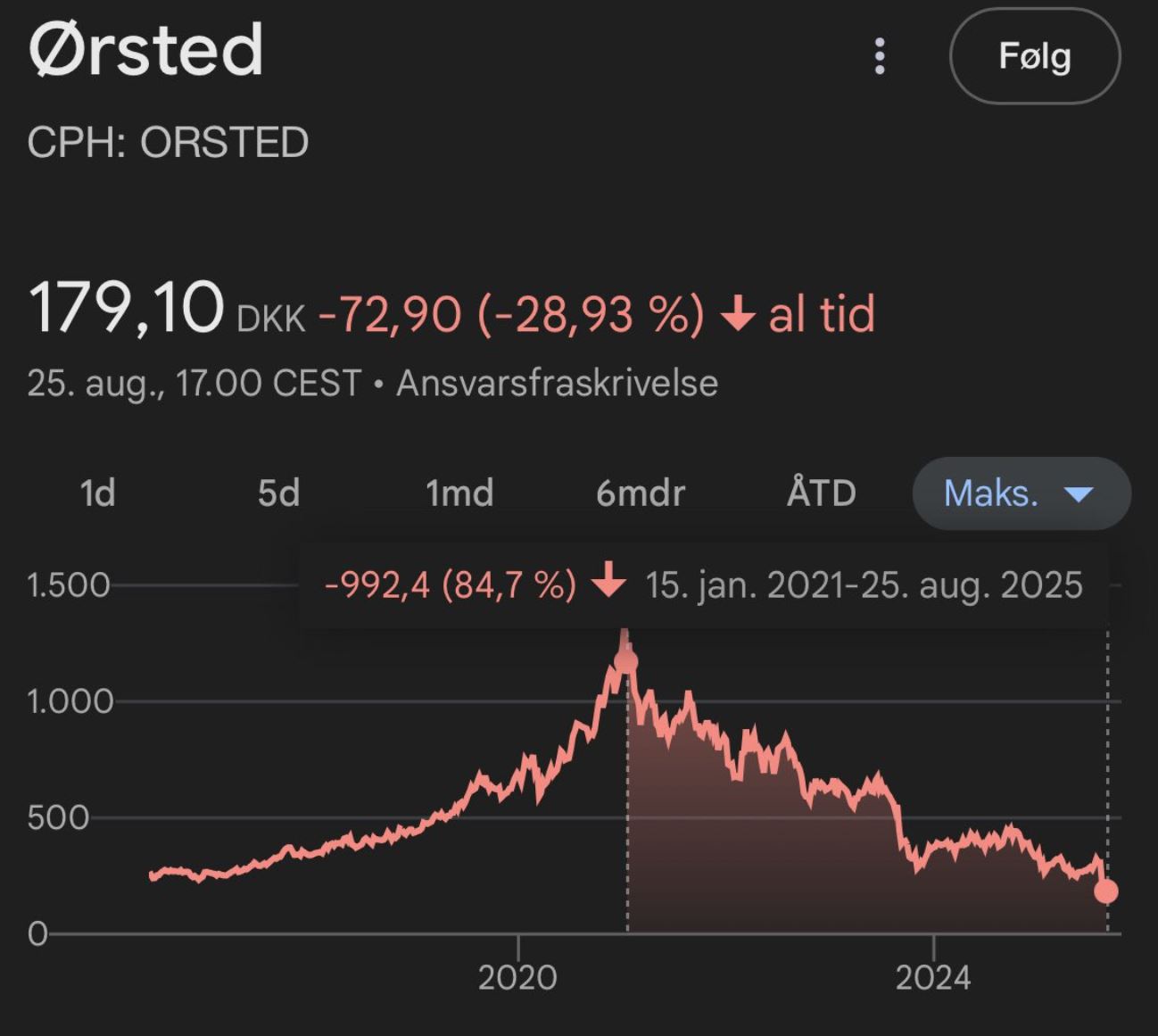
Ørsted has reduced its expected EBITDA for 2025 by one billion kroner, lowering the range from 25-28 billion DKK to 24-27 billion DKK. This adjustment is primarily due to weaker-than-normal wind speeds in July and August and project delays in Taiwan, as well as ongoing challenges in the U.S. offshore wind market.
Key Reasons for the Guidance Cut
- Lower Wind Speeds: Below-average wind speeds across Ørsted’s offshore wind portfolio in July and August 2025 have reduced revenue, negatively impacting EBITDA by approximately DKK 1.2 billion.
- Project Delays: The Greater Changhua 2b project in Taiwan has been delayed due to damage to an export cable, deferring revenue and negatively impacting earnings by another DKK 0.3 billion. Completion is now expected in Q3 2026, rather than late 2025.
- U.S. Market Setbacks: After President Trump’s administration ordered a halt to the nearly finished Revolution Wind project, Ørsted and partner Skyborn Renewables filed a lawsuit, claiming the stoppage is unlawful. This stop-work order affects a project that was already 80% complete and has led to potential additional costs of up to $1 billion if not resolved.
Financial and Strategic Updates
- Rights Issue: To strengthen its financial position after these setbacks, Ørsted is seeking approval from shareholders for a DKK 60 billion (approx. $9.4 billion) rights issue. The Danish State, as the majority shareholder, supports the proposal.
- Investments and Outlook: Despite reduced earnings guidance, Ørsted maintains its gross investment targets for 2025 at DKK 50-54 billion and says that these recent developments do not affect its medium-term business goals.
- Sector Implications: The wider renewable energy sector faces risks from both weather volatility and geopolitical uncertainty, as illustrated by similar issues at other developers, like RWE.
Updates on the Revolution Wind Project
- The Revolution Wind project, designed to supply power to 350,000 homes in Rhode Island and Connecticut, has been suspended due to a federal stop-work order amid national security concerns. Ørsted has invested $5 billion so far and stands to lose both sunk costs and significant future revenues if the project is not allowed to proceed.
- Ørsted is actively pursuing legal remedies, arguing the stoppage was politically motivated and unlawfully enacted.
Recent Extraordinary General Meeting
- The extraordinary general meeting took place today (September 5, 2025), with a primary agenda of approving the share issuance to boost capital and ensure the continuity of key projects amid recent setbacks.
This update reflects Ørsted’s current business environment, highlighting operational, political, and market-related challenges while reaffirming its commitment to long-term growth and investment in renewable energy infrastructure.