
The Norwegian parliamentary elections held on 8 September 2025 resulted in a narrow victory for the centre-left bloc, allowing the Labour Party, led by Prime Minister Jonas Gahr Støre, to retain power despite a historic surge from the right-wing Progress Party.
Key Election Results
- Labour Party (Ap) won with 28.2% of the vote and will be the largest group in the Storting (parliament).
- The Progress Party (FrP) achieved its best-ever result, doubling its votes to 23.9% and becoming Norway’s second-largest party
- The Conservatives (Høyre), led by Erna Solberg, saw support drop to 14.6%.
- In terms of seats, Labour secured 53, Progress 48, and the coalition of parties supporting a Labour-led government holds 87—above the 85 needed for a parliamentary majority.
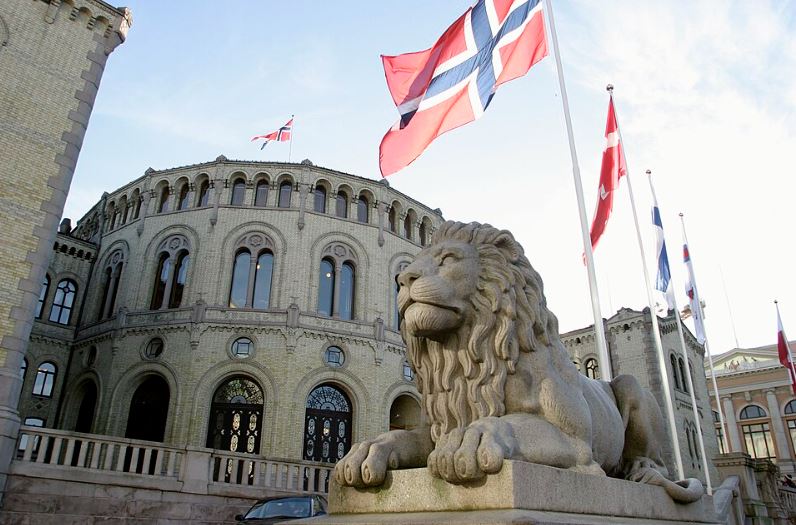
Here are the final seat counts by party in the 2025 Norwegian Storting (parliament):
| Party | Seats |
| Labour Party (Ap) | 54 |
| Progress Party (FrP) | 47 |
| Conservative Party (Høyre) | 32 |
| Centre Party (Sp) | 15 |
| Socialist Left Party (SV) | 13 |
| Red Party (Rødt) | 4 |
| Green Party (MDG) | 4 |
| Christian Democratic Party (KrF) | 3 |
| Liberal Party (Venstre) | 3 |
| Patient Focus (Pasientfokus) | 1 |
These numbers reflect the allocation for all 169 seats in the Storting after the 8 September 2025.
Party Performance Highlights
- The Green Party (MDG) crossed the 4% threshold for the first time, increasing their seats from 3 to 7.
- The Christian Democrats (KrF) held above the critical threshold at 4.2%, while the Liberal Party (Venstre) fell short at 3.6%.
- Voter participation was high, at nearly 79%, the biggest turnout since 1989.
Political Implications
- Jonas Gahr Støre is set to remain Prime Minister but must negotiate with four allied parties—Red (Rødt), Socialist Left (SV), Centre Party (Sp), and the Green Party—to ensure government stability.
- The Progress Party surged due to its anti-immigration stance and opposition to state subsidies for renewables, while Labour’s platform focused on economic security and social programs.
- Despite gains for green and left parties, a parliamentary majority still favours continued oil exploration, even in Arctic regions.
Coalition Prospects
- A Labour-led coalition is probable but may govern as a minority, relying on confidence-and-supply deals with other left-leaning factions.
- Broad cooperation across the left-of-centre spectrum will be required to maintain majority support in parliament.
These results reflect both the fragmentation of Norwegian politics and shifting priorities among the electorate, particularly regarding the cost of living, energy policy, and identity issues.