
In a swift political transition, Elisabet Lann, a rising figure within the Christian Democrats (KD) and current Gothenburg municipal councillor, has been appointed Sweden’s new Minister of Health. The announcement came Tuesday, just one day after her predecessor, Acko Ankarberg Johansson, unexpectedly stepped down — a move that sent ripples through Kristersson’s coalition government.
Ankarberg Johansson, who as recently as last week confirmed her intention to seek re-election to the Riksdag, cited the accelerated timing of internal party nominations ahead of the next general election as the reason for her departure. Her exit leaves Lann with the urgent task of steering a healthcare system under mounting public and political pressure.
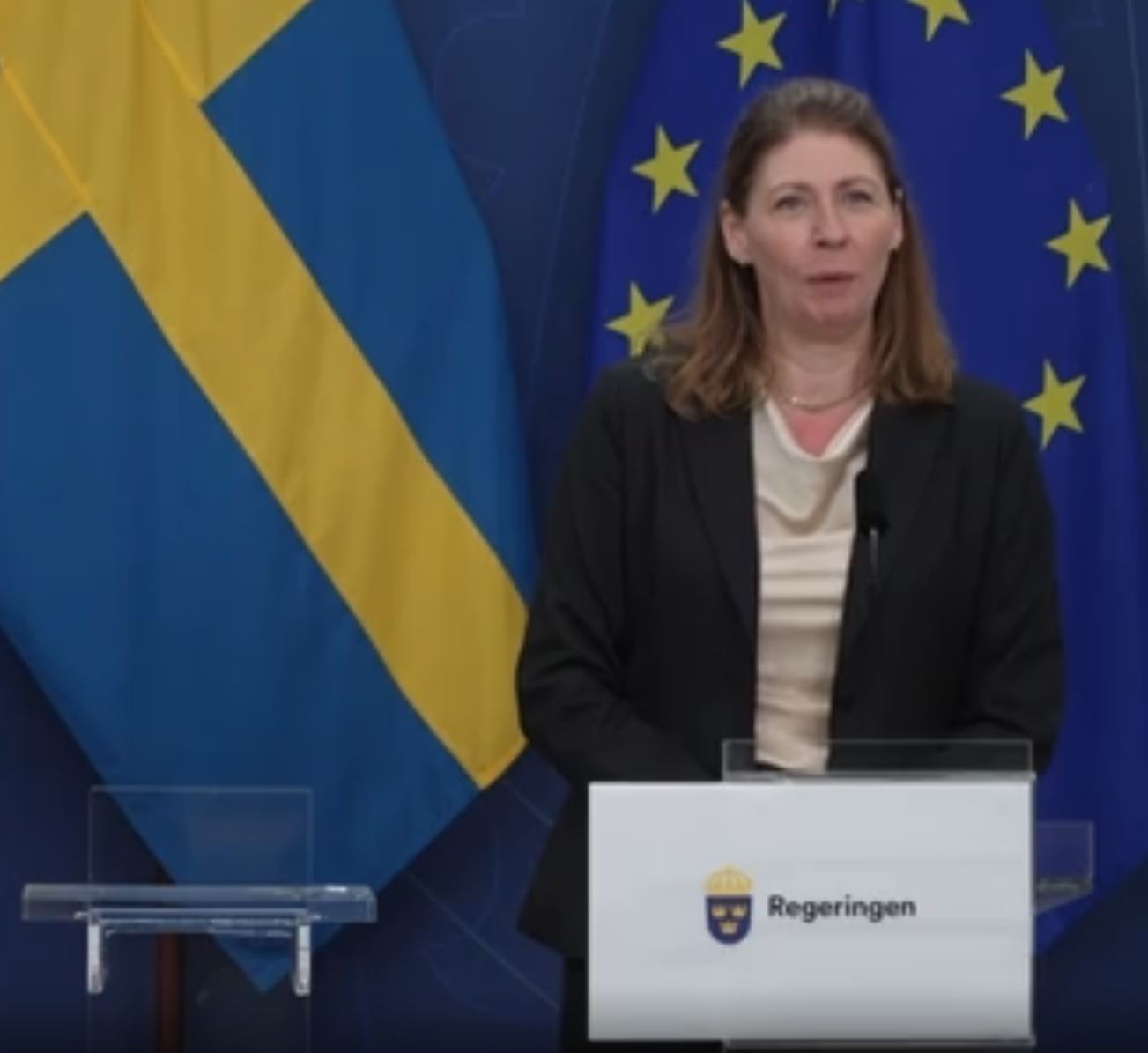
Lann, who also serves on the KD’s national board and executive committee, inherits a portfolio central to her party’s identity. Healthcare reform — particularly the reduction of Sweden’s notoriously long patient wait times — has long been a flagship issue for the Christian Democrats. Despite billions in targeted subsidies and repeated electoral promises, systemic delays persist. A damning May report by SVT’s “30 minute” underscored how Sweden continues to breach legal thresholds for acceptable care wait times — a challenge now squarely on Lann’s desk.
A Dramatic Debut — And a Resilient Response
Lann’s introduction to national office was anything but ordinary. During Tuesday’s press conference announcing the cabinet reshuffle, moments after delivering her inaugural remarks and handing the floor to Social Affairs Minister and party colleague Jakob Forssmed, she collapsed.
Attendees watched in stunned silence as staff swiftly assisted her from the room. Within minutes, however, Lann returned — composed and determined — attributing the incident to a sudden drop in blood sugar.
“This wasn’t exactly a normal Tuesday,” she quipped with characteristic poise, “and this is what can happen when you have low blood sugar.”
Her quick recovery and self-deprecating candor were widely praised on social media and in political circles as emblematic of her grounded, human-cantered leadership style — a trait many hope will translate into pragmatic, compassionate policymaking.

What’s Next for Swedish Healthcare?
With national elections on the horizon and public trust in healthcare delivery waning, Lann’s appointment comes at a critical juncture. Colleagues describe her as a detail-oriented administrator with deep local government experience — an asset in navigating Sweden’s complex regional healthcare structure. Her background in Gothenburg, one of Sweden’s largest and most diverse municipalities, may prove invaluable in bridging urban-rural healthcare disparities.
The Nordic Business Journal will be closely following Minister Lann’s first 100 days — particularly her strategy to align budgetary commitments with measurable outcomes, strengthen primary care networks, and restore public confidence in a system that remains among the most cherished — yet most criticised — in the Nordic region.
One thing is certain: Elisabet Lann may have stumbled at her first podium — but she didn’t stay down. In a ministry that demands resilience, she’s already shown she has it.
— Reporting by Nordic Business Journal Staff