
Gothenburg, Sweden — Håkan Samuelsson, the 74-year-old veteran at the helm of Volvo Cars, has made it unequivocally clear: his current two-year contract will be his last. Returning to the CEO role in spring 2024 after stepping down in March 2022, Samuelsson is now focused squarely on one final mission — identifying and preparing his successor.
“My ambition is to find someone who can take over,” Samuelsson told Bloomberg in a recent interview. “This time, it’s definitive. I won’t be extending beyond these two years.”
Rather than look externally, Samuelsson is placing his confidence in Volvo’s internal leadership pipeline. “We have several strong internal candidates who are absolutely capable of stepping into this role within the next 24 months,” he said. While the Board of Directors will remain open to external candidates, Samuelsson emphasized the risks inherent in outside hires. “Bringing someone in from the outside is always a gamble. Internally, we already have the DNA, the culture, and the strategic alignment.”
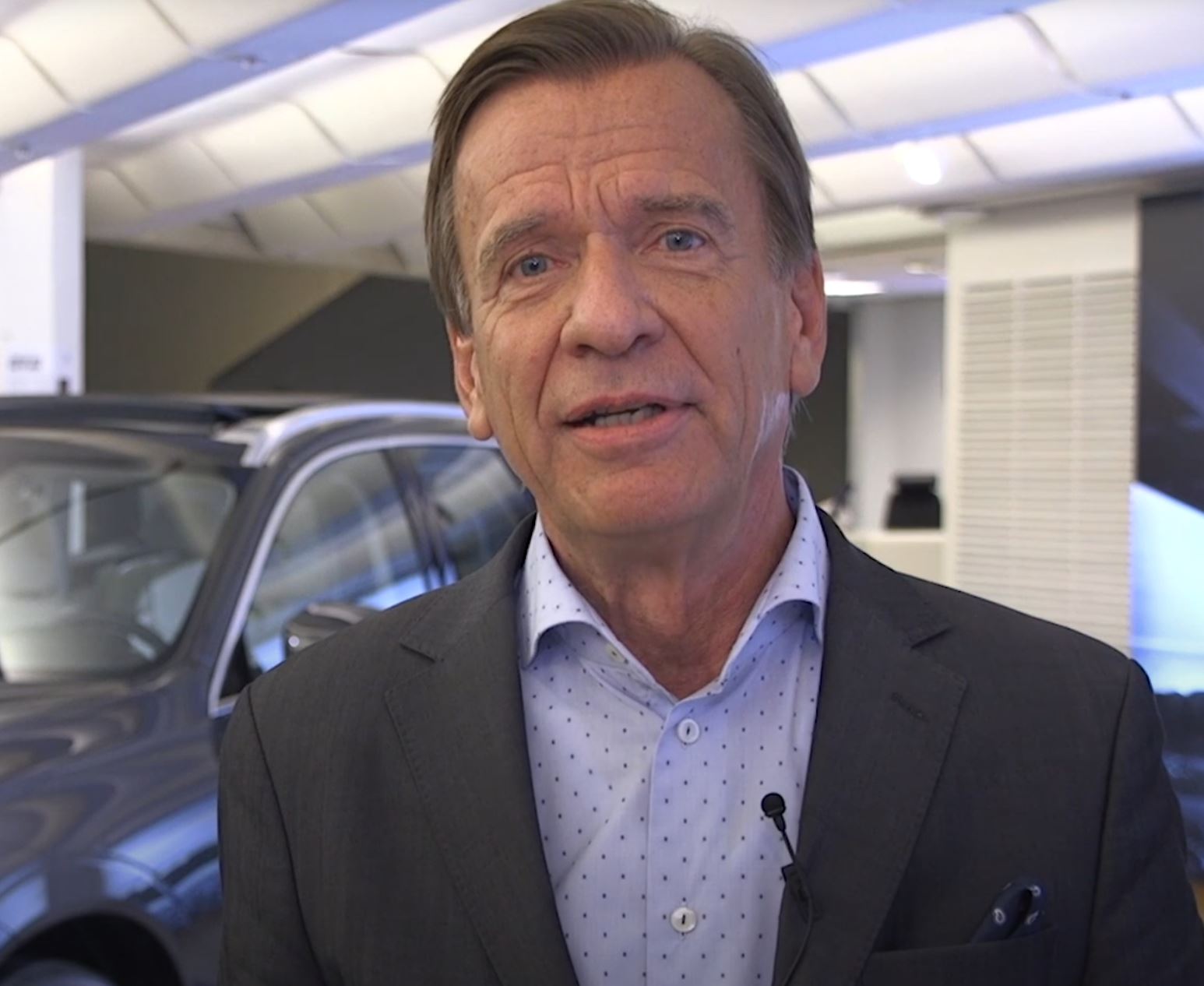
Unwavering Commitment to Electrification
Even as global automotive giants waver in their EV timelines, Samuelsson remains resolute. Last year, Volvo Cars adjusted its 2030 target — originally a 100% EV sales goal — to a more pragmatic 90–100% range. But for Samuelsson, this is a tactical recalibration, not a retreat.
“There is no turning back,” he asserts. “Electrification is inevitable. It may unfold at different speeds across markets — slower in some regions, faster in others — but the trajectory is clear. Within ten years, every new car on the road will be electric. And critically, they’ll be more affordable than ever.”
This conviction places Volvo in deliberate contrast to peers. At the recent Munich Auto Show, Volkswagen CEO Oliver Blume called a 100% EV transition by 2035 “unrealistic.” Stellantis — parent to Citroën, Opel, Chrysler, and others — also recently walked back its 2030 EV-only ambition.
Samuelsson’s stance isn’t just about technology — it’s about brand identity. Volvo’s premium positioning in safety and sustainability hinges on its leadership in clean mobility. “We’re not following the herd,” he says. “We’re setting the pace.”
A Nordic Legacy in Transition
Samuelsson’s return was always meant to be transitional — a steady hand guiding Volvo through geopolitical headwinds, supply chain recalibrations, and the complexities of scaling EV production. Now, as he prepares to exit the stage, his focus is on ensuring continuity.
The Nordic Business Journal understands that succession planning is already underway, with key executives across product development, electrification, and global operations being groomed for higher leadership. The Board is expected to announce a shortlist by mid-2025.
For investors and industry watchers, Samuelsson’s clarity offers rare stability in an era of executive churn. His legacy — steering Volvo from combustion dependence to electrification leadership — will be cemented not just by the cars built under his watch, but by the leader he leaves behind.
Looking Ahead
As Volvo Cars accelerates toward its electric future, the next two years will be decisive — not only for product launches and market share, but for securing the leadership that will carry the brand into the 2030s and beyond.
Samuelsson may be preparing for his final curtain call — but under his direction, Volvo’s next act is already being written.
By The Nordic Business Journal — Where Northern Insight Drives Global Business.