
When twenty-one Russian drones crossed into Polish territory this week, the message to NATO was clear. So was the response. On Friday in Brussels, NATO Secretary-General Mark Rutte stood beside the alliance’s Supreme Military Commander, Alexus G. Grynkewich, and announced a fresh operation to reinforce the eastern flank.
“It was careless, it was unacceptable,” Rutte said, condemning Moscow’s move. He added a warning that echoed across Europe: “NATO will continue to defend every centimeter of its airspace.”
A calculated provocation
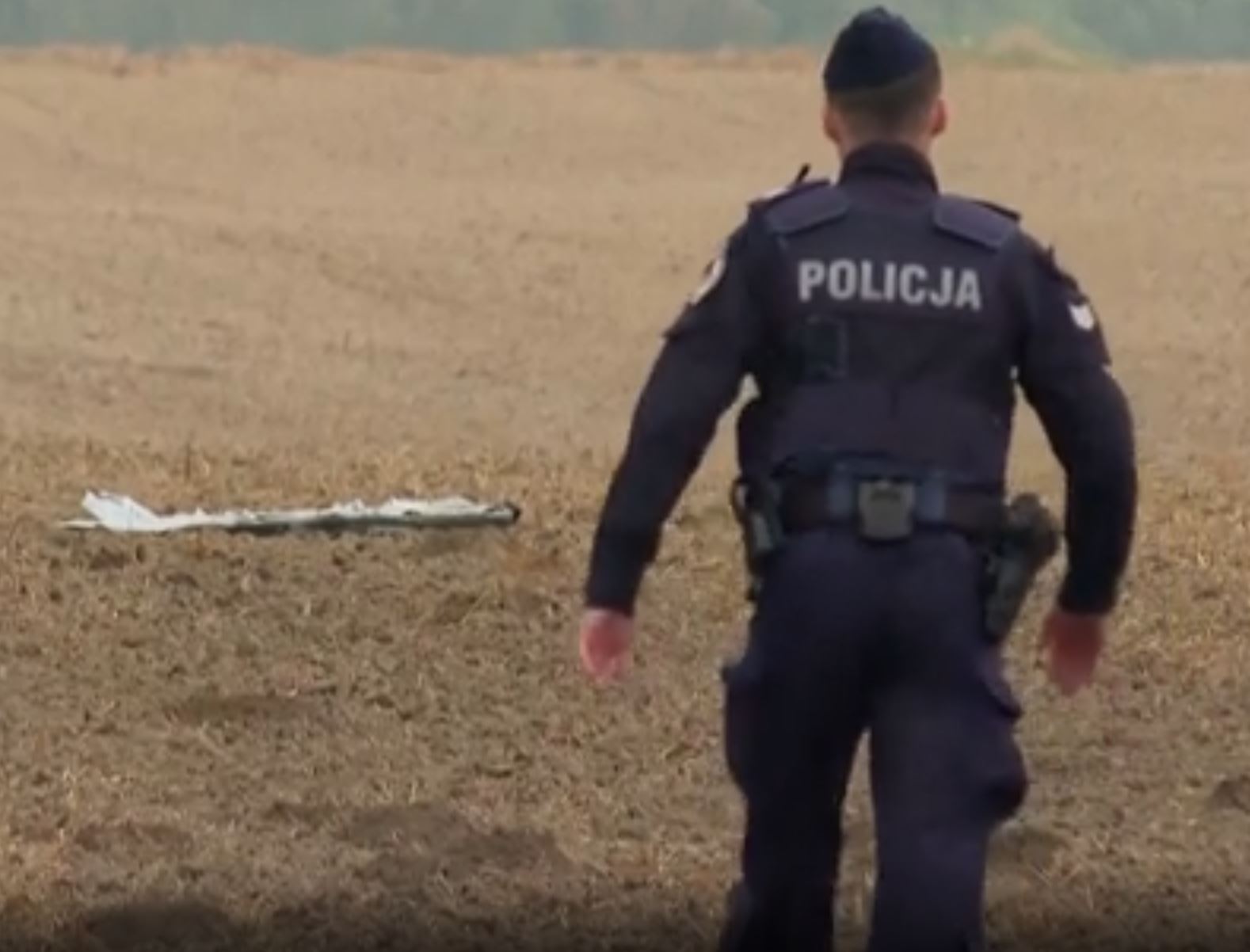
Poland confirmed that 21 drones had entered its airspace on Wednesday. Seventeen have already been recovered for analysis, according to Marcin Przydacz, an aide to President Karol Nawrocki. The Kremlin denied responsibility, but few in Warsaw or Stockholm were convinced. Both Swedish and Polish officials described the incursion as a deliberate provocation.
NATO’s answer is not just words. The reinforcement plan involves air and ground forces drawn from several member states, along with new counter-drone measures. “It is also about increased defence capabilities when it comes to drones,” noted Niklas Svensson, SVT’s Europe correspondent.
A signal to Moscow
The point, analysts argue, is less about the drones themselves and more about NATO’s credibility. “It is a common signal that this is a provocation that they take seriously,” Svensson explained. “And that they still clearly want to show that they will be able to meet it.”
For Moscow, the timing was telling. The drone incident comes as NATO continues to bolster support for Ukraine and expand military coordination across the Baltic region. For Warsaw and its neighbours, the violation landed as an uncomfortable reminder of geography: Russia is right next door.
Sweden prepares its own defences
The anxiety is not limited to Poland. In Sweden, authorities in Blekinge County unveiled a mass evacuation plan that would move up to 110,000 people if war broke out. With naval and air force bases along the Baltic, the county is a critical military hub—and a prime target in any conflict.
Peter Ryman, Blekinge’s director of defence, stressed that the plan is about readiness, not alarmism. “Having a plan in place is not about creating fear, it’s about creating security for us,” he said.
Bottom line
The airspace violation may have lasted only minutes, but its ripple effects are long. NATO has now tied its credibility to holding firm on its eastern border. If Russia was testing the alliance’s resolve, the answer came swiftly: the line has been drawn, and it will be defended.