
Introduction: The Rising Threat of Drone Disruptions
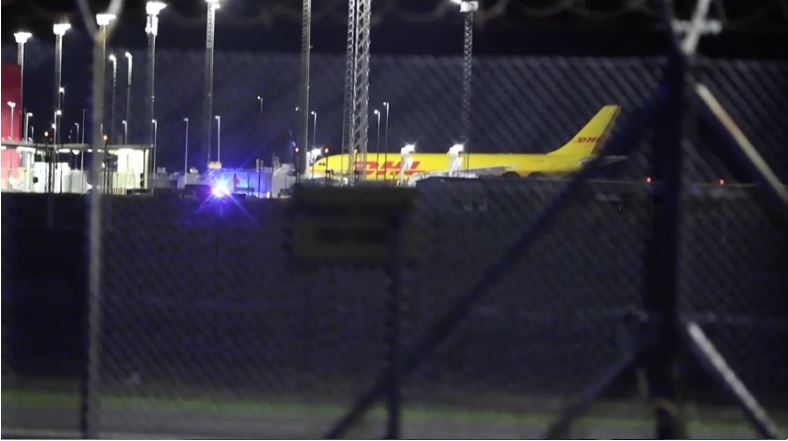
On the night of Monday, September 22, Copenhagen Airport (Kastrup) experienced a significant disruption when several unidentified drones were spotted hovering over the airspace, forcing the airport to shut down for several hours. The incident caused widespread delays and cancellations, leading to a cascade of logistical problems for both airlines and passengers. The drones were reported to have appeared over the airport around 8:30 p.m., continuing their evasive flight paths until the airport finally reopened at 00:20 on Tuesday morning.
While the drone disruption at Copenhagen Airport has garnered immediate attention, questions surrounding the motives behind the drones’ appearance, their operators, and their possible links to broader geopolitical tensions are now becoming a focal point for authorities, aviation experts, and the general public alike.
The Immediate Impact on Air Traffic
The impact on air traffic was immediate and severe. By 7 a.m. on Tuesday, it was reported that 10 out of the 26 flights scheduled between 6:00 and 7:00 a.m. had been either cancelled or delayed, disrupting the plans of countless travellers. Four of the seven incoming flights scheduled to land between 6:00 and 7:00 a.m. also faced similar issues. The situation at Copenhagen Airport, a major international hub, clearly underscored the vulnerability of air traffic systems to external disruptions.
As flights were diverted to neighbouring airports in Malmö and Landvetter, travellers were left scrambling to find alternate connections. Passengers were urged to check with their airlines for updates, but the uncertainty of the situation led to widespread frustration.
The Mysterious Drone Attack: Unanswered Questions
Despite the swift police response and the airport’s eventual reopening, authorities have provided limited information on the drones’ origins and motives. Copenhagen Police have confirmed the presence of two to three drones that “moved in and out of the area,” but their precise flight paths remain unknown. According to police reports, these were not hobby drones, but larger, more capable aircraft, which adds to the mystery surrounding the incident.
At the press conference on Tuesday morning, police officer Jens Jespersen suggested that the drones were operated by a “capable actor,” raising suspicions of a deliberate, orchestrated disruption. However, the police have not yet provided any definitive answers regarding whether the drones were an act of terrorism, protest, or simply a random malfunction.
Furthermore, during a later statement, Copenhagen police confirmed that the drones “disappeared on their own,” rather than being neutralized by authorities, further fuelling questions about their origin. As of now, the investigation remains ongoing, but little progress has been made in identifying the perpetrators or determining their intent.
Geopolitical Tensions: Could Russia Be Involved?
The mystery deepened when Ukrainian President Volodymyr Zelensky publicly speculated on social media that the drone incident was the work of Russia. However, neither Russian nor Danish authorities have commented on Zelensky’s claim, leaving the speculation in the realm of uncertainty. With Denmark being a NATO member and its proximity to both Russia and Sweden, there are fears that this incident could be linked to larger geopolitical conflicts, especially considering Russia’s recent history of aggressive military actions in Ukraine and the broader region.
The possibility of state-sponsored involvement raises concerns not only about the security of civilian airports but also about the vulnerability of European airspace to potential military incursions. As NATO nations work together to protect against such threats, the question remains whether this is an isolated incident or a signal of a growing trend of drone-based security risks in the region.
The SAS Emergency Landing: A Close Call
As the drone incident unfolded, an SAS (Scandinavian Airlines) flight, en route to Copenhagen, made an emergency landing at the airport despite the airspace being closed. The aircraft’s fuel supply was insufficient to allow it to be rerouted to another airport, a dangerous situation that could have escalated into a full-scale aviation emergency. This close call highlights the severe risks posed by drone interference in commercial air travel. The fact that this flight was forced to land during an active security breach reveals how critical it is for airports and air traffic controllers to quickly assess and mitigate such disruptions.
Broader Security Implications: A Wake-Up Call for Europe
While Copenhagen Airport managed to reopen relatively swiftly, the drone incident serves as a wake-up call for European aviation authorities. If a similar disruption were to occur at a larger hub or during a more critical period, the consequences could be far more severe. This incident highlights the need for enhanced counter-drone technologies, increased cooperation between European air traffic authorities, and more rigorous security measures at airports.
Already, Norway’s Gardermoen Airport followed in Copenhagen’s footsteps by closing its airspace temporarily due to a similar drone sighting. This shows that the problem is not confined to Denmark alone and that other Scandinavian countries are on alert. The cross-border cooperation between Norwegian and Danish authorities in investigating whether the incidents are connected marks a significant step in addressing drone-related security risks.
Conclusion: The Road Ahead
As Copenhagen and other European airports continue to deal with the fallout from this unexpected drone incident, one thing is clear: the aviation industry must prioritize drone detection and mitigation strategies in the face of increasingly sophisticated threats. Whether this was a deliberate attack, a geopolitical move, or a mere malfunction, it is undeniable that drones pose a growing risk to air travel. The authorities will need to work quickly and decisively to investigate the incident, improve security protocols, and ensure that such disruptions do not become commonplace.
In the long run, this incident could prompt a wider reassessment of how airports, airlines, and governments handle the integration of drones into crowded airspaces. With drones becoming more accessible and more powerful, the aviation sector may be facing a new era of security challenges—one that demands innovation, international cooperation, and a proactive response to new threats.
As the investigation into the Copenhagen drone incident continues, the aviation community—and the world—will be watching closely to see how authorities handle this latest challenge in the ever-evolving landscape of global aviation security.