
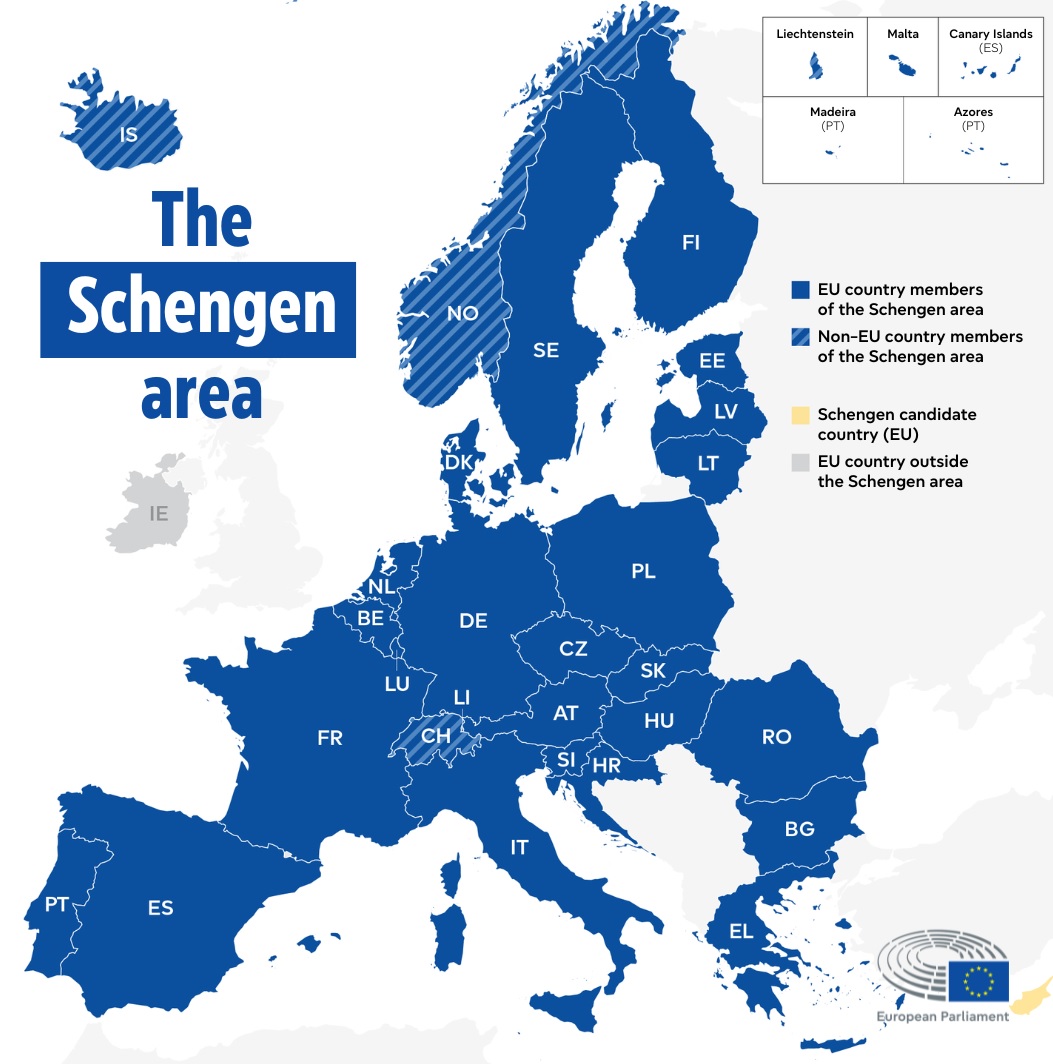
On Sunday, October 12, 2025, the European Union’s Entry/Exit System (EES) goes live across all Schengen external borders, including Sweden, Norway, Finland, Denmark, and Iceland. This marks a structural change in how Europe manages border crossings—especially for non-Schengen visitors such as business travellers, tourists, and contractors.
The manual passport stamp is being retired. In its place comes a fully digital registration system that records biometric and travel data at entry and exit points.
Why the EES Matters for Nordic Economies
The Nordic region depends on smooth, predictable cross-border movement. Whether it’s a logistics company moving goods through Copenhagen or a tech firm flying talent in and out of Stockholm, efficiency at the border matters.
EES aims to tighten external borders without slowing legitimate travel or trade. By automating passport checks and using biometric identification, it’s designed to reduce congestion, detect overstays more effectively, and strengthen Europe’s overall border management.
The system is managed by eu-LISA, the EU’s digital systems agency, with operational support from Frontex, the European Border and Coast Guard Agency.
What’s Changing for Non-Schengen Travelers
From October 12 onward, non-EU, non-Schengen citizens entering or leaving the Schengen area for short stays (up to 90 days in any 180-day period) will face a new process:
- Digital registration replaces manual stamping.
- Biometric data—a facial image and up to four fingerprints—will be collected and securely stored.
- Children under 12 are exempt from fingerprinting.
- EU citizens, Schengen residents, and valid residence permit holders are not logged into the system.
- The EES operates only at external borders (airports, ports, and land crossings). Once inside Schengen, internal borders remain open as usual.
For companies that host non-EU clients, partners, or contractors, this means planning ahead. First-time entry may take slightly longer due to biometric registration, especially during the early rollout phase.
Timeline and Rollout
The system launches in October 2025, with a phased deployment through April 2026. Nordic airports and ports—particularly Arlanda, Gardermoen, Kastrup, and Helsinki-Vantaa—are already installing new self-service kiosks and automated gates to handle the transition.
What Data Is Collected
EES records several categories of information for each border crossing:
- Biometric data: facial image and up to four fingerprints (except for children under 12)
- Travel document details: name, nationality, date of birth, passport number
- Entry and exit information: date, time, and crossing point
- Visa or permit type if applicable
- Overstay data, if the traveller exceeds their permitted stay
Data retention follows strict limits:
- Three years for standard entries and exits
- Five years if a traveller overstays
- Individual entry/exit events are also logged for three years
Data Protection and Cybersecurity
For Nordic countries, where digital trust and privacy are cultural cornerstones, EES is built to align with EU privacy and security laws, including GDPR. Safeguards include:
- Encryption during transmission and storage of all personal and biometric data
- Limited access—only verified border, immigration, and law enforcement officials can retrieve information
- Anti-spoofing and liveness detection to prevent deepfake or fake biometric use
- Authentication checks to ensure data cannot be altered
- Continuous monitoring and auditing to maintain system integrity
- Privacy by design, ensuring transparency and accountability from the outset
These protections are designed to maintain both operational security and traveller confidence—critical for a system processing millions of movements each year.
Business and Policy Implications
For Nordic businesses, EES has two key implications:
- Operational planning: Companies hosting non-Schengen guests should expect slightly longer border checks at first and may wish to inform partners or clients in advance.
- Compliance awareness: Employers bringing in short-term specialists from outside the EU must ensure travellers understand the new digital requirements to avoid delays or overstays.
At the policy level, EES represents Europe’s broader move toward data-driven border governance—an approach that balances security, technology, and mobility.
Bottom Line
From October 12, 2025, Europe’s borders become digital. For Nordic travellers and businesses, this means a smarter, more traceable, and ultimately more secure border process—one that reinforces both Europe’s openness and its control.
The transition may cause brief friction at first, but the long-term outcome is clear: faster crossings, stronger data, and greater confidence in who enters and leaves the Schengen area.