
Skaraborg Air Force Base, Såtenäs — October 20, 2025
Sweden’s Air Force has officially received its first next-generation JAS 39 Gripen E fighter, marking a decisive step in modernizing the country’s air defence and deepening its integration with NATO operations. The handover took place Monday at the Skaraborg Air Force Wing (F7) in Såtenäs, where the aircraft will also serve as the training hub for future Gripen E pilots.
“It’s essentially an entirely new aircraft,” said Air Force Chief Major General Jonas Wikman during the ceremony.
The event drew senior Swedish defence officials, including Minister of Defence Pål Jonson, Supreme Commander General Michael Claesson, and representatives from Saab and the Swedish Defence Materiel Administration (FMV).
Jonson praised the close partnership between government, industry, and the armed forces. “The Gripen E is a product of efficient collaboration between Saab, FMV, and the Swedish Armed Forces. It reflects the best of Sweden’s defence innovation and strategic self-reliance,” he said.
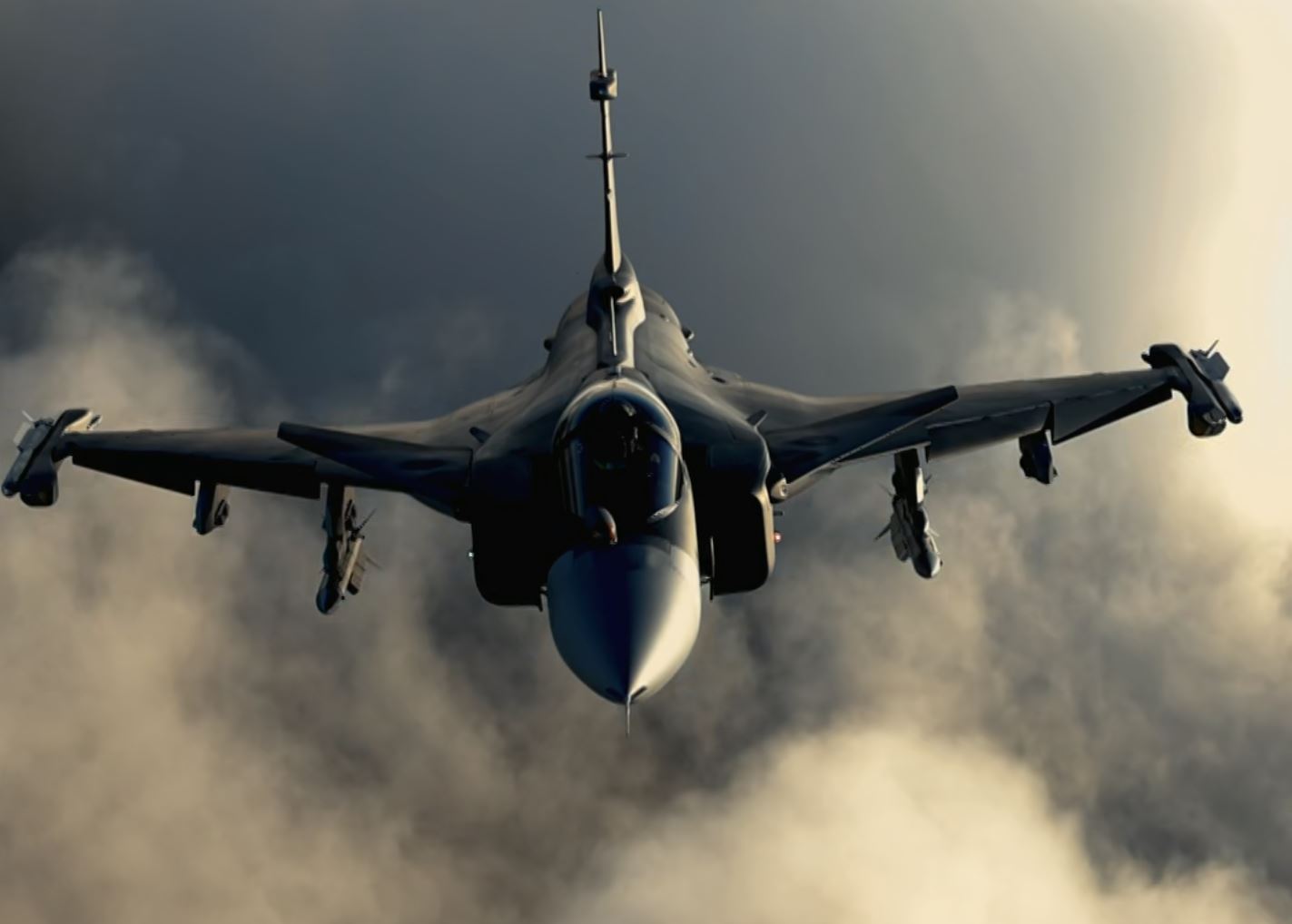
F7: The Centre of Pilot Transition
F7 Såtenäs has been chosen as the first base to retrain pilots for the Gripen E. Known historically as Sweden’s training nucleus for earlier Gripen variants and for foreign pilots, F7 offers an ideal mix of infrastructure and geography — advanced simulators, spacious hangars, and unrestricted airspace over Lake Vänern.
“The F7 wing has always been central to our pilot development. Starting the Gripen E program here is both practical and symbolic,” Wikman noted.
A Step Change in Capability
General Claesson emphasized that the Gripen E is not just a technical upgrade, but a strategic multiplier for Sweden’s defence posture within NATO.
“These new capabilities give us a different level of endurance, operational depth, and integration within the alliance’s combat systems,” he said.
The Gripen E introduces a series of major advancements over the C/D models:
- More powerful engine with increased thrust and efficiency.
- Extended range, enabling longer missions without refuelling.
- Larger payload capacity, allowing a greater mix of weapons and sensors.
- Advanced sensor fusion system, integrating radar, electronic warfare, and targeting data in real time.
- New radar and electronic warfare suite for enhanced situational awareness and survivability.
- Redesigned cockpit optimized for pilot decision support and digital interoperability.
- Encrypted communications and new landing gear designed for higher weight and operational flexibility.
Symbolic Handover, Strategic Implications
In a traditional gesture, FMV handed the aircraft’s logbook to the Air Force Commander — a symbolic act marking the formal transfer of responsibility.
Beyond ceremony, the Gripen E’s arrival carries broader meaning. It comes as Sweden prepares for full NATO membership ratification and reinforces its position as a technologically independent but interoperable defence power in Northern Europe.
The Gripen E program — jointly developed by Saab and FMV — aims to deliver a total of around 60 aircraft to Sweden. Brazil, already operating the same variant, continues to train alongside Swedish units, strengthening transatlantic cooperation in air defence technology and tactics.
On th whole, the eGripen E handover is more than a procurement milestone; it’s a declaration of readiness. Sweden is signalling to both allies and potential adversaries that it intends to maintain control of its skies with a fighter built for the modern battlespace — agile, data-driven, and fully NATO-compatible.