
Only one European brand still makes the podium—and it is Polish, not Scandinavian
Copenhagen – Denmark has become the Nordic gateway for Chinese bus makers. During the first nine months of 2025, 77 % of all heavy-duty buses registered in Denmark carried Chinese nameplates, data from Mobility Denmark show. The figure is unprecedented in northern Europe and almost double the Chinese share in neighbouring Sweden.
Volume and market shares, Jan-Sep 2025
Total new registrations: 308 heavy buses (>8 t)
Chinese brands (combined)
| Brand | Units | Market size |
| BYD | 146 units | 47 % |
| Yutong | 69 units | 22 % |
| Zhongtong | 8 units | 3 % |
| Total Chinese | 223 units | 72 % |
European brands
| Mercedes-Benz 26 units 8 % |
| Solaris 26 units 8 % |
| Setra 18 units 6 % |
| MAN 9 units 3 % |
| Neoplan 2 units <1 % |
| Van Hool 1 unit <1 % |
| Scania/Irizar 1 unit <1 % |
| Isuzu 1 unit <1 % |
| Iveco 1 unit <1 % |
| Total European 85 units 28 % |
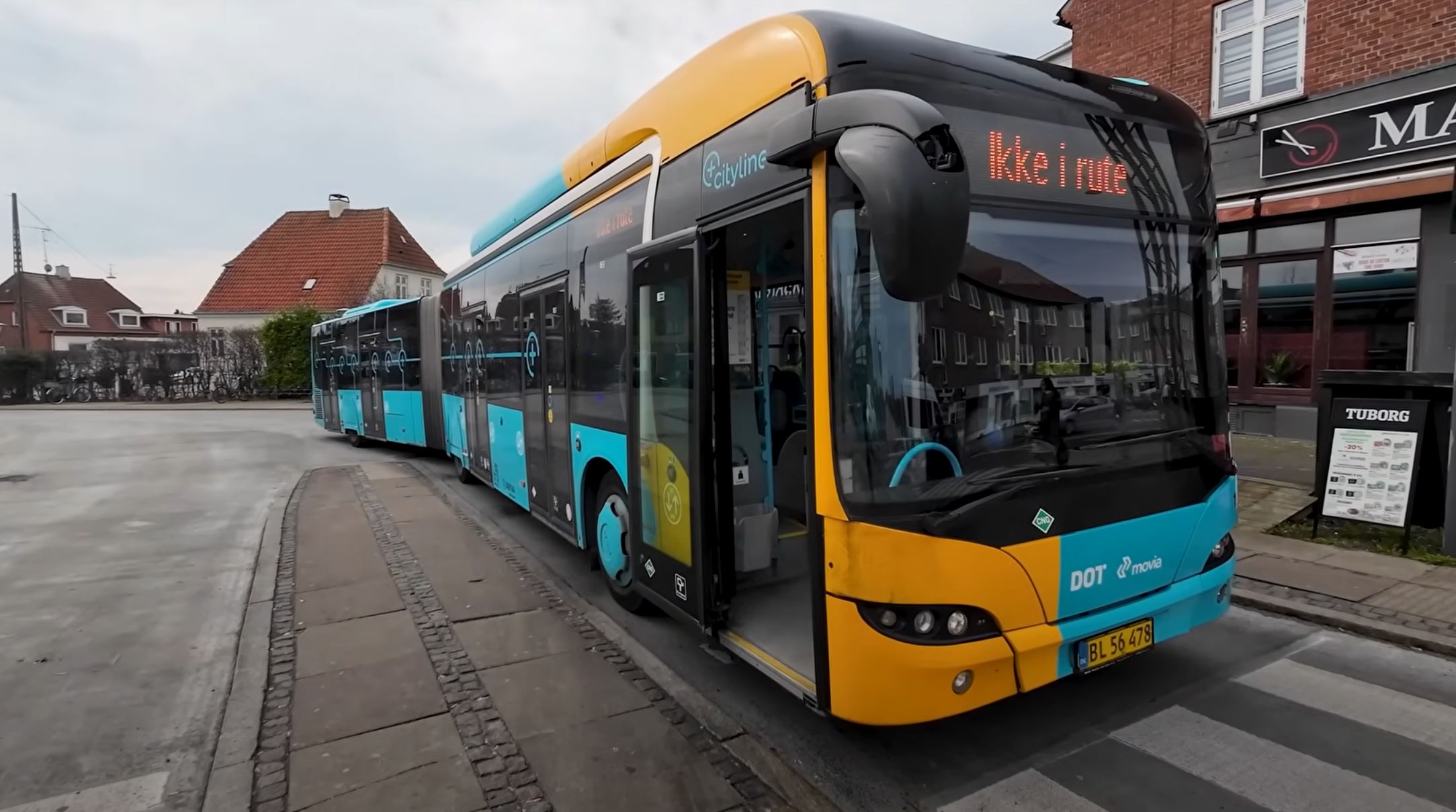
Key take-aways
1. BYD alone outsells the entire European competition combined (146 vs. 85).
2. Solaris (Poland) is the only European manufacturer still on the podium; Volvo and Scania are absent from the top table.
3. Zhongtong’s entry means three Chinese OEMs are now active in Denmark; the brand is already tendering in Sweden and Norway.
4. Electrification drives the shift: 96 % of BYD and 91 % of Yutong deliveries were battery-electric, aligning with Denmark’s 2030 target for zero-emission public transport in major cities.
Why Denmark, why now?
– Tender design: Danish operators are allowed to run buses on 12-year contracts only if tail-pipe CO₂ ≤ 50 g/km. Diesel cannot meet the threshold; Chinese e-buses can and do under-cut European prices by 12-18 %.
– Financing: Denmark’s Green Bus Fund covers up to 40 % of the price premium for electric vehicles, erasing the traditional Total-Cost-of-Ownership advantage of diesel.
– Homologation: EU whole-vehicle type approval granted to BYD and Yutong in 2022 removed the last technical barrier; delivery lead-times are now 6–8 months versus 12–14 months for European builders.
Sweden: the contrast
Sweden registered 374 heavy buses in the same period. Chinese share: 38 % (142 units). The difference is policy-driven: Swedish counties apply a 60 % weight to “lifetime cost” and only 25 % to CO₂, protecting Volvo and Scania. Denmark weights CO₂ at 45 % and purchase price at 30 %, tilting the playing field toward the lowest-cost electric option.
Outlook
– Order backlog: Danish operators have already signed options for another 190 e-buses for 2026–27; 80 % are with BYD or Yutong.
– Local assembly: BYD is scouting sites in Fredericia and Malmö for a CKD (knock-down) plant to circumvent potential EU anti-dumping tariffs.
– Supply-chain risk: 64 % of the battery cells used by BYD and Yutong come from CATL’s Chinese plants. A 2026 EU battery-passport rule could add €8 000–10 000 per bus unless local cell production is secured.
To sum up, Denmark has become the first Nordic country where European bus makers are minority suppliers. Unless Stockholm, Oslo and Helsinki tighten CO₂ criteria further, the Danish pattern is likely to repeat: Chinese electric buses offer the cheapest, fastest route to net-zero public transport, and European incumbents have less than two product cycles to re-gain cost competitiveness.