
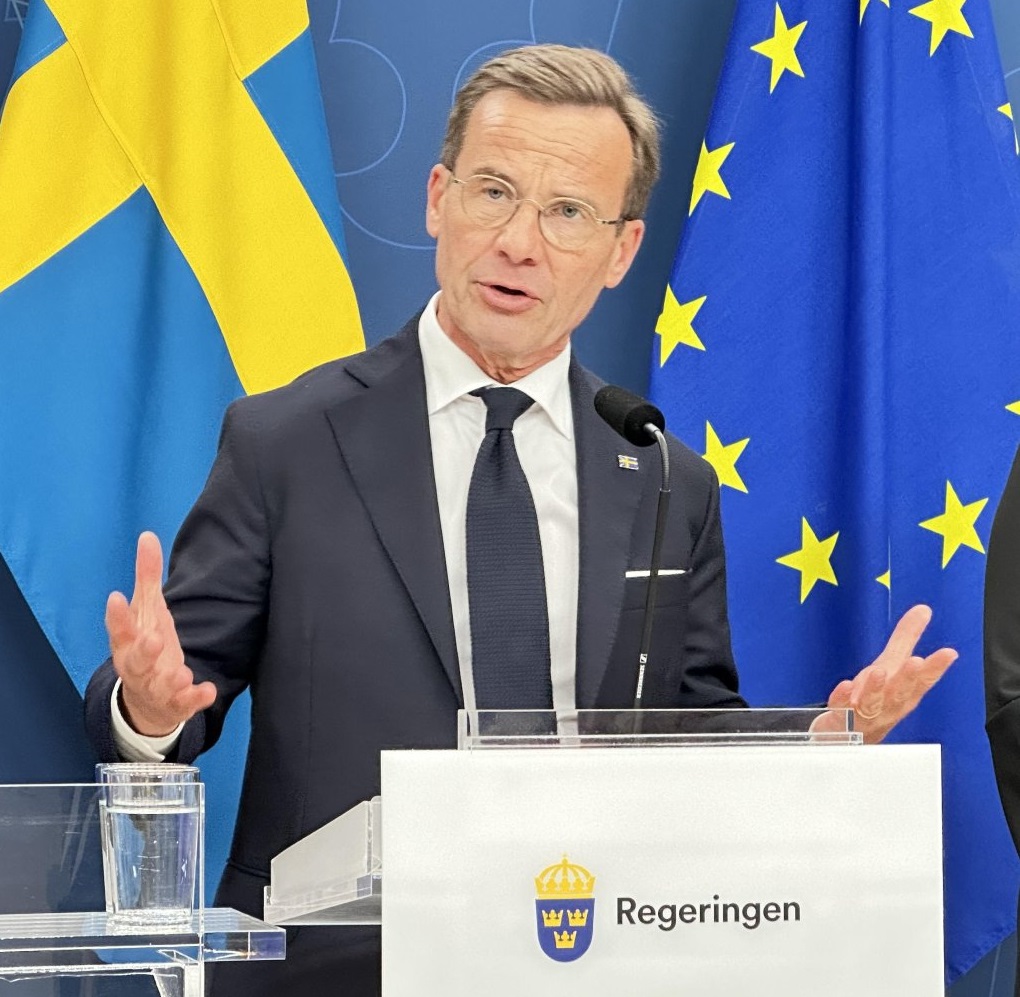
Swedish Prime Minister Ulf Kristersson has strongly criticised a peace plan devised by the United States and Russia for Ukraine, arguing that it would disproportionately benefit Moscow and undermine Ukraine’s sovereignty. In a statement, Kristersson expressed concerns over the key points of the proposal, which include demands for Ukraine to cede territory to Russia and limit its military capabilities.
The Swedish Prime Minister emphasized that any negotiations regarding Ukraine’s future must involve the Ukrainian government at the forefront. “Ukraine must be an active participant in discussions about Ukraine’s fate,” Kristersson said, underlining the importance of respecting Ukraine’s territorial integrity and autonomy.
Kristersson’s remarks were made in the context of a broader reaffirmation of Nordic-Baltic solidarity. In a written comment, he declared that the leaders of the eight Nordic and Baltic nations remain united in their unwavering support for Ukraine. “Ukraine does not stand alone. We will continue to work together for a just and lasting peace,” he stated.
The Swedish Prime Minister convened a brief telephone conference with the leaders of the eight Nordic-Baltic countries on Friday evening to discuss the peace plan and its implications. The call lasted approximately 20 minutes, according to Kristersson’s office, and was focused on reaffirming the group’s collective commitment to supporting Ukraine in its struggle against Russia’s aggression.
Kristersson’s criticism comes amid increasing global concerns about the potential for peace negotiations to offer concessions to Russia, particularly in light of its ongoing invasion of Ukraine. The Swedish leader’s position aligns with the broader Western stance, which calls for any peace process to prioritize Ukraine’s sovereignty and territorial integrity.
Broader Implications of the US-Russia Plan
While details of the US-Russia peace plan remain largely undisclosed, the known elements have raised alarm among many Western officials. The proposal reportedly includes provisions that would require Ukraine to relinquish territories in the east and south of the country, areas currently under Russian occupation. Furthermore, there are suggestions that the plan could limit Ukraine’s military strength, potentially leaving it vulnerable to future Russian aggression.
This proposal has sparked widespread debate, with critics arguing that it could reward Russia’s illegal occupation of Ukrainian territory and embolden future Russian military actions. Supporters of Ukraine’s resistance, including several EU and NATO members, have been vocal in their opposition to any peace deal that does not fully respect Ukraine’s territorial integrity.
In response to the growing unease, Kristersson’s comments reflect a broader Nordic-Baltic stance that emphasizes the importance of Ukraine’s self-determination. The region, which has long been vulnerable to Russian pressure, views the survival of a free and independent Ukraine as a crucial element of European security.
The Nordic-Baltic Alliance’s Role
The Nordic and Baltic nations—comprising Sweden, Denmark, Finland, Iceland, Estonia, Latvia, Lithuania, and Poland—have been staunch supporters of Ukraine throughout the conflict. These countries have provided critical military, humanitarian, and economic assistance to Ukraine, while also advocating for tougher sanctions against Russia.
Kristersson’s convening of the conference was seen as an effort to solidify this regional unity in the face of shifting international dynamics. As the war in Ukraine continues to evolve, the Nordic-Baltic countries are likely to remain at the forefront of efforts to ensure that any peace process does not compromise Ukraine’s fundamental rights.
Conclusion
Prime Minister Kristersson’s vocal opposition to the US-Russia peace plan highlights the ongoing tension between diplomatic efforts for peace and the need to uphold Ukraine’s sovereignty. As global powers continue to discuss the terms of a potential resolution to the war, the Nordic-Baltic nations are poised to continue their strong advocacy for a peace settlement that ensures Ukraine’s security, territorial integrity, and right to self-determination.