
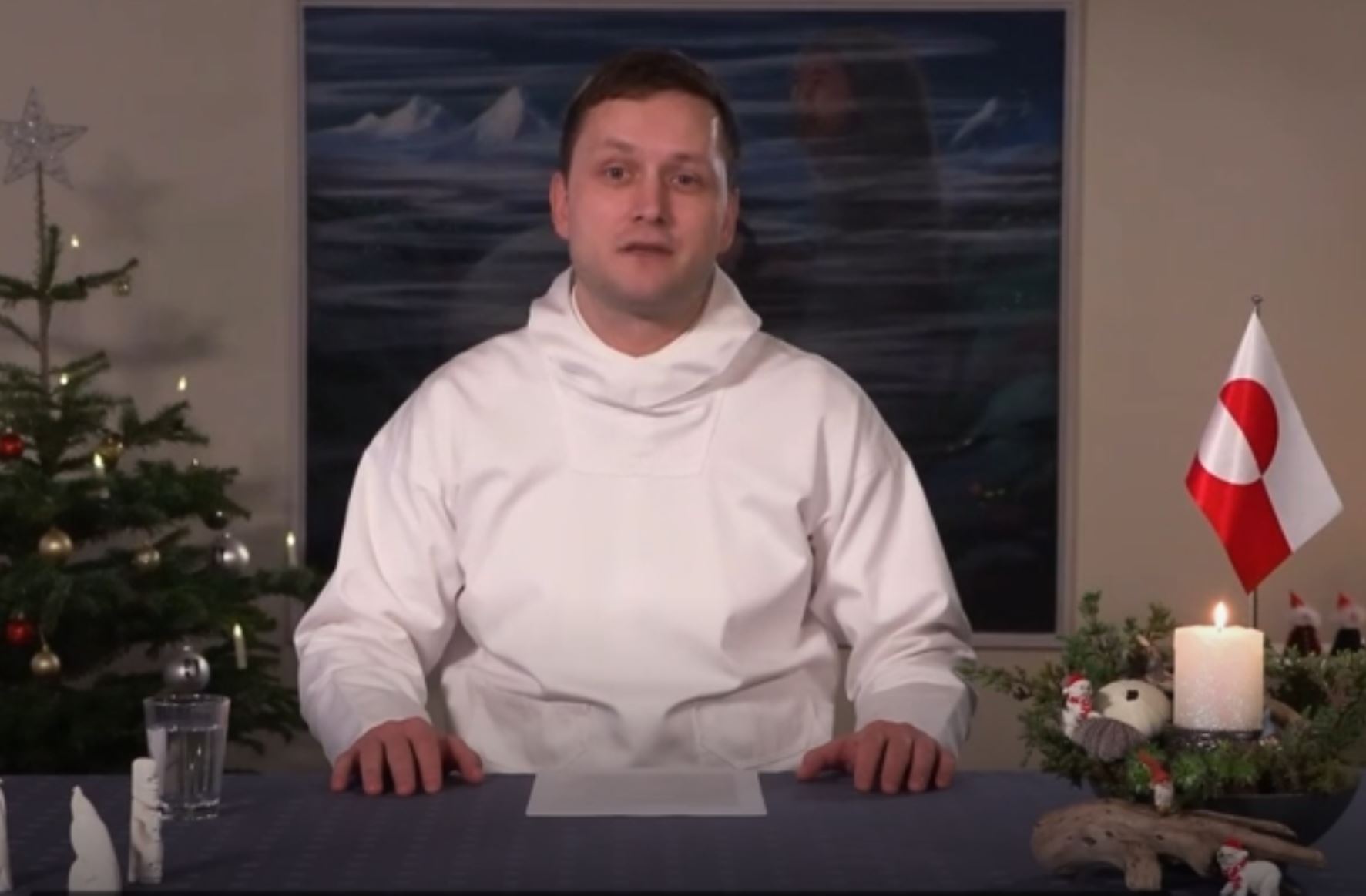
In his first New Year’s address as Prime Minister of Greenland, Jens-Frederik Nielsen delivered a speech that resonated far beyond ceremonial tradition. Delivered on the evening of January 1, 2026, Nielsen’s remarks were a sobering reflection on a year marked by geopolitical turbulence, historical reckoning, and a reaffirmed national identity. At the heart of his message: respect—as both a diplomatic principle and a non-negotiable foundation for Greenland’s future.
The Unnamed Elephant in the Room
Though never naming him outright, Nielsen’s sharp critique was clearly directed at former U.S. President Donald Trump, whose renewed public calls in late 2025 to “acquire” Greenland reignited global headlines. Citing “lack of respect and condescension,” Nielsen underscored how Trump’s remarks—framed yet again under the guise of “national security”—had galvanized unprecedented unity among Greenlanders.
“The message was that our country cannot simply be annexed, and that our country is not for sale,” Nielsen declared, referencing the historic nationwide demonstrations in March 2025—the largest in Greenland’s history. That display of civic resolve sent a clear signal: Greenland is not a geopolitical bargaining chip.
This episode is not merely symbolic. It arrives at a time when the Arctic is increasingly central to global resource competition, climate strategy, and military positioning. With melting ice opening new shipping lanes and access to rare earth minerals—Greenland holds an estimated 31% of the world’s untapped rare earth deposits—the island’s strategic value is undeniable. Trump’s persistent interest reflects a broader trend: great powers eyeing the Arctic not as a fragile ecosystem, but as a frontier for influence.
A New Era of Assertive Sovereignty
Nielsen’s speech signals a shift in Greenland’s diplomatic posture. No longer content to be spoken about, Greenland is insisting on being spoken with. The appointment in December 2025 of Louisiana Governor Jeff Landry as a “special U.S. envoy to Greenland”—a move widely interpreted as an attempt to bypass Copenhagen—only reinforced perceptions of external overreach.
In response, Greenland is accelerating its own foreign policy autonomy. Since gaining greater self-rule in 2009, the government in Nuuk has steadily expanded its international engagements, opening representation offices in Brussels, Reykjavik, and Ottawa. Analysts now expect Greenland to press harder for direct partnerships with the EU, Canada, and even Indo-Pacific democracies like Japan and South Korea—all of whom have growing stakes in Arctic stability and mineral security.
For Nordic businesses, this pivot presents both opportunity and responsibility. Companies in clean tech, sustainable fisheries, renewable energy, and critical minerals stand to benefit from deepening ties—but only if they engage on Greenland’s terms: with transparency, long-term commitment, and genuine respect for Inuit knowledge and self-determination.
Reckoning with the Past to Shape the Future
ielsen’s address also turned inward, acknowledging a painful chapter in Greenland’s relationship with Denmark: the forced IUD insertions carried out by Danish health authorities from the 1960s to the 1980s. In November 2025, after decades of advocacy, the Danish government issued a formal apology and established a compensation fund for survivors.
“It was time,” Nielsen said simply—a phrase that carried the weight of generations. This reckoning is more than moral accounting; it’s a strategic recalibration. By confronting historical injustices, Greenland strengthens the legitimacy of its governance and deepens public trust—essential foundations for navigating complex negotiations over resource rights, defence, and eventual independence.
Importantly, Nielsen framed Denmark not as an adversary but as a partner with whom “our common future” must be built—albeit one that must earn renewed trust through action, not just words.
What This Means for the Nordic Region
Greenland’s assertiveness should not be seen as isolationism, but as sovereign pragmatism. As climate change accelerates and Arctic governance grows more contested, the Nordic countries—Denmark, Norway, Sweden, Finland, and Iceland—have a unique opportunity to lead through partnership rather than paternalism.
For businesses, policymakers, and investors, the message is clear: Greenland’s resources and strategic position are not up for grabs—they are up for collaboration. But collaboration requires listening, equity, and a commitment to shared prosperity.
Looking Ahead
In our next feature, we’ll examine how Greenland’s mineral policy is evolving in 2026, including its new “Green Mining” standards and the role Nordic clean-tech firms can play in building a sustainable Arctic economy. We’ll also analyse the implications of the U.S.-Greenland-Denmark trilateral dynamics post-Trump 2024 election aftermath.
We invite our readers—especially those in sustainable industry, Arctic policy, and Nordic diplomacy—to connect with us. Share your insights, questions, or partnership ideas at insights@nordicbusinessjournal.com. Let’s shape the future of the North, together.
— The Nordic Business Journal Team
January 2, 2026