
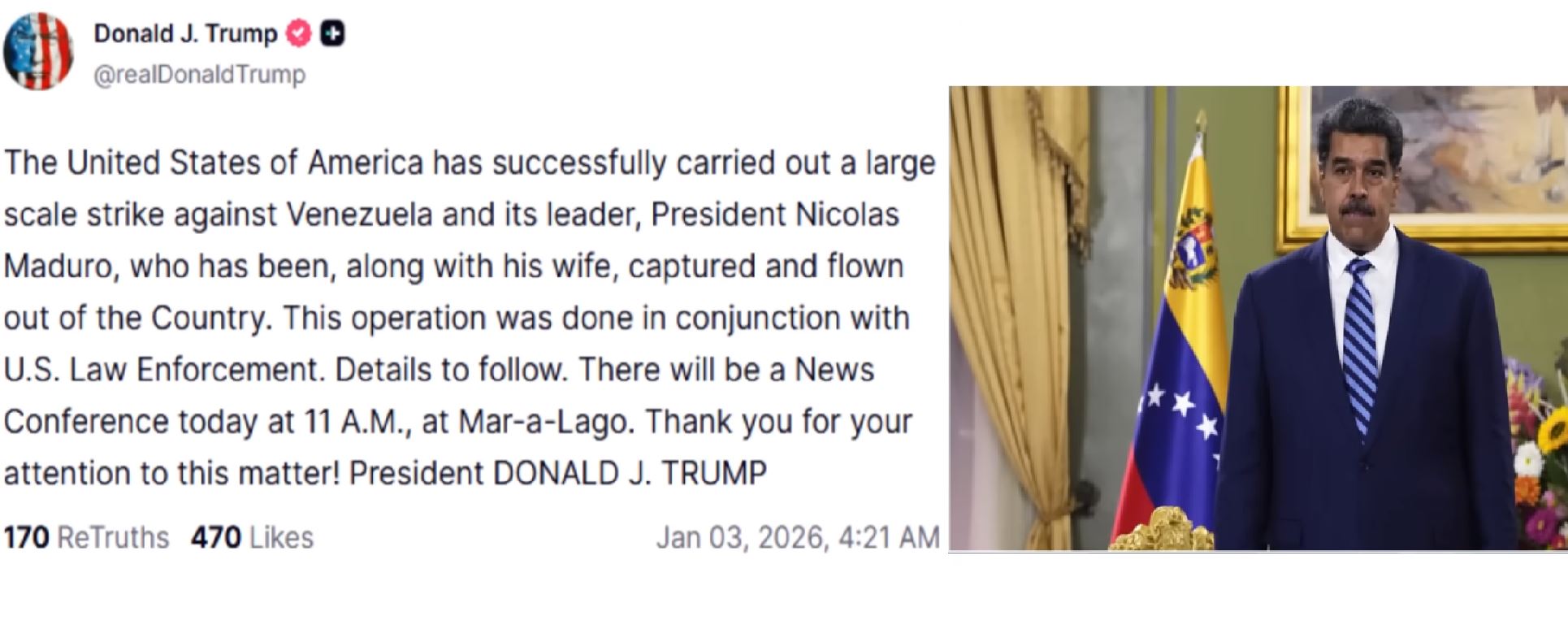
In the early hours of January 3, 2026, a U.S.-led military operation inside Venezuela’s capital sparked immediate diplomatic reverberations across Europe—and particularly within the Nordic region. While Washington frames the strike as a targeted action against “transnational criminal networks,” the absence of congressional authorization or UN backing has drawn sharp scrutiny from European capitals and legal experts alike. For Nordic policymakers and business leaders navigating an increasingly fragmented global security landscape, this incident underscores pressing questions about the rule of law, extraterritorial military action, and the credibility of international institutions.
EU and Nordic Governments Urge Restraint—But Signal Deeper Legal Concerns
The European Union’s top diplomat, High Representative Kaja Kallas, reiterated the bloc’s long-standing position that Nicolás Maduro’s government lacks democratic legitimacy. Yet even amid that criticism, Kallas emphasised that “under all circumstances, the principles of international law and the UN Charter must be respected.” Notably, she stressed the safety of EU citizens in Venezuela as the bloc’s immediate priority—an indication that Brussels is walking a fine line between political condemnation and legal caution.
Germany and Spain have echoed calls for de-escalation. Berlin activated its crisis response team and maintains close contact with its embassy in Caracas, while Madrid offered to mediate, insisting any resolution must align with the UN Charter. Italy, meanwhile, is monitoring the situation primarily through the lens of its diaspora’s safety.
But it is the Nordic countries—often seen as standard-bearers of international legal order—that have delivered the most consequential signal. Though no individual Nordic capital (Stockholm, Copenhagen, Oslo, Helsinki, or Reykjavík) has yet issued a formal statement on the January 3 strikes, their collective legal stance, articulated in a recent joint submission on the law of war, is telling. The Nordics have declared that “no rules of immunity should apply in national jurisdictions for the gravest international crimes,” explicitly naming genocide, crimes against humanity, and war crimes.
This position—while formally tied to International Criminal Court (ICC) jurisprudence—has clear implications for the current crisis. Legal scholars in Oslo and Stockholm are already analysing whether a unilateral military strike on sovereign territory, absent UN Security Council authorisation or self-defence justification under Article 51 of the UN Charter, could constitute a crime against humanity under customary international law. If so, officials involved could, in theory, face legal exposure in Nordic courts under universal jurisdiction principles.
Constitutional and Multilateral Gaps Raise Accountability Questions
The operation’s domestic and international legitimacy gaps are stark. The U.S. Congress was not consulted, and no authorising vote was taken—a point tacitly acknowledged by White House Chief of Staff Susie Wiles, who stated that “ground strikes would require congressional approval.” Her phrasing suggests the administration itself recognises the constitutional infirmity of its actions.
Similarly, the United Nations has not endorsed the strike. Venezuela has formally condemned the attack as a “flagrant violation” of the UN Charter, citing Articles 1 (peaceful settlement of disputes) and 2(4) (prohibition on the use of force). Russia has called for an emergency UN Security Council session, a move likely to deepen East-West divisions at a time when multilateral cooperation is already strained.
Wider Pattern or Isolated Incident?
This strike appears part of a broader, if underreported, trend of U.S. extraterritorial military actions. In late 2025, similar operations targeted alleged drug-trafficking vessels off Nigeria’s coast—actions that drew rare bipartisan criticism in Washington. Senator Ed Markey labelled the strikes “crimes against humanity” and called Defence Secretary Pete Hegseth a “war criminal.” Yet notably, neither the African Union, ECOWAS, nor European governments issued formal responses at the time.
The silence then contrasts sharply with the coordinated caution now emerging from Europe—suggesting that the Venezuela strike may have crossed a perceived red line, not just in geography but in legal principle.
Why This Matters for Nordic Business and Policy
For Nordic companies with global supply chains, energy interests, or diplomatic exposure in Latin America and West Africa, the Venezuela incident is more than a geopolitical footnote. It signals a potential unravelling of the rules-based order that has underpinned stable investment climates for decades. If unilateral military actions become normalized—even by traditional allies like the U.S.—the risk of retaliatory measures, legal challenges, or regional instability rises significantly.
Moreover, Nordic nations’ commitment to universal jurisdiction and international criminal law may soon translate into concrete policy: expect parliamentary inquiries in Helsinki or Copenhagen, potential asset freezes under Magnitsky-style legislation, or even judicial investigations if credible evidence of war crimes emerges.
Looking Ahead
What’s next? In our upcoming feature, we’ll examine how Nordic courts could assert jurisdiction over foreign officials implicated in unlawful strikes—and what that means for diplomatic immunity, corporate risk, and international contracts. We’ll also explore whether the Nordic Council might propose a regional framework to deter future violations of sovereignty.
Stay Engaged
We invite our readers—diplomats, legal advisors, compliance officers, and corporate strategists—to share insights, concerns, or first-hand accounts related to this evolving situation. Connect with us at insights@nordicbusinessjournal.com or join our exclusive webinar on “Sovereignty in the Age of Unilateral Force” later this month.
The Nordic Business Journal: Where Business Meets the Rule of Law.