
In a striking reaffirmation of regional solidarity, Nordic leaders have once again drawn a clear line in the Arctic snow: Greenland’s future will be decided by Greenlanders—and Denmark—not by external powers, regardless of political rhetoric.
The renewed spotlight on Greenland follows recent media speculation that former U.S. President Donald Trump, now a leading candidate in the 2024 U.S. presidential race, reiterated his long-standing view that the United States should acquire the world’s largest island. In a now-viral interview with The Atlantic published December 29, 2025, Trump reportedly stated, “Greenland is critical to U.S. national security—and frankly, it’s always made sense for America to control it.” While no formal policy proposal has been made—and Trump holds no executive power as of January 2026—the comments reignited diplomatic sensitivities across the Nordic region.
Within hours, Danish Prime Minister Mette Frederiksen issued a firm response on Sunday evening:
“Greenland belongs to the people of Greenland and the Kingdom of Denmark. Any suggestion otherwise is not only outdated—it’s disrespectful to our sovereignty and our partnership.”
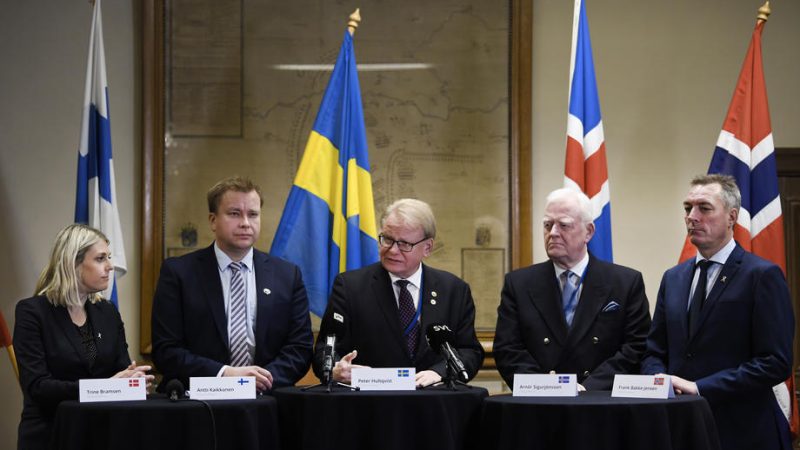
Her statement was swiftly echoed across the Nordic neighbourhood. Swedish Prime Minister Ulf Kristersson, Norwegian Prime Minister Jonas Gahr Støre, and Finnish President Alexander Stubb each posted messages of unequivocal support on X (formerly Twitter), emphasizing that Nordic security and sovereignty are indivisible.
President Stubb’s post was particularly pointed:
“No one makes decisions on behalf of Greenland and Denmark, except Greenland and Denmark themselves. Our Nordic friend Denmark and the Prime Minister have our full support.”
This unified front is more than diplomatic courtesy—it reflects a strategic recalibration across the Nordic bloc in response to growing great-power competition in the Arctic.
Why This Matters Now
While Trump’s remarks carry no official weight today, they underscore a broader truth: Greenland is increasingly central to global geopolitical calculations. Home to vast rare earth mineral deposits, critical for renewable energy and defence technologies, and strategically positioned between North America and Europe, Greenland sits at the nexus of climate change, resource security, and military strategy.
The U.S. already maintains the Pituffik Space Base (formerly Thule Air Base) in northern Greenland—a cornerstone of its Arctic and space surveillance infrastructure—under a 1951 defence agreement with Denmark. But as China and Russia expand their Arctic interests, and as NATO reorients toward high-latitude defence, the autonomy and alignment of Greenland take on new strategic dimensions.
Crucially, Greenland’s own government—led by Premier Múte Bourup Egede—has consistently asserted its right to self-determination. In 2025, Nuuk accelerated talks with Copenhagen on potential independence, while simultaneously deepening economic ties with the EU and selectively engaging with U.S. investors in mining and infrastructure—but always on Greenlandic terms.
The Nordic response, therefore, isn’t just about defending Danish sovereignty; it’s about upholding the principle that small states and autonomous regions retain agency in a multipolar world. This stance aligns with the Nordic model’s core tenets: rule of law, multilateralism, and respect for democratic self-governance.
What’s Next?
As the 2024 U.S. election results loom (with official certification expected January 6, 2026), businesses and policymakers across the Nordics should monitor whether Trump’s rhetoric translates into concrete proposals if he returns to office in 2027. Even if not, the underlying strategic interest in Greenland will persist—driven by climate-induced Arctic accessibility and the global scramble for critical minerals.
For Nordic companies in mining, logistics, clean tech, and defence, this moment presents both opportunity and risk. Engaging with Greenland requires more than investment—it demands cultural fluency, environmental responsibility, and respect for Indigenous rights. The Nordic governments’ unified stance offers a stable diplomatic backdrop, but the real work happens in Nuuk, not Washington.
Looking Ahead
In our next issue, we’ll examine how Greenland’s emerging mineral economy is reshaping Nordic supply chains—with exclusive insights from mining ventures in Kvanefjeld and the role of EU critical raw materials partnerships.
Stay informed. Stay connected.
Follow us on LinkedIn and X (@NordicBizJournal), or email our editorial desk at insight@nordicbusinessjournal.com to share your perspective on Arctic strategy, sovereignty, and sustainable investment. The future of the North is being written now—and Nordic businesses have a seat at the table.