
As a historic Arctic blast grips Northern Europe, major European aviation hubs are buckling under the weight of relentless snowfall. On January 6, 2026, Amsterdam’s Schiphol Airport—one of Europe’s busiest—cancelled over 400 flights for the fifth straight day, with only a third of its 1,200 scheduled departures taking off. Travelers faced chaos: some reported waiting over 32 hours in queues for customer service, while train disruptions further compounded access to the airport. Parisian airports saw moderate relief by Tuesday after 15% of Monday’s flights were axed, but orange snow warnings still blanket 26 French departments.
The Nordics, though not immune, are telling a different story—one of operational excellence under pressure.
Current Disruption Snapshot: January 6, 2026
– Stockholm Arlanda (ARN), Oslo Gardermoen (OSL), and Copenhagen (CPH) report significant delays and selective cancellations, primarily due to wind gusts and rapid accumulation of snow (up to 40 cm forecast in central Sweden).
– SAS, KLM, and easyJet have all issued extensive disruption notices. SAS, in particular, is advising passengers on trans-Nordic and European routes to expect rebooking delays.
– Finland remains relatively stable: Helsinki-Vantaa (HEL) has maintained near-normal operations, reinforcing its reputation as one of the world’s most winter-resilient airports.
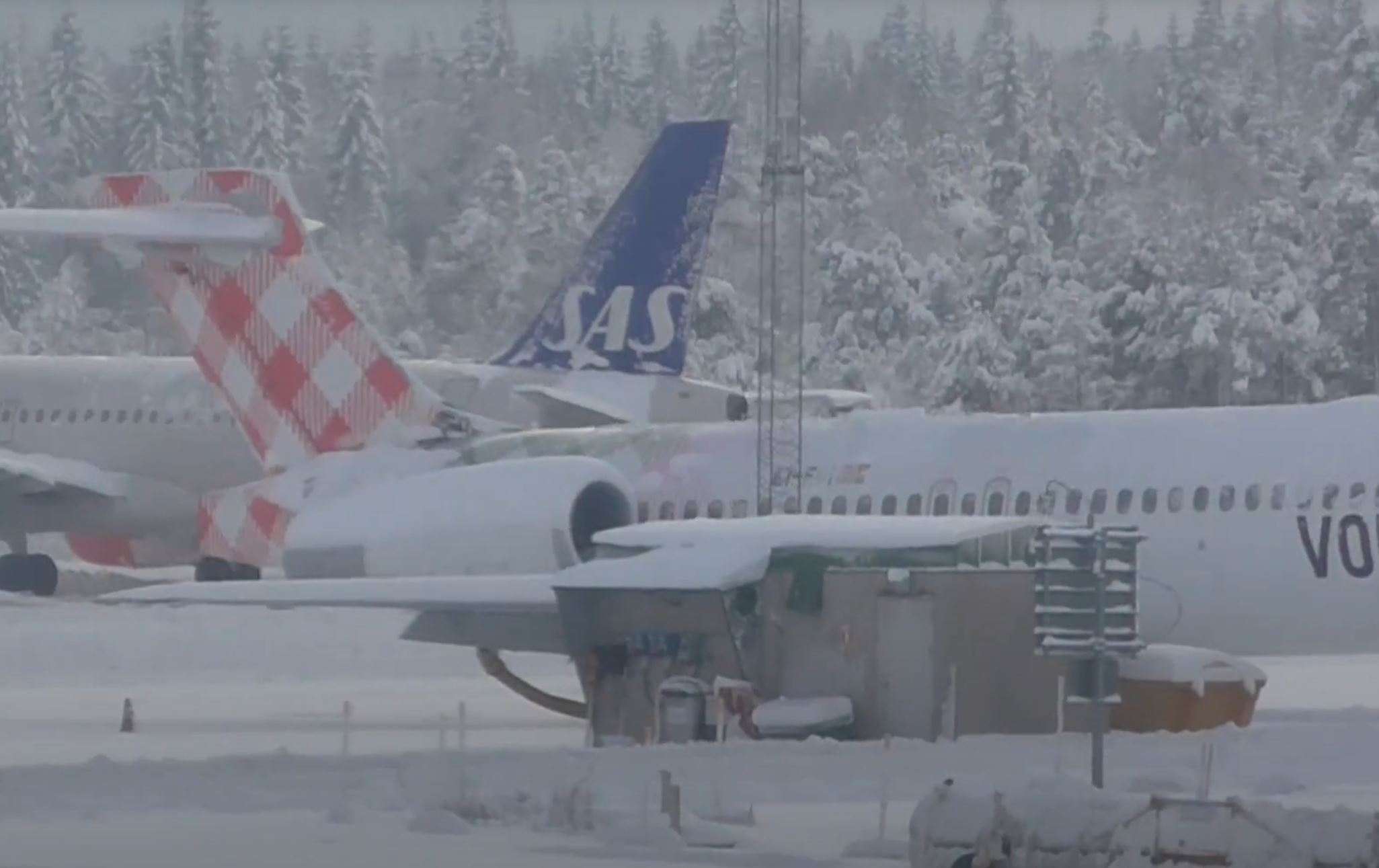
The Nordic “Snow-How”: A Strategic Advantage
While Schiphol grapples with systemic gridlock, Nordic airports are demonstrating why decades of investment in winter logistics translate into business continuity—a critical advantage for regional competitiveness.
Speed & Technology
– Helsinki Airport can clear a full runway in just 11 minutes, thanks to a fleet of autonomous snowploughs and high-capacity snow throwers moving 8,000 tonnes of snow per hour.
– Stockholm Arlanda rarely shuts down entirely—even during blizzards—thanks to pre-emptive de-icing protocols and real-time runway monitoring.
Integrated Coordination
Swedavia (Sweden) and Finavia (Finland) operate Tactical Traffic Forums: cross-agency war rooms where airlines, air traffic control, ground handlers, and meteorologists align on minute-by-minute response plans. This integrated model minimizes cascading delays—an approach now being studied by European aviation regulators.
Economic Implications
For Nordic businesses, this resilience isn’t just about convenience—it’s a logistical insurance policy. In a region where just-in-time supply chains and international talent mobility are vital, maintaining air connectivity during extreme weather preserves productivity and investor confidence. Contrast this with Schiphol’s cascading failures, which have already cost Dutch logistics firms an estimated €50 million in delayed cargo this week alone (per Dutch Chamber of Commerce estimates).
The Bigger Picture: Climate Volatility and Infrastructure Preparedness
This week’s Arctic blast underscores a growing paradox: as climate change intensifies weather extremes, infrastructure designed for historical norms falters. Southern and central European airports—built with milder winters in mind—are increasingly vulnerable. Meanwhile, Nordic nations, long accustomed to harsh conditions, are quietly becoming hubs of climate adaptation expertise.
The European Union is reportedly fast-tracking a Winter Resilience Task Force, with Finavia and Swedavia invited to contribute best practices. For Nordic firms, this positions the region not just as a user of winter tech—but as an exporter of cold-weather operational intelligence.
Looking Ahead
Next in our series: “From Snowploughs to AI: How Nordic Airports Are Building the World’s First Fully Autonomous Winter Operations Ecosystem”—an exclusive look at how machine learning, predictive de-icing, and drone-based runway inspections are setting a new global benchmark.
Stay Informed, Stay Connected
Are you managing travel disruptions or supply chain delays due to this weather event? The Nordic Business Journal’s logistics desk offers real-time airport and airline status briefings for subscribers. Email us at insights@nordicbusinessjournal.com or connect on LinkedIn to share your experience—and shape our next investigation.
— The Nordic Advantage Isn’t Just Geography. It’s Preparedness.