
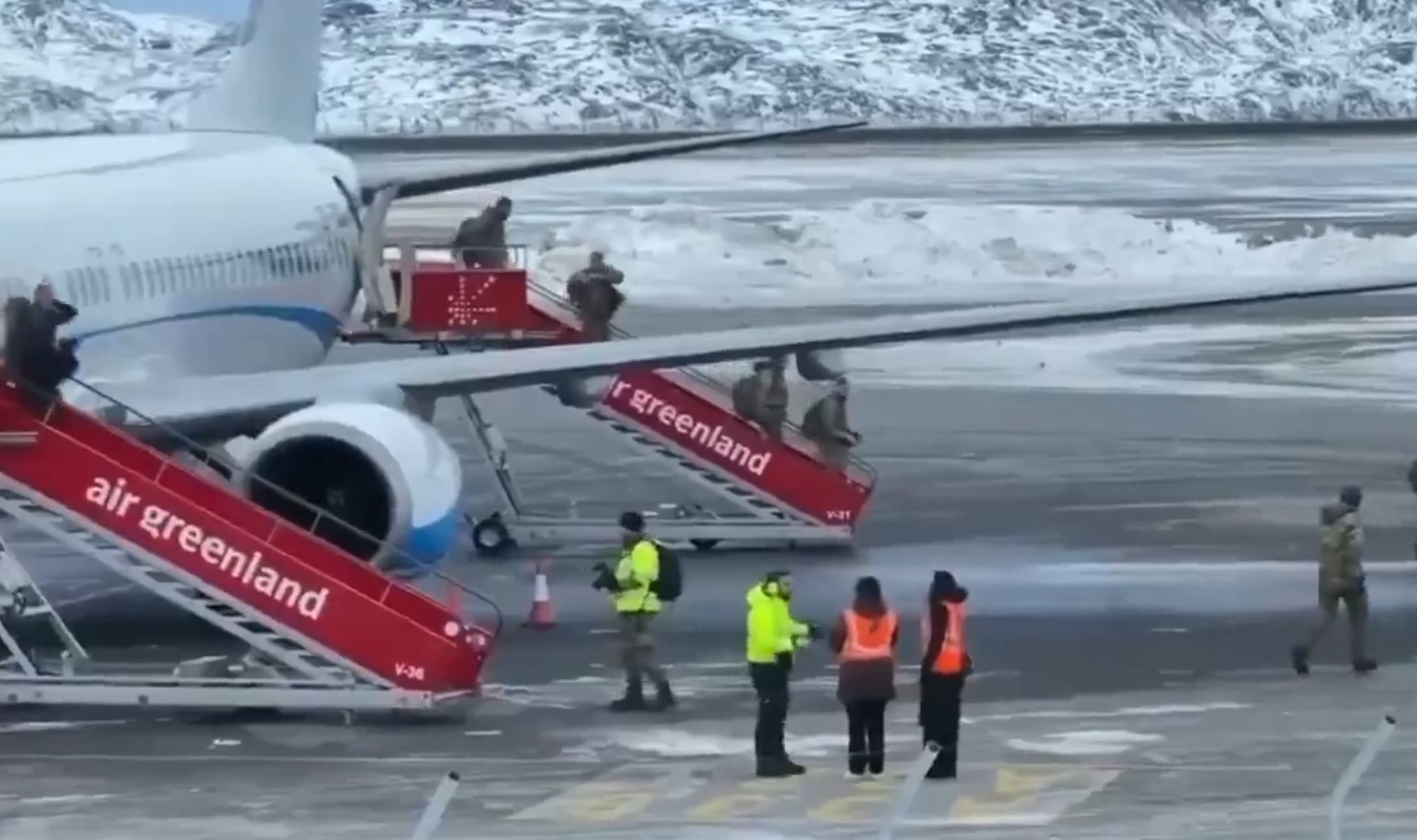
Sweden has concluded a short-term military assessment mission in Greenland, marking a transition from reconnaissance to operational planning in the Arctic — a region increasingly central to Nordic security, energy, logistics, and geopolitical stability.
According to the Swedish Armed Forces, a small contingent of staff officers was deployed at Denmark’s request to evaluate terrain, infrastructure, climate conditions, and logistical requirements for future Arctic exercises. The mission forms part of broader NATO efforts to enhance preparedness in northern and High Arctic environments following Sweden’s accession to the alliance.
“We are now leaving the location, but not the engagement,” said Vice Admiral Ewa Skoog Haslum, Head of Operations Management. “The next step is to evaluate the information collected and begin planning future exercise activities.”
Sweden is expected to participate later this year in Denmark’s Arctic Endurance exercise series, focused on strengthening NATO’s northern flank and improving interoperability among allied forces operating in extreme environments.
Strategic Context: Why Greenland Matters More Than Ever
Greenland’s strategic relevance has grown sharply over the past decade, driven by:
- Climate change, opening new Arctic shipping routes and resource access
- Geopolitical competition, particularly involving Russia, China, and NATO
- Critical infrastructure security, including undersea cables, satellite systems, and energy corridors
For Nordic economies, Arctic stability is no longer just a defence issue — it is directly linked to maritime trade resilience, energy security, rare earth mineral access, insurance risk modelling, and regional investment confidence.
Sweden’s presence in Greenland signals a shift toward deeper Nordic integration in Arctic security governance, especially alongside Denmark, Norway, Finland, Iceland, Canada, and the United States. With Finland and Sweden now full NATO members, the alliance’s northern posture is evolving from fragmented national defence planning toward a cohesive regional deterrence architecture.
Business Implications: Defence, Infrastructure, and Arctic Innovation
For the Nordic business community, Sweden’s Arctic engagement carries several implications:
- Defence and Dual-Use Technology Demand
Cold-weather logistics, satellite navigation, autonomous systems, Arctic aviation, and climate-resilient construction are emerging growth areas for Nordic firms. - Infrastructure Investment Opportunities
Ports, airfields, energy storage, data connectivity, and emergency response systems in Arctic regions are increasingly attractive to public-private partnerships. - Supply Chain and Insurance Risk Modelling
Arctic volatility — from weather patterns to geopolitical tensions — is reshaping shipping insurance, energy transport risk profiles, and long-term investment strategies. - Green Transition and Mineral Security
Greenland’s mineral reserves, including rare earth elements critical for EVs and renewable energy technologies, are gaining strategic significance. Stability in the region is essential for future Nordic supply chain planning.
Updated Context (2025): A Rapidly Evolving Arctic Landscape
Since Sweden’s NATO accession in 2024, Nordic defence coordination has accelerated. Joint Arctic exercises are now expanding beyond traditional military readiness to include:
- Civil-military emergency response
- Climate disaster resilience
- Cyber and space-domain defence
- Protection of energy and communications infrastructure
In parallel, Russia has intensified Arctic militarization, while China continues to position itself as a “near-Arctic stakeholder,” reinforcing why NATO’s northern engagement — including Sweden’s Greenland assessment — is increasingly viewed as both deterrence and stability-building rather than escalation.
Strategic Outlook
Sweden’s Greenland mission reflects a broader shift from Arctic exploration to Arctic execution — from studying the region to operationalising long-term presence, resilience, and alliance coordination. For Nordic businesses, this means the Arctic is no longer peripheral. It is becoming a central arena for defence innovation, infrastructure investment, and geopolitical risk management.
As climate, commerce, and security converge in the High North, companies that understand this evolving Arctic ecosystem — and align early with government and alliance initiatives — are likely to gain competitive advantage.
Editor’s Note – Next Article Direction
In our next issue, Nordic Business Journal will explore how Arctic defence cooperation is reshaping investment flows into satellite systems, logistics infrastructure, and climate-resilient technologies — and what this means for Nordic industrial leadership over the next decade.
Connect with us
Have insights, data, or perspectives on Arctic markets, defence innovation, or Nordic geopolitics? Reach out to our editorial team at editor@nordicbusinessjournal.com and follow us on LinkedIn and X for real-time analysis.