
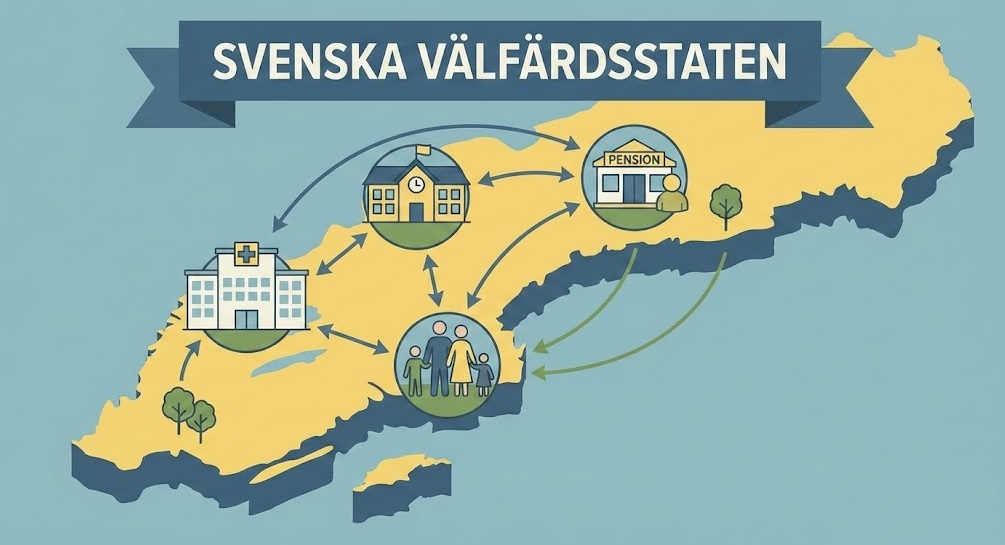
Sweden’s welfare sector is facing a crisis, with staffing shortages exacerbated by some of the lowest wages in the EU relative to the broader economy. The latest report from the SNS Economic Council sheds light on the alarming state of affairs and calls for urgent political decisions to ensure the sustainability of the welfare system.
The Glaring Wage Disparity
Sweden’s welfare workers earn significantly less than their counterparts in other sectors, and this disparity is more pronounced when viewed through the lens of European comparisons. According to Olof Åslund, one of the researchers behind the SNS report, “From an international perspective, the Swedish welfare sector stands out by having lower wages relative to the rest of the economy than any other EU country, while the sector is larger than in most other countries.” The welfare sector, which accounts for about 20% of Sweden’s labour market, faces a dilemma: it cannot maintain its current scale or expand without significant reforms in both pay structures and recruitment practices.
Despite the high levels of job satisfaction and the meaningful nature of their work, welfare employees in Sweden face a significant barrier to recruitment due to the wage gap. It is clear that this issue must be addressed if Sweden hopes to continue offering high-quality welfare services to its population.
Three Paths Forward – All with High Costs
The SNS report presents three potential paths for tackling the staff shortage in the welfare sector, each of which comes with significant challenges and costs.
- Raising Wages and Offering Targeted Training Subsidies
Increasing wages is a direct approach to making the sector more attractive, but this comes with fiscal consequences. Raising relative wages in shortage occupations is an effective strategy, but it may require tax increases or reallocation of resources from other areas. Political leaders will need to weigh the benefits of a more robust welfare system against the financial burden of such measures. - Lowering Formal Skill Requirements
Another option is to lower the formal educational requirements for welfare sector jobs, broadening the recruitment base. The report notes that the proportion of foreign-born individuals employed in welfare has tripled in the past 20 years. However, this recommendation conflicts with the current political sentiment in Sweden, where immigration restrictions are increasingly a topic of debate. There is tension between utilizing a more diverse workforce and the desire to limit migration. - Lowering Ambitions and Focusing on Productivity Gains
Finally, there is the option of lowering ambitions for welfare services, making prioritization a central theme. Researchers remain sceptical that productivity improvements alone, whether through technological innovation or AI, can resolve the fundamental issue of staffing shortages. While tech solutions may help in some areas, they cannot replace the human element that is central to the welfare system.
Growing Income Inequality: A Backdrop to the Welfare Crisis
At the same time, new statistics from Statistics Sweden show that income inequality is on the rise in the country. The Gini coefficient, a widely used measure of income inequality, rose to 0.314 in 2024, up from 0.310 the previous year. The primary driver behind this increase has been the growing gap in capital income, highlighting a widening divide between the wealthy and the rest of the population.
Despite a slight increase in the overall economic standard of Swedish households, which rose after two years of decline, it still lags behind the peak levels seen in 2021. The proportion of households with low economic standards decreased to 13.1% in 2024, the lowest figure since 2007. However, this reduction in poverty does little to address the underlying issues of inequality that persist.
A Differentiated Approach to Skill Utilisation
To address the welfare sector’s staffing crisis, SNS Economic Council Chairman Oskar Nordström Skans suggests a more differentiated approach to the use of skills. By aligning highly educated personnel with tasks that truly require their expertise, and lowering qualification requirements for other roles, the sector could increase wages in areas where recruitment is most challenging without incurring astronomical costs.
This solution offers a compromise: it would allow for wage increases where they are most needed, without overwhelming the budget. Additionally, it could help diversify the workforce and provide more opportunities for various groups to enter the sector.
However, researcher Georg Graetz points out a potential paradox: if productivity increases faster in other sectors, it could lead to greater demand for welfare services, further stressing an already overburdened system. This highlights the importance of a balanced approach to both sectoral productivity and welfare service provision.
A Crossroads for Sweden’s Welfare System
Sweden’s welfare sector is at a critical juncture. The low wages, staffing shortages, and rising income inequality point to a pressing need for political and economic reforms. The challenges outlined by researchers at SNS require decisive action that balances financial sustainability with social equity. Whether through increased wages, a more inclusive recruitment process, or prioritizing certain services, the path forward will demand uncomfortable political decisions.
Looking Ahead
As the Swedish welfare system grapples with these critical issues, policymakers must be prepared to make tough choices. Future discussions must explore the balance between fair wages and fiscal responsibility, the role of immigration in sustaining the workforce, and the extent to which technology can complement human labour in welfare services.
In our next issue, we will examine the long-term effects of wage disparities in welfare and other public sectors, and explore potential solutions to reverse the trend of increasing income inequality in Sweden.
Connect with Us
We invite our readers to join the conversation and share their thoughts on the challenges and solutions presented in this article. Follow our social media channels or reach out to us via email to stay updated on future analyses and to connect with fellow readers.