
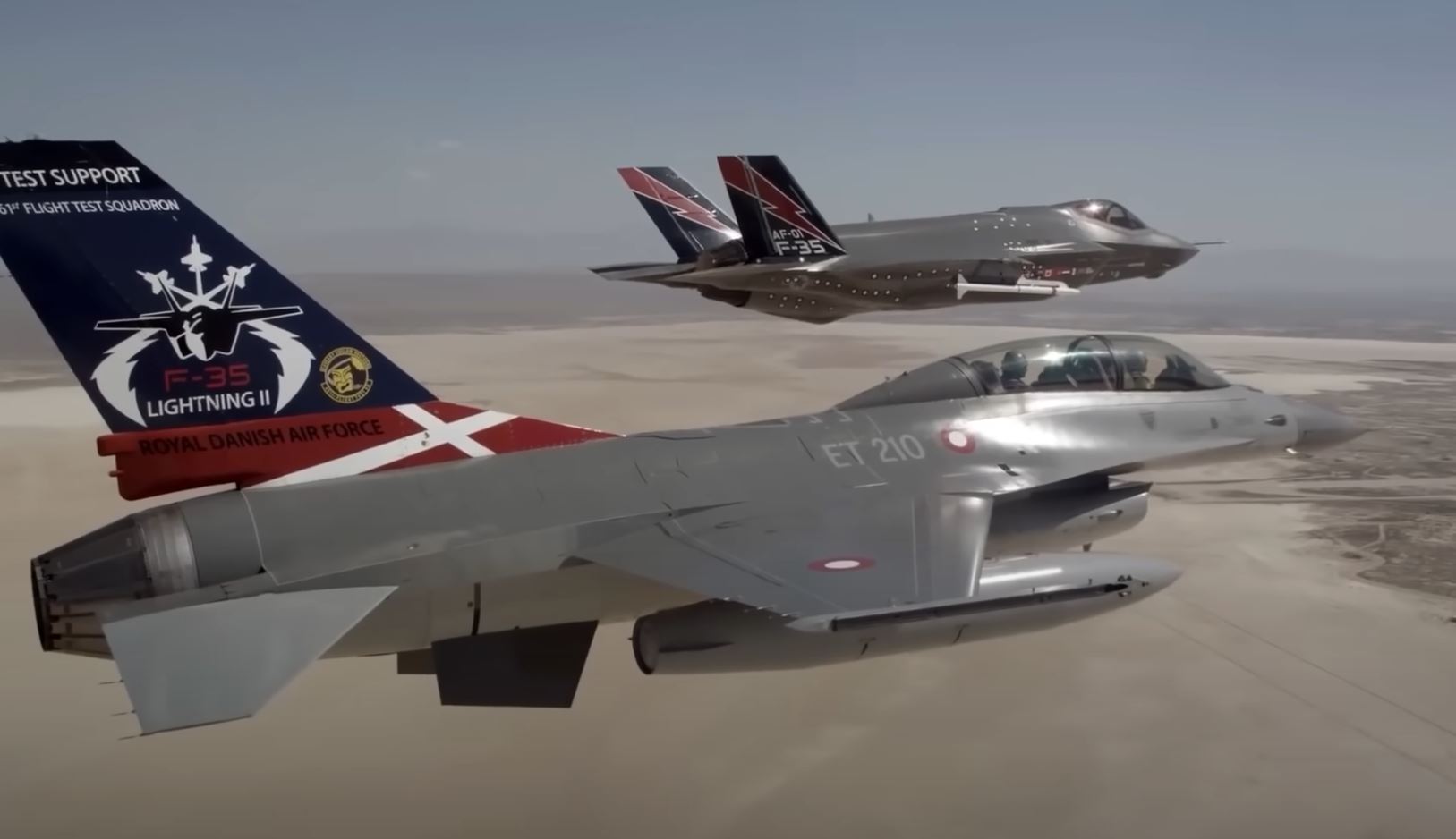
COPENHAGEN — As NATO formally activated its Arctic Sentry mission on February 11, Denmark has positioned itself at the operational forefront of the Alliance’s northern security architecture, deploying four F-35A Lightning II fighter jets to Keflavík Air Base in Iceland. The move transforms what was once a Danish national initiative—Operation Arctic Endurance—into a cornerstone of collective NATO deterrence in a region rapidly shifting from geopolitical backwater to strategic flashpoint.
Defence Minister Troels Lund Poulsen confirmed Denmark’s commitment during the Munich Security Conference, emphasising that Copenhagen successfully advocated for years to bring Arctic security under NATO’s formal command structure. “This has been a priority for Denmark to get Arctic Endurance into a framework under the NATO umbrella,” Poulsen stated, noting the mission now integrates multi-domain capabilities beyond air power—including special forces teams and maritime surveillance assets operating across Greenland’s vast territory.
Sweden has simultaneously committed JAS 39 Gripen fighters to patrol the Iceland-Greenland corridor, creating the first sustained Nordic air policing framework in the High North under NATO command. The interoperability between Denmark’s fifth-generation F-35s and Sweden’s advanced Gripens—both platforms featuring significant Nordic industrial participation—signals a maturing defence industrial ecosystem capable of sustaining complex Arctic operations year-round.
Strategic Imperatives Driving the Shift
For Nordic business leaders, Arctic Sentry represents more than a military deployment—it is a risk-mitigation framework with direct commercial implications:
Critical Infrastructure Protection: The mission explicitly prioritises safeguarding undersea cables and energy pipelines traversing the Greenland-Iceland-UK gap, which carry over 95% of transatlantic data traffic. Disruption scenarios in this corridor pose systemic risk to Nordic financial services, digital infrastructure operators, and logistics firms dependent on real-time global connectivity.
Resource Security and Supply Chains: Greenland’s mineral wealth—including rare earth elements critical for electric vehicle batteries and defence technologies—has intensified great-power competition. With the EU’s Critical Raw Materials Act driving demand for non-Chinese supply sources, Arctic Sentry provides the security backdrop necessary for responsible resource development. Danish and Swedish mining technology firms now operate within a more predictable security environment, though regulatory frameworks in Nuuk remain the decisive variable.
Arctic Shipping Corridors: Climate change is accelerating the viability of Northern Sea Routes, potentially reshaping global trade lanes by 2035. While the Northeast Passage along Russia’s coast remains contested, the transpolar route across international waters north of Greenland could emerge as a neutral alternative—contingent on stable security conditions that Arctic Sentry aims to guarantee.
Navigating U.S.-Denmark-Greenland Tensions
The mission’s launch follows months of delicate diplomacy amid renewed U.S. interest in Greenland’s strategic position. Since President Trump’s return to office in January 2025, Washington has intensified rhetoric regarding Greenland’s status, though recent working-level dialogues between Copenhagen, Nuuk, and Washington have de-escalated immediate friction. Notably, the United States has committed assets to Arctic Sentry despite earlier scepticism—a diplomatic win for Denmark that underscores NATO’s continued cohesion on northern security even amid bilateral strains.
Greenlandic Foreign Minister Vivian Motzfeldt welcomed the enhanced presence, noting it brings “a new and strong capacity that we have not seen much of in Greenland, but which will undoubtedly contribute to strengthening security and surveillance in our region.” Her statement reflects Nuuk’s pragmatic calculus: greater international attention brings both sovereignty challenges and opportunities for infrastructure investment and diplomatic leverage.
Business Implications and Forward Look
For Nordic executives, three developments warrant monitoring:
1. Defence Industrial Opportunities: Sustained Arctic operations demand cold-weather modifications, logistics innovation, and satellite communications—sectors where Nordic firms hold competitive advantages. Saab’s recent Arctic-capable sensor contracts and Terma’s electronic warfare systems for F-35s exemplify this trend.
2. Insurance and Risk Pricing: Marine insurers and reinsurers are recalibrating Arctic route premiums based on NATO’s enhanced presence. Early data suggests modest reductions in political risk premiums for vessels transiting the Denmark Strait.
3. Greenland’s Regulatory Trajectory: Nuuk’s 2025 mineral strategy emphasizes partnerships with EU-aligned investors. Companies positioning for rare earth development should engage now with Greenlandic authorities while security conditions remain stable.
Next Steps For Nordic Business Leaders
Our next analysis will examine the commercial viability of Arctic shipping corridors through the lens of insurance markets, port infrastructure investments in Iceland and northern Norway, and regulatory hurdles facing transpolar routes. We will also profile Nordic SMEs winning contracts to support sustained Arctic operations—from cold-weather logistics to satellite data services.
How is your organisation adapting strategy to the High North’s evolving security landscape? Share insights with our editorial team at insights@nordicbusinessjournal.com. We’re particularly interested in hearing from maritime logistics firms, resource developers, and defence suppliers navigating this new strategic reality.