
At the Munich Security Conference, US Secretary of State Marco Rubio delivered a speech that many have interpreted as a notable shift in tone from previous American rhetoric, particularly the more confrontational approach seen last year. A year ago, the message from then-Vice President JD Vance was laced with criticism of Europe, claiming that the continent was its own greatest threat and accusing European leaders of abandoning the core democratic values that bound the US and Europe together. In stark contrast, Rubio’s speech this year was described as more optimistic, emphasising the deep, enduring connection between the US and Europe. He even went so far as to say, “The US will always be a child of Europe,” underscoring his belief in the transatlantic relationship.
Danish Ministers Praise Rubio’s Approach
Danish political leaders, including Minister of Foreign Affairs Lars Løkke Rasmussen and Minister of Defence Troels Lund Poulsen, reacted positively to Rubio’s speech. Minister Lund Poulsen noted the speech’s “clear signal” that the United States values its partnership with Europe, especially in areas of transatlantic cooperation and mutual defence. His remarks highlighted Rubio’s repeated emphasis on the ties that bind the two continents, noting that these connections transcend temporary political rhetoric.
“We were hearing a more optimistic tone this year, which is a stark contrast to the adult nonsense we were subjected to last year from Vice President Vance,” said Lars Løkke Rasmussen, echoing the sentiments of many who felt that last year’s address undermined the transatlantic relationship. While Rasmussen was more reserved in his praise, he appreciated the return to a more diplomatic discourse and recognized the need for such relationships in turbulent times.
The Realities Behind the Warm Words
Despite the positive reception to Rubio’s speech, there was an undercurrent of caution, especially regarding the realpolitik behind the rhetoric. A Danish political analyst emphasised that, while Rubio’s tone was indeed warm, it carried with it a subtle message: Europe must shoulder more responsibility, particularly in the realm of defence. Minister Rasmussen, too, noted that while the speech reaffirmed the special bond between the US and Europe, it also underscored Europe’s need to become more self-reliant and less dependent on the US in defence matters.
“Behind the flowery rhetoric, the challenges remain unchanged,” Rasmussen noted, pointing to the geopolitical challenges facing Europe, from the rise of China to the ongoing instability in the Middle East. The unspoken reality was that Europe must prepare to act independently on many of these fronts, with or without American support.
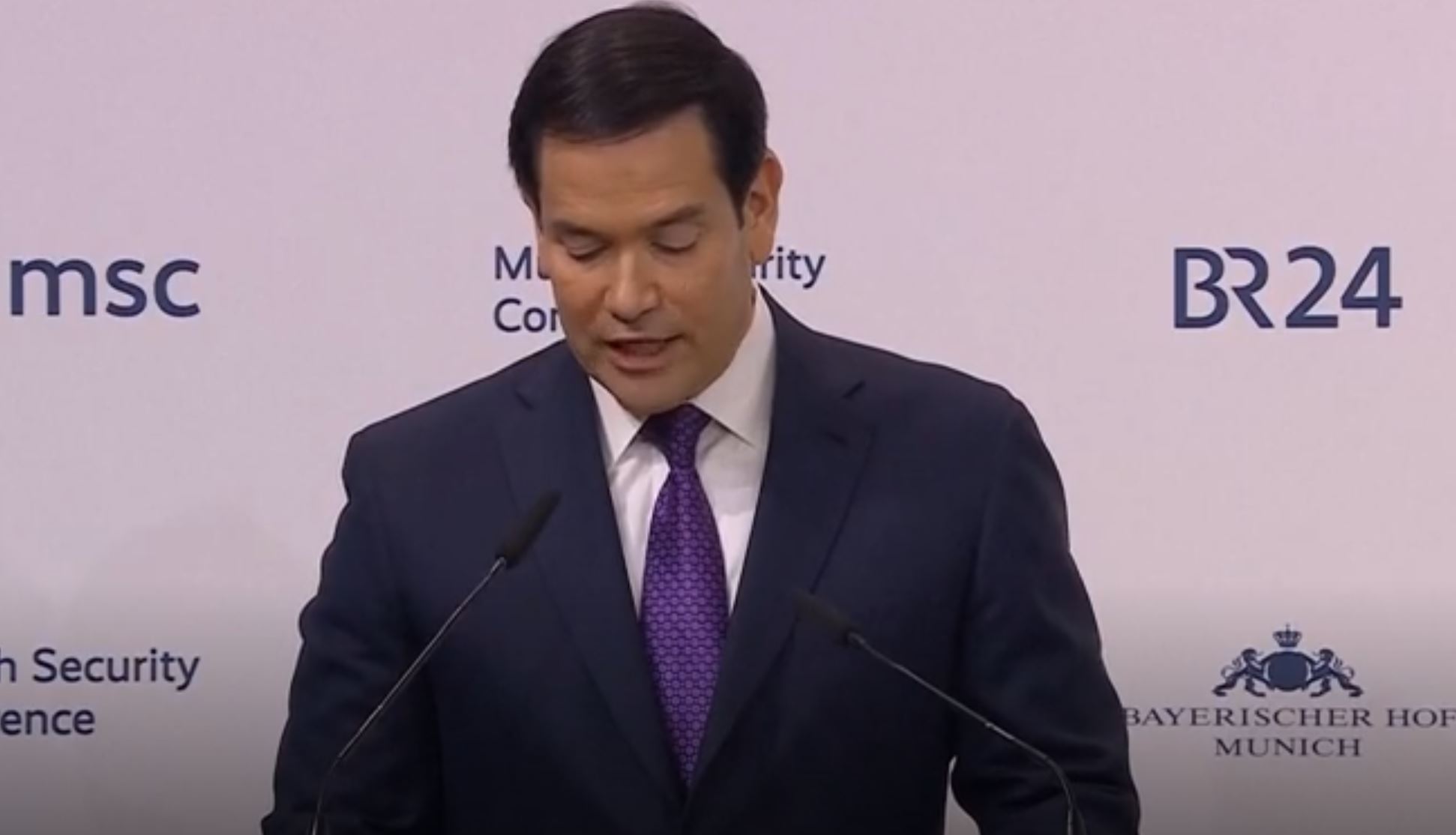
A Shift in Transatlantic Dynamics: What Does Rubio’s Diplomacy Signal?
Rubio’s message represents a pivot from the more isolationist and transactional rhetoric that characterised the Trump administration, signalling a shift in US foreign policy under President Joe Biden and his team. However, the US political landscape is complex and far from unified. As Rasmussen pointed out, “just as the US is more than Donald Trump, the American administration is more than Marco Rubio.” This is a reminder that political dynamics in Washington can change rapidly, and the transatlantic alliance must adapt to these shifts.
The presence of leaders like Rubio, who highlight diplomacy and cooperation, contrasts sharply with the rhetoric of hardliners like Vance, who questioned Europe’s commitment to democracy and freedom. Yet, while the tone is softer, the substance of the US’s demands remains much the same: Europe must take more responsibility, particularly in defence and global leadership.
A Key Omission: The War in Ukraine
One notable absence in Rubio’s speech was any mention of the war in Ukraine. This omission has raised eyebrows, given the central role that the conflict has played in shaping European and transatlantic policy in recent years. In his post-speech comments, Rubio acknowledged the uncertainty surrounding the war’s outcome, stating, “We don’t know if the Russians are serious about ending the war, or what concessions they are prepared to make. But we will continue the work.” While Rubio did not address the war directly in his speech, his comments later reflected the ongoing challenge of securing peace and stability in Europe’s eastern flank.
Both Rubio’s and Vance’s speeches indicate a growing consensus that Europe must play a more active role in addressing the geopolitical instability that surrounds it. Minister Lund Poulsen expressed concern over the shifting burden of responsibility onto Europe, lamenting the lack of stronger American commitment to supporting Ukraine. “It’s clear that the Americans are pushing Europe to take on more of the responsibility,” he said, a sentiment shared by many across the European Union.
Looking Ahead: Europe’s Defence Responsibility and Transatlantic Cooperation
As Europe grapples with its evolving role in global security, the Munich Security Conference served as a reminder of the challenges and opportunities in transatlantic relations. Rubio’s speech, while optimistic, ultimately underscored the need for Europe to invest more in its own defence capabilities and to take a more prominent role on the world stage. The rhetoric from the US may be warmer, but the reality is that Europe’s security cannot be taken for granted.
The challenge for Europe now is clear: While diplomatic gestures and warm speeches are important, they must be followed by concrete actions that strengthen Europe’s role as a global security actor. This includes bolstering defence budgets, enhancing military cooperation within NATO, and fostering closer ties with non-EU European countries such as the UK.
What’s Next for Europe and the US?
The transatlantic relationship, while still strong, faces a critical juncture. As Europe moves towards greater autonomy in defence and security, it must balance its strategic partnerships with the need for self-reliance. The coming months will likely reveal whether Europe can meet the growing demands of global security, or whether it will once again find itself relying on the United States in times of crisis.
In our next article, we will delve deeper into Europe’s shifting defence posture, examining the steps being taken to create a more self-sufficient continent and what this means for the future of NATO. Stay connected with us for more updates on this evolving story.
Connect with Us
For insights, analysis, and updates on European and global security issues, follow the Nordic Business Journal and join the conversation. Stay informed as we explore the future of transatlantic relations and Europe’s role in global defence.