
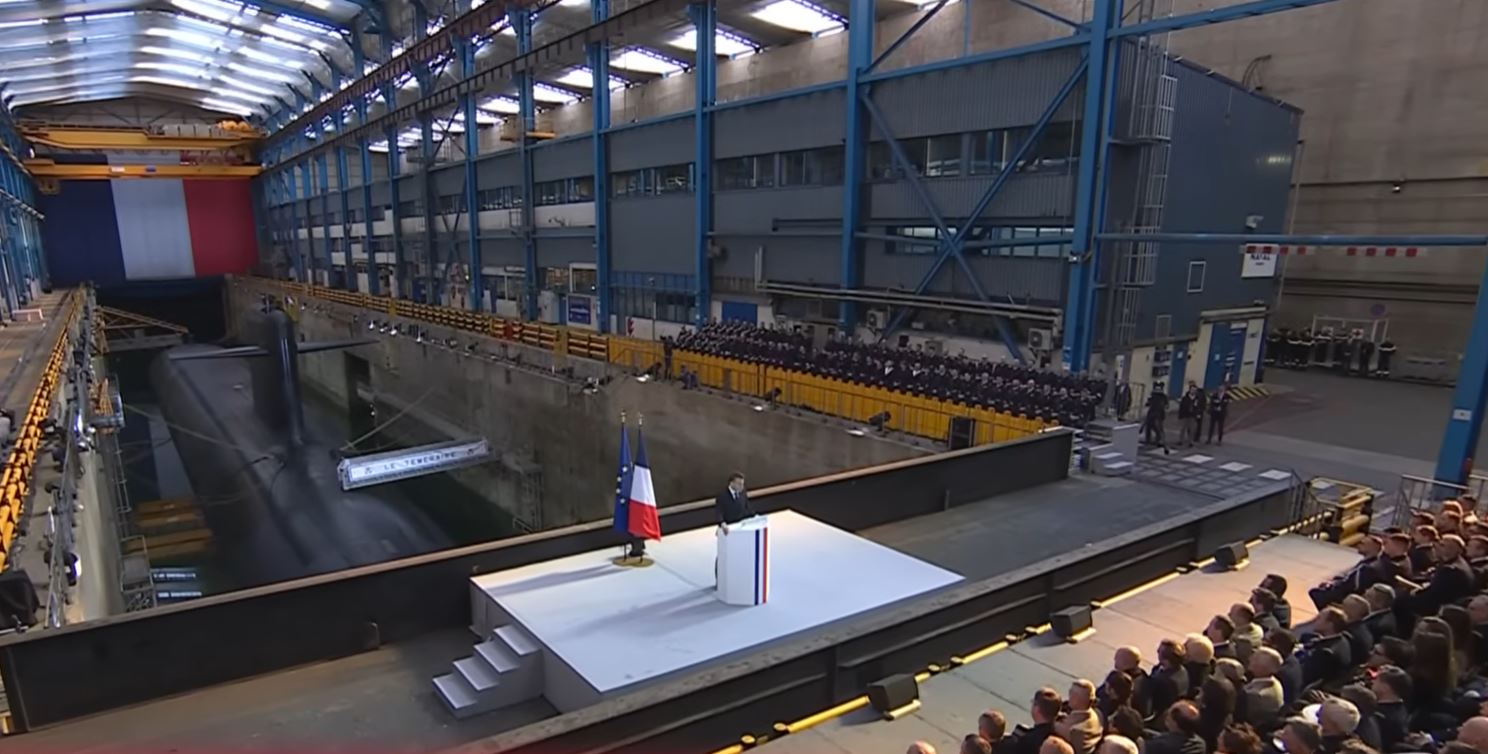
In a significant move that highlights France’s growing role in Europe’s defence landscape, President Emmanuel Macron has announced plans to expand France’s nuclear weapons capabilities. This includes increasing the number of nuclear warheads in the nation’s arsenal and constructing a new nuclear-capable submarine. The announcement, made during a speech at a naval base south of Brest, underscores the French government’s commitment to maintaining a robust deterrent amid the ongoing geopolitical tensions in Europe.
As part of this rearmament strategy, France is offering its European allies—including Sweden—the opportunity to participate in joint “deterrence exercises,” a critical component of an evolving security framework that reflects the shifting dynamics of global power. Prime Minister Ulf Kristersson of Sweden has expressed the country’s willingness to engage in these talks, emphasizing the importance of strengthening European defence cooperation in light of the current security challenges.
A Nuclear Arsenal Reinforced
President Macron outlined France’s updated nuclear strategy, which he said is directly tied to the growing security threats on the European continent, particularly following Russia’s invasion of Ukraine. The new policy will see an increase in France’s nuclear warhead stockpile, and, in a significant shift from previous transparency, the country will no longer publicly disclose the exact number of warheads it possesses.
“This is part of our broader strategy of advanced deterrence,” Macron said, adding that the updated strategy will not only bolster France’s defence capabilities but also serve as a powerful signal to potential adversaries. He also announced that France would be developing a new nuclear-capable submarine, further enhancing the country’s maritime deterrence.
Strengthening European Security
The French president highlighted the importance of a united European stance in the face of rising security threats. In his speech, Macron called for a collective European response, framing the nuclear rearmament as part of a broader effort to ensure the security and stability of the entire continent. He specifically mentioned the role of countries like Sweden, Denmark, Poland, Belgium, and the Netherlands in these deterrence exercises.
Sweden’s involvement is particularly notable, as it marks a deepening of ties between France and Nordic countries on matters of defence. Prime Minister Kristersson responded positively to France’s initiative, stating, “Sweden is prepared to participate in these important discussions aimed at strengthening the security of Europe in these uncertain times.” The Swedish government has stressed that while it advocates for a world without nuclear weapons, the current geopolitical climate—particularly Russia’s aggressive actions—necessitates a robust defence strategy.
France’s Strategic Dialogue with NATO Allies
The growing cooperation between France and its European allies is expected to extend beyond joint military exercises. Prime Minister Kristersson also revealed that France intends to initiate a comprehensive dialogue with several NATO countries, seeking to further integrate its nuclear capabilities into the broader European defence framework.
As tensions continue to mount, France’s proactive approach to strengthening its nuclear deterrence comes at a time when NATO and the European Union are recalibrating their defence priorities. Earlier this winter, France conducted its first-ever joint nuclear weapons exercises with the United Kingdom, another major nuclear power in Europe, signalling the emergence of a more cohesive European defence posture in the face of external threats.
A New Era of European Defence Cooperation
France’s nuclear rearmament is a direct response to the shifting security landscape in Europe, with a particular focus on the threat posed by Russia. By expanding its deterrence capabilities and offering its allies the opportunity to engage in joint exercises, France is signalling its commitment to safeguarding the security of Europe as a whole.
The next phase of France’s nuclear strategy will likely have far-reaching implications for European defence policy. The dialogue between France, Sweden, and other NATO members will play a crucial role in shaping Europe’s response to the challenges of the 21st century, with the nuclear question continuing to be a central theme in discussions about security, stability, and sovereignty in the region.
As the situation evolves, the business community, both within the Nordic region and globally, will be closely watching these developments. The geopolitical landscape of Europe is undergoing significant change, and France’s role in shaping that future will be one of the key factors in determining the region’s security and economic stability.