
New research reveals accelerating ice loss with profound implications for regional economies, global supply chains, and investment strategies
“There is no week of regret.” This stark warning from environmental professor Johan Rockström at the Potsdam Institute captures the urgency of new findings from European universities that show periods of extremely rapid melting on the Greenland ice sheet are becoming not just more common—but structurally transformative.
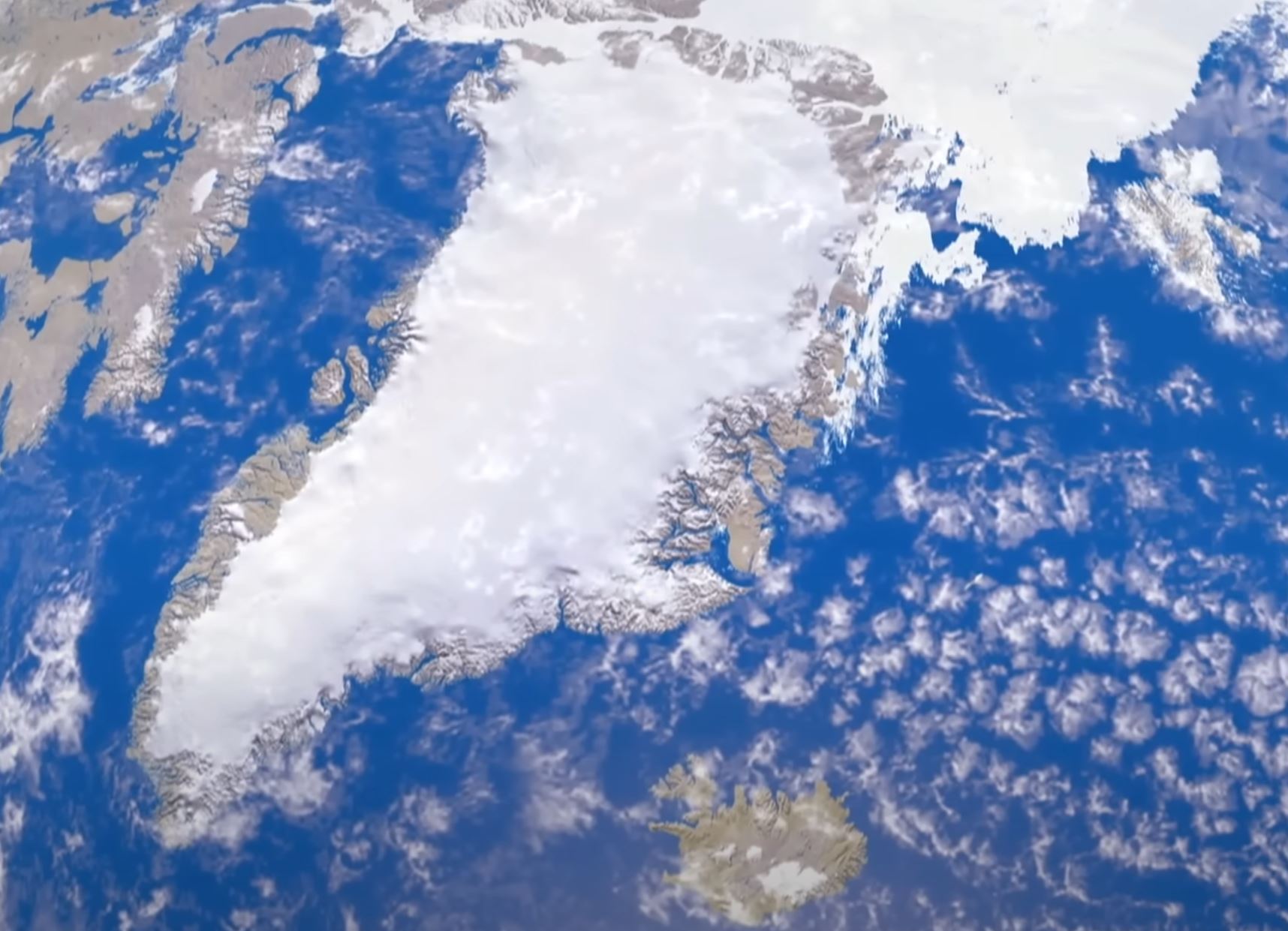
For Nordic business leaders, the implications extend far beyond environmental concern. The Greenland Ice Sheet (GrIS) is approaching a climate tipping point that will reshape maritime logistics, coastal real estate valuations, insurance markets, and Arctic investment opportunities across the region.
The Science: Faster Than Forecasted
The latest research reveals a disturbing acceleration. Scientists analysing extreme melting events from 1950–2023 found that thermodynamic processes now intensify meltwater production by 63% when compared to the 1950–1975 baseline, with northern Greenland experiencing the most severe increases.
Seven of the ten most extreme melting events have occurred since 2000. Record-breaking episodes in August 2012, July 2019, and July 2021 showed no historical precedents—indicating we have entered uncharted territory. Under high-emission scenarios, extreme meltwater anomalies could surge by +372% by 2100.
The mechanism is straightforward but self-reinforcing: higher temperatures transform reflective ice surfaces into dark meltwater that absorbs rather than reflects solar radiation. This albedo feedback loop means each melting event makes the next one more likely.
Current Update (2025): According to the Arctic Report Card 2025, the Greenland ice sheet lost 129 gigatons of mass in the 2025 balance year—less than the 2003–2024 average of 219 gigatons annually, but continuing the long-term trajectory of net loss. Critically, above-average snowfall temporarily masked underlying warming trends, while ice discharge actually exceeded historical averages. This volatility itself signals instability.
Critical Threshold: The +1.4°C to +2.3°C Danger Zone
Landmark research published in October 2025 identified a crucial tipping point: warming beyond +1.4°C triggers non-linear mass loss due to feedback mechanisms including melt-albedo effects and firn saturation. The jump from +1.4°C to +2.3°C warming produces a sea-level rise increase of 7.56 cm—far outpacing linear projections.
Most concerning for business planning: even stabilising temperatures at +2.3°C will not halt ice sheet decline. The research demonstrates that only by returning to climates colder than +2.3°C can we achieve stabilisation—and even then, at a reduced ice sheet state approximately 4% smaller than present.
With global warming already at approximately +1.1°C above pre-industrial levels and current policies tracking toward +2.5–2.9°C by 2100, the Nordic region faces a high probability of crossing this threshold within the operational lifespan of infrastructure being planned today.
Strategic Business Implications
1. Arctic Shipping: Opportunity and Peril
The melting ice is paradoxically opening new maritime routes while destabilising existing ones. The Northern Sea Route and potential trans-Arctic passages offer 40% shorter shipping distances between Europe and Asia—but increasingly unpredictable ice conditions, glacier calving events, and freshwater influx into the North Atlantic require sophisticated risk management.
Investment consideration: Port infrastructure in Iceland, Norway, and Greenland itself requires climate-resilient design standards that account for both increased accessibility and extreme weather volatility.
2. Sea-Level Rise: The Coastal Real Estate Reckoning
Greenland’s complete melting would raise global sea levels by approximately 7 meters. While complete collapse would take centuries, the +372% increase in extreme melt events projected by 2100 suggests acceleration beyond previous IPCC estimates.
Nordic exposure: Copenhagen, Oslo, Stockholm, and Helsinki all face significant coastal asset exposure. Danish insurance markets are already pricing climate risk into premiums; Norwegian sovereign wealth funds are divesting from coastal real estate in vulnerable zones.
3. The AMOC Slowdown Threat
Freshwater influx from Greenland melting threatens the Atlantic Meridional Overturning Circulation (AMOC)—the ocean current system that keeps Nordic temperatures 5–10°C warmer than equivalent latitudes elsewhere. Research suggests AMOC weakening could trigger regional cooling even as global temperatures rise, creating agricultural and energy demand shocks.
4. Greenland’s Economic Transformation
Greenland itself represents both risk and opportunity. The self-governing territory sits atop vast rare earth mineral deposits, hydrocarbon reserves, and newly accessible agricultural land. However, infrastructure investment must account for permafrost thaw, glacial lake outburst floods, and rapidly changing hydrology.
The AI and Early Warning Frontier
A significant development as of March 2026: the UK-led GIANT project (Greenland Ice/Ocean Interaction Network for the Arctic) is deploying machine learning and AI-enhanced climate models to build prototype early warning systems for rapid glacier change. This represents a crucial tool for business risk management—transitioning from reactive adaptation to predictive resilience.
The project aims to incorporate Greenland’s fjords into the UK Earth System Model, improving forecasting of freshwater export into the North Atlantic. For Nordic industries dependent on stable ocean conditions—fisheries, offshore energy, shipping—such predictive capacity offers competitive advantage.
The Investment Perspective
Short-term (2025–2030): Climate volatility creates arbitrage opportunities in Arctic logistics, cold-chain infrastructure, and climate adaptation technologies. Nordic engineering firms specialising in permafrost-resistant construction and hydrological management are positioned for growth.
Medium-term (2030–2050): Insurance and reinsurance markets will undergo structural transformation. The Task Force on Climate-related Financial Disclosures (TCFD) frameworks must incorporate ice-sheet tipping points into scenario analysis. Pension funds and institutional investors should stress-test portfolios against AMOC disruption scenarios.
Long-term (2050+): If warming exceeds +2.3°C without reversal, committed sea-level rise becomes unstoppable. Coastal asset depreciation curves will steepen dramatically. Conversely, successful mitigation maintaining +1.4°C warming preserves ice sheet stability and protects trillions in coastal infrastructure value.
Conclusion: Strategic Foresight Required
The research is unambiguous: we are approaching a threshold where Greenland’s ice loss becomes self-sustaining. For Nordic business, this is not merely an environmental issue—it is a material risk to supply chains, asset valuations, and regional competitive advantage.
The window for influencing outcomes is narrowing. The October 2025 study confirms that exceeding +2.3°C creates irreversible momentum, but also demonstrates that cooling after overshoot can still achieve partial stabilisation. This provides strategic clarity: every fraction of a degree matters, and adaptation investments must account for non-linear change.
Rockström’s warning bears repeating: there is no week of regret. In business terms, there is no quarter for retrospective risk assessment. The time for integrating ice-sheet science into capital allocation decisions is now.
What’s Next: Follow Our Coverage
In our next issue, Nordic Business Journal will publish an exclusive analysis on “Arctic Infrastructure 2.0: Engineering for the New North”—examining how Nordic construction, energy, and logistics firms are redesigning standards for a thawing Greenland. We will profile Greenland’s emerging mining sector, assess the viability of new Arctic ports, and investigate how Denmark, Norway, and Iceland are positioning as climate adaptation solution exporters.
Connect with us: Share your perspectives on how Greenland’s transformation is affecting your sector. Subscribe to our Arctic Business Briefing at www.nordicbusinessjournal.com/arctic or contact our editorial team at editor@nordicbusinessjournal.com to contribute to our ongoing coverage of climate-driven business transformation in the Nordic region.
Sources: Arctic Report Card 2025 (NOAA); Delhasse et al., The Cryosphere 2025; NASA GRACE-FO data; University of Stirling GIANT Project communications.