
Strategic Context: Why the March 2025 Oslo Summit Marks a Turning Point
The Arctic is no longer a frozen periphery—it has become the world’s most contested emerging economic frontier. As ice retreats and great power competition intensifies, the Nordic countries and Canada are moving from shared concern to strategic integration. The March 15, 2026 summit in Oslo represents the most significant deepening of Arctic cooperation in decades, occurring against a backdrop of unprecedented Canadian investment and shifting global security dynamics.
The Strategic Imperative: Climate change is warming the Arctic nearly three times faster than the global average, unlocking shipping routes, critical mineral deposits, and energy resources that great powers are actively positioning to exploit. Simultaneously, Russia’s militarization of its northern flank and China’s growing Arctic ambitions have transformed regional security calculations. The Nordic-Canadian partnership is responding with a coherence that signals a new phase in Arctic governance.
The Summit: From Diplomatic Ritual to Economic Architecture
The Oslo gathering brought together Nordic prime ministers—Norway’s Jonas Gahr Støre, Sweden’s Ulf Kristersson, Finland’s Petteri Orpo, Denmark’s Mette Frederiksen, and Iceland’s Kristrún Frostadóttir—with Canadian Prime Minister Mark Carney in his first international foray since taking office.
The Joint Commitment: The leaders issued a statement agreeing to “deepen cooperation between our countries to ensure the safety, security and sovereignty of our citizens, and to build the prosperous and sustainable economies of the future”. This language moves beyond traditional security framing to explicitly link defence with economic development—a crucial evolution for business readers.
Prime Minister Støre’s assessment captures the shift: “We are stronger together and we have discussed issues that are truly critical for all of us.” Meanwhile, Kristersson emphasized the need to become “more proactive and more forward-looking”.
What Changed: Unlike previous Arctic Council meetings focused on environmental cooperation, this summit explicitly addressed defence industrial capacity, critical minerals, and dual-use infrastructure. The inclusion of economic ministers alongside defence officials signals that Arctic security is now understood as inseparable from economic resilience.
Canada’s $40 Billion Arctic Transformation: The Economic Engine
The summit’s significance is amplified by Prime Minister Carney’s announcement just days earlier of a $40 billion comprehensive plan to defend, build, and transform Canada’s North—the largest Arctic investment in Canadian history.
Defence Infrastructure: $32 Billion Commitment
– Forward Operating Locations: Major upgrades to Yellowknife, Inuvik, Iqaluit, and 5 Wing Goose Bay, including airfield improvements, hangars, ammunition facilities, and fuel infrastructure
– Northern Operational Support Hubs: New hubs at Whitehorse and Resolute, plus support nodes at Cambridge Bay and Rankin Inlet, backed by $2.67 billion
– Arctic Over-the-Horizon Radar: $6.5 billion investment (in partnership with Australia) for early warning capabilities
Critical Infrastructure: Unlocking Economic Potential
The plan includes $10 billion in major projects now referred to Canada’s Major Projects Office for accelerated development by the early 2030s:
| Project | Strategic Value | Business Impact |
| Mackenzie Valley Highway | 800km all-season road connecting Yellowknife to Inuvik; reduces travel distance by 1,200km | Opens mineral-rich Dehcho, Sahtu, and Beaufort Delta regions; enables year-round resource exploration |
| Grays Bay Road & Port | First overland connection to deepwater Arctic Ocean port; 230km road to tidewater | Direct export route for critical minerals (copper, zinc, gold); dual-use civilian-military potential |
| Arctic Economic & Security Corridor | 400km road through Slave Geological Province linking to Grays Bay | Connects strategic mineral deposits to national highway network; creates 11,000 construction jobs |
| Taltson Hydro Expansion | Adds 60MW capacity, doubling NWT hydro power; connects North/South Slave grids | Clean energy for communities and industrial development; reduces diesel dependency by 240,000 tonnes annually |
The Business Implication: These projects represent not just Canadian development, but potential integration points with Nordic technology, engineering, and investment. Norway’s sovereign wealth fund ($3.5 trillion) and Nordic defence industrial capabilities position these nations as natural partners in implementation.
Defence Industrial Collaboration: Concrete Opportunities
The summit advanced specific procurement partnerships that create immediate business opportunities:
- Kongsberg Vanguard Partnership:
A joint venture between Norwegian firms Kongsberg Defence & Aerospace and Salt Ship Design, plus Ottawa-based Adaptive Marine Solutions Inc., recently secured a $9.6 million contract to design Canadian Coast Guard mid-shore multi-mission vessels under Canada’s National Shipbuilding Strategy.
- Canada’s Defence Industrial Strategy:
Carney highlighted Canada’s $6.6 billion Defence Industrial Strategy, including the new Defence Investment Agency to accelerate capability delivery and strengthen allied supply chains. The proposed Defence, Security and Resilience Bank aims to mobilise financing at scale for joint procurement among NATO allies.
- Nordic Access to SAFE:
Canada officially joined the EU’s Security Action for Europe (SAFE) initiative in February 2026, creating pathways for Nordic defence contractors to participate in North American procurement.
The Security Context: Cold Response 26 and Russian Signalling
The summit occurred during NATO’s Cold Response 26 exercise (March 9-19, 2026), involving 25,000 troops from 14 nations conducting Arctic warfare training across northern Finland, Norway, and Sweden.
Strategic Significance: This is the first Cold Response exercise fully integrated under Arctic Sentry, NATO’s new enhanced vigilance activity dedicated to Arctic defence. The exercise emphasizes “total defence”—integrating civilian infrastructure preparedness with military operations, reflecting Norway’s designation of 2026 as the “year of total defence”.
Russia’s Response: Moscow issued missile launch warnings in the Barents Sea (March 11-13) overlapping the exercise area—its second such warning in two weeks. Thomas Nilsen, editor of The Barents Observer, characterised this as “military signalling” rather than genuine threat, noting Russia’s pattern of responding to NATO Arctic exercises with demonstrations of force.
Geopolitical Reality Check: While some assets were redirected due to escalating tensions with Iran—including the French Charles de Gaulle carrier strike group and certain U.S. F-35s—the exercise demonstrates NATO’s commitment to Arctic readiness despite global competing demands.
Critical Minerals: The Economic Foundation of Security Cooperation
Beneath the security rhetoric lies a compelling economic driver: the Arctic contains vast deposits of critical minerals essential for the energy transition and defence technologies.
Canada’s Position: The Northwest Territories and Nunavut host significant copper, zinc, gold, and rare earth element deposits. The Grays Bay Road and Arctic Corridor projects specifically target unlocking these resources for global markets.
Nordic Complementarity: Norway’s advanced offshore technology, Swedish mining expertise, and Finnish battery mineral processing capabilities create natural supply chain synergies with Canadian raw material extraction.
The Strategic Logic: As Western nations seek to reduce dependence on Chinese critical mineral supply chains, Arctic deposits—developed through Nordic-Canadian partnerships—offer a politically secure alternative. The summit’s emphasis on “building the prosperous and sustainable economies of the future” directly references this decoupling imperative.
Analysis: Three Strategic Implications for Business Leaders
1. Infrastructure Investment Wave
The $40 billion Canadian commitment, combined with NATO’s Arctic Sentry framework, signals a decade-long infrastructure build-out. Nordic engineering firms, defence contractors, and logistics providers should position for procurement opportunities in polar construction, cold-weather technology, and dual-use facilities.
2. Critical Minerals Supply Chain Formation
The integration of Canadian extraction with Nordic processing and European manufacturing is creating a new Arctic supply corridor. Early movers in transportation, logistics, and mineral development will shape standards and relationships.
3. Defence Industrial Integration
The Kongsberg Vanguard model—combining Norwegian technology with Canadian procurement—represents a template for transatlantic defence partnerships. As both Canada and Nordic nations increase defence spending toward 2%+ of GDP, joint ventures offer scale advantages and market access.
Challenges and Considerations
Indigenous Partnership Requirements: Both Canadian and Nordic Arctic development increasingly requires genuine Indigenous partnership, not just consultation. The Taltson Hydro project involves NWT Métis Nation, Akaitcho Dene First Nations, and Salt River First Nation as collaborative partners—a model that adds complexity but ensures social licence.
Environmental Constraints: Arctic infrastructure faces unique environmental challenges. Permafrost thaw, extreme weather, and ecological sensitivity require specialized engineering approaches and extended timelines.
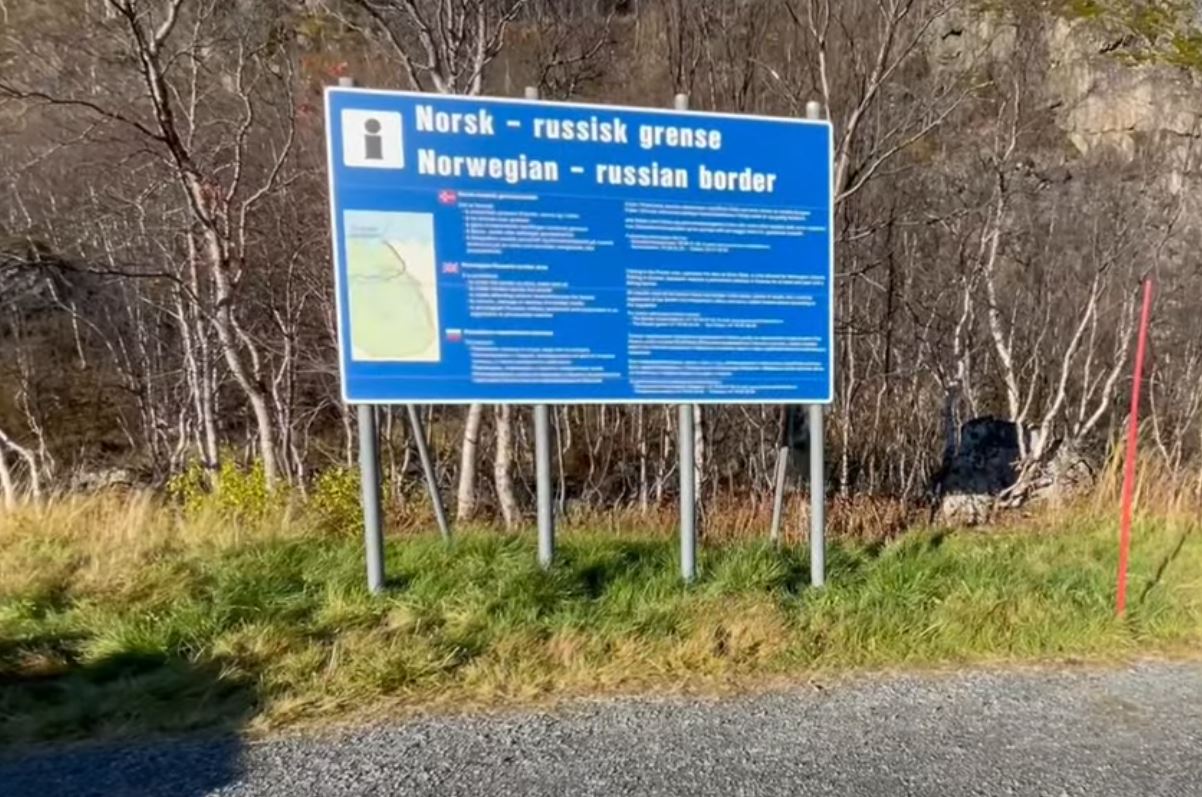
Geopolitical Risk: While Russia’s current focus remains on Ukraine, its Arctic military capabilities continue to develop. The Barents Sea missile warnings demonstrate that economic development will occur alongside sustained military tension.
Conclusion: A New Arctic Economic Zone Emerges
The Nordic-Canadian summit marks the transition from Arctic cooperation as diplomatic aspiration to integrated economic-security architecture. With $40 billion in Canadian investment, NATO’s Arctic Sentry operational framework, and explicit linkages between defence procurement and resource development, the High North is becoming a defined economic zone with distinct governance structures.
For business leaders, this represents a generational opportunity in infrastructure, critical minerals, defence technology, and sustainable development—provided they understand that success requires navigating security imperatives, Indigenous partnerships, and extreme environmental conditions simultaneously.
The Arctic is warming. The competition for its resources and strategic position is heating up correspondingly. The Nordic-Canadian alliance is positioning to ensure that this competition occurs within a framework of shared values and mutual economic benefit.
Next in Our Arctic Series: “Arctic Investment Routes: Mapping the $100 Billion Infrastructure Pipeline” — An exclusive analysis of procurement timelines, joint venture structures, and regulatory pathways for Nordic businesses entering the Canadian Arctic market. We examine the Major Projects Office acceleration process and identify immediate opportunities in transportation, energy, and telecommunications infrastructure.
Connect with Nordic Business Journal: Follow our Arctic coverage at [website] and join the conversation using ArcticBusiness. For editorial inquiries or to contribute expert analysis, contact our Arctic Affairs desk at [email].
Published March 2026 | Analysis based on official government releases, NATO statements, and expert interviews