
How a routine Arctic exercise escalated into NATO’s most serious crisis in decades—and what it means for Nordic security and business resilience
Preparing for the Unthinkable: Danish Forces Ready for a U.S. Confrontation
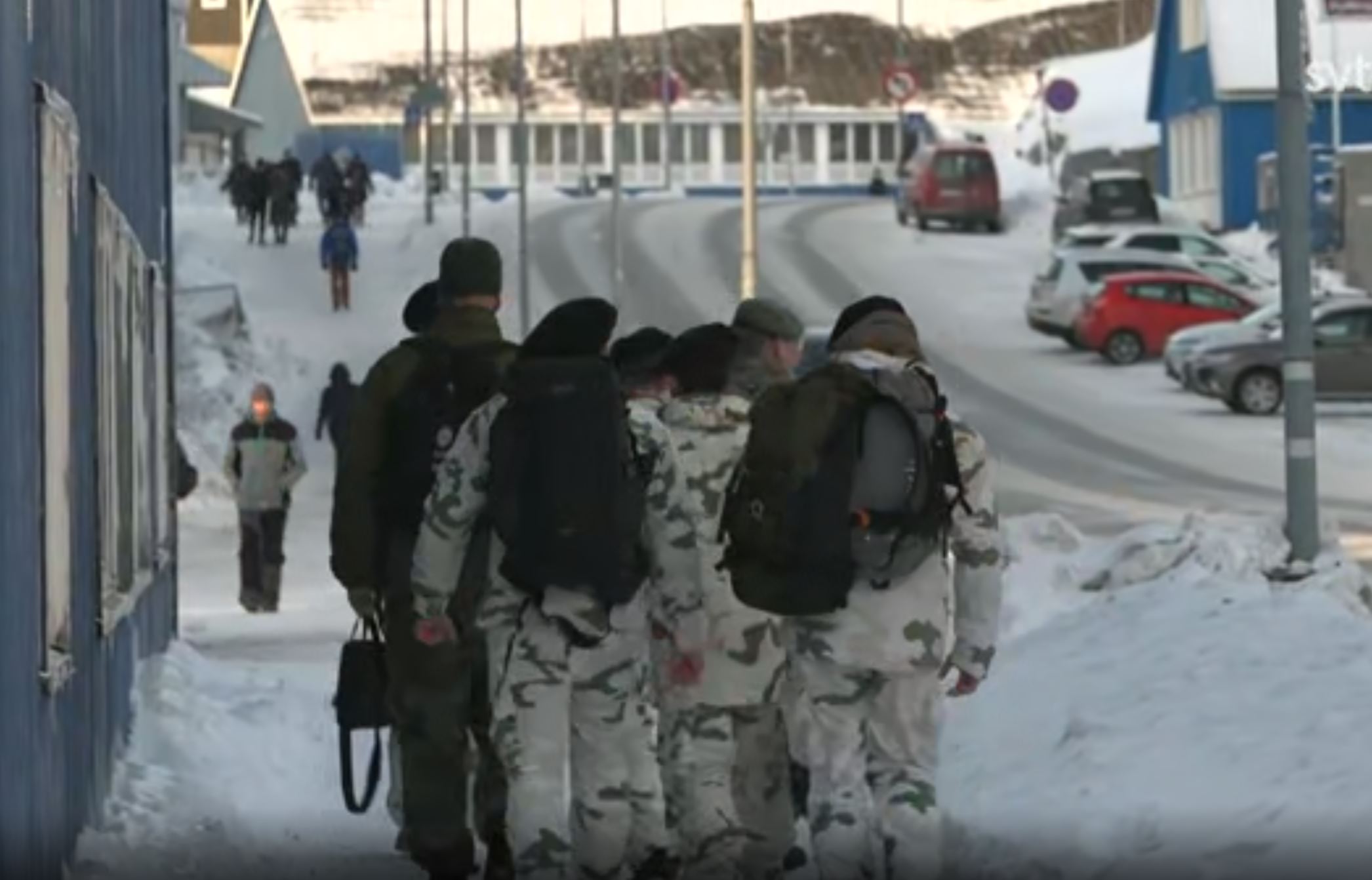
In January 2026, the Danish military carried out its most extraordinary mobilisation since the Nazi invasion of 1940. Under the guise of a routine Arctic exercise, Danish troops transported live ammunition, explosives, and medical supplies to Greenland—not to counter Russian aggression, but to prepare for a scenario once thought unimaginable: a possible military confrontation with the United States.
Danmark’s Radio (DR) revealed that the operation, officially called “Arctic Endurance”, was in reality a high-stakes deterrence mission. It was triggered by President Donald Trump’s repeated refusal to rule out military action to annex the autonomous territory. A Danish defence official described the situation as historic: “We have not faced anything like this since April 1940.”
The preparations were stark and deliberate: troops were stationed in Nuuk with live ammunition, explosives were positioned to deny American forces access to Greenlandic runways, and blood supplies were readied for potential casualties. This was far from routine contingency planning—it was active preparation for conflict with a treaty ally.
From Venezuela to Greenland: How the Crisis Escalated
The situation intensified after the U.S. conducted a military operation in Venezuela on January 10, 2026. Following this, Trump declared, “We’re going to do something on Greenland, whether they like it or not,” sending shockwaves through Copenhagen.
Danish Prime Minister Mette Frederiksen responded decisively: “If the United States chooses to attack another NATO country militarily, then everything stops. That includes our NATO commitments and the security guarantees we have relied upon since the end of World War II.”
On January 15, 2026, Denmark launched Arctic Endurance, deploying approximately 150 troops alongside 39 personnel from Sweden, Norway, Germany, France, the Netherlands, Finland, and the United Kingdom. France prepared to send hundreds more, while Germany contributed reconnaissance specialists. The multinational composition was strategic: any attack on Greenland would be viewed as an attack on multiple NATO nations, raising the stakes significantly.
Business Implications: Navigating a New Geopolitical Reality
For Nordic businesses, the crisis exposed fundamental vulnerabilities in the transatlantic security framework that has underpinned commerce for decades.
1. Supply Chain and Critical Infrastructure Risks
Greenland is increasingly vital for rare earth minerals, essential for green technologies and defence industries. Trump’s interest in Greenland’s resources, combined with threats of tariffs on European allies, created unprecedented supply chain uncertainty. Danish intelligence formally labelling the U.S. as a potential security threat signals that companies must now plan for scenarios where allies could become adversaries.
2. NATO’s Credibility Under Question
The crisis forced a reassessment of NATO’s collective defence principle. Former NATO Defence College head Arne Bård Dalhaug called Trump’s threats “a gift-wrapped present for Putin,” potentially undermining NATO’s deterrent effect. European analysts now openly discuss the alliance’s fragility, with EU Commissioner Andrius Kubilius warning that a U.S. attack on Greenland could effectively dismantle NATO.
3. Nordic Defence Investments Surge
Denmark committed DKK 3.2 billion to Arctic defence in 2026, including plans for permanent multinational bases. Sweden’s participation—despite its recent NATO membership—demonstrates regional solidarity while highlighting vulnerability to great-power competition. Swedish officials insist their involvement was purely to deter Russia, but the underlying anxiety about alliance reliability is evident.
4. Diplomacy Fails Where Territory Is at Stake
European leaders tried offering Trump “everything but territory”: increased troop access, enhanced NATO Arctic presence, and joint investment partnerships. This strategy failed, signalling that conventional diplomatic and economic incentives may no longer deter territorial ambitions. Businesses must now factor in higher political risk premiums when operating across the Atlantic.
Temporary Truce or Tactical Pause?
At the World Economic Forum on January 21, 2026, Trump reversed course, pledging no military action or tariffs against Denmark after discussions with NATO Secretary General Mark Rutte. Yet intelligence warnings suggest the crisis could reignite. Trump later appointed Louisiana Governor Jeff Landry as a special envoy to Greenland, tasked with pursuing U.S. control of the territory.
While Denmark’s military stood down from its highest alert, the trust deficit remains. Former CIA Director John Brennan noted a growing “sense of shame” among Americans, while European allies increasingly view the U.S. as a potential threat rather than a security guarantor.
Strategic Takeaways for Nordic Businesses
The Arctic as a Strategic Battleground
Climate change is opening new shipping routes and resource access in the Arctic, turning it into a contested economic zone. Trump’s insistence on full control underscores the growing geoeconomic stakes.
Accelerated European Strategic Autonomy
With U.S. reliability in question, Nordic businesses should anticipate stronger European defence integration, including joint procurement, shared satellite systems, and reduced dependence on American technology and security guarantees.
Legal and Reputational Risks
Companies with U.S. defence contracts or Arctic operations now face complex compliance environments. Denmark’s experience demonstrates that even allies can abruptly impose military and economic pressures simultaneously.
Greenland’s Political Position
Greenland’s government has firmly rejected U.S. overtures. Prime Minister Jens-Frederik Nielsen affirmed that Greenland “chooses Denmark.” Yet, the suspension of independence discussions highlights ongoing political and regulatory uncertainty.
Nordic Business Journal
This article is part of our ongoing coverage of Arctic security transformation. Upcoming coverage will explore the economic implications of European strategic autonomy, including changes to defence budgets, critical mineral supply chains, and transatlantic trade relationships. To receive early access and join our executive briefing network, subscribe at info.
Sources: Danmark Radio, AP, Danish Defence Intelligence Service, NATO official statements, Danish Ministry of Defence
Published: March 19, 2026