
Statistics Sweden’s latest release showed Sweden’s GDP stalled in February after two months of decline: output was unchanged month-on-month when markets had been expecting a pickup, following a notable 1.1% contraction the month before. On an annual basis growth was modest (around the low single digits). The short summary: momentum is weak, and the near-term outlook remains cloudy.
Why the slowdown matters
Sweden is not isolated: Europe’s muted growth, China’s uneven rebound and higher global interest rates have combined to sap demand for exports and investment. But several Sweden-specific dynamics amplify the slowdown:
– Monetary policy lag. The Riksbank’s aggressive tightening since 2021–2023 to quell inflation has raised borrowing costs for households and firms. The policy moves worked to lower inflation, but the lagged impact on consumption and housing investment is now showing up as weaker GDP.
– Housing and construction. After years of strong building, residential construction activity has slowed sharply amid higher mortgage rates and falling prices in some markets, removing an important growth engine.
– Household purchasing power. Real disposable incomes remain under pressure despite easing inflation trends: wage growth has not fully caught up and higher debt-servicing costs squeeze consumption.
– External demand headwinds. Germany and other European trade partners face sluggish growth; Sweden’s export-dependent manufacturing—automotive and heavy industry—has seen volatile order books.
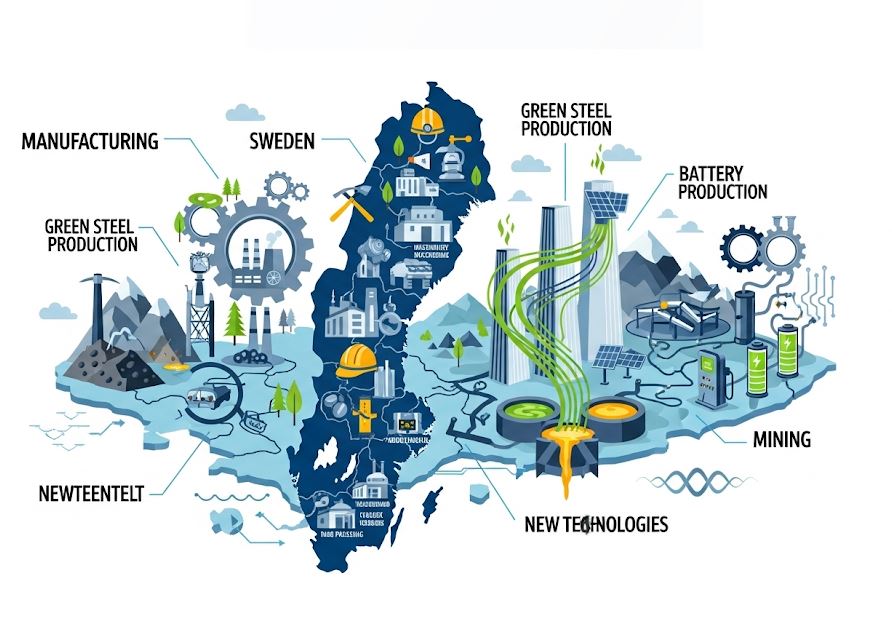
– Structural shifts. Energy-intensive industries are adjusting to Sweden’s rapid green transition (electrification, higher electricity demand) and investment cycles tied to new exports (e.g., batteries, data centres) create both opportunities and interim dislocations.
What this means for Nordic business leaders and investors
1. Plan around a lower-growth baseline. Expect modest GDP growth in the near term rather than a quick rebound. Companies should stress-test plans for weaker revenue paths and tighter financing conditions.
2. Protect cashflows and liquidity. Higher interest rates, even if easing later, make working capital and refinancing risk real. Build 12–18-month liquidity cushions, extend debt maturities where possible and tighten credit controls.
3. Prioritise productivity-enhancing capex. With broad capex budgets under pressure, focus investment on automation, digitalisation and energy efficiency that lower unit costs and improve margins.
4. Reconsider market and customer mix. Exporters should diversify beyond cyclical markets and deepen offerings in service-based exports (software, engineering services) which are less capital intensive and more resilient.
5. Use FX and interest-rate hedges strategically. The krona’s volatility and rate differentials can affect margins; hedging policies should be dynamic and reviewed against scenario plans.
6. Seek opportunities created by the slowdown. Distressed assets, consolidation in fragmented sectors, and government-supported green projects can present M&A and growth opportunities for well-capitalised firms.
7. Follow labour and skills mismatches. Despite softer growth, labour shortages persist in tech, healthcare and construction niches. Invest in retraining and flexible hiring models to fill capability gaps.
Policy outlook — what to watch
– Riksbank trajectory: If inflation continues to decline sustainably, the Riksbank could pivot to rate cuts later in 2025–2026, which would ease households and revive housing demand. Conversely, any unexpected inflation resurgence (commodity shocks, wage pressures) would keep policy restrictive longer.
– Fiscal space: Sweden’s relatively strong public finances give the government room for targeted support (training, green subsidies) rather than broad stimulus. Expect more targeted supply-side measures than large demand packages.
– EU and global growth: External demand is a key wildcard. Improved growth in the euro area and stronger China demand would materially lift Sweden’s export cycle.
Scenarios to prepare for
– Baseline: Slow, uneven recovery with sub-par growth for the next 6–12 months; gradual Riksbank easing later in the cycle.
– Downside: Global slowdown triggers deeper export weakness, a prolonged housing correction and corporate investment retrenchment.
– Upside: Faster disinflation and a coordinated recovery in Europe and China boost exports and industrial capex, accelerating a rebound.
Practical short checklist for executive teams
– Update cashflow forecasts monthly under at least three macro scenarios.
– Prioritise projects with payback <36 months; freeze marginal capex.
– Re-negotiate supplier and customer payment terms to improve working capital.
– Run an FX/interest-sensitivity review with the CFO and treasury.
– Map talent gaps and start targeted recruitment or reskilling in priority areas.
Sweden’s recent GDP stagnation is a warning signal, not a terminal diagnosis. The country’s strong institutions, diversified industrial base and leadership in green tech give it the tools to adapt. But the near-term environment is one where careful financial management, targeted investment in productivity, and export diversification will determine which firms emerge stronger.
Where we go next
In our next piece we will take a deep dive into the Swedish household sector and the housing market: how mortgage stress, savings buffers and regional price dynamics interplay with consumer spending. If your organisation would like a tailored briefing or to contribute data and perspective to our reporting, connect with Nordic Business Journal at editorial@nordicbusinessjournal.com or via LinkedIn/NBJ. We welcome reader questions and topic suggestions for upcoming issues.