
Analysis | Infrastructure Investment | Nordic Mobility
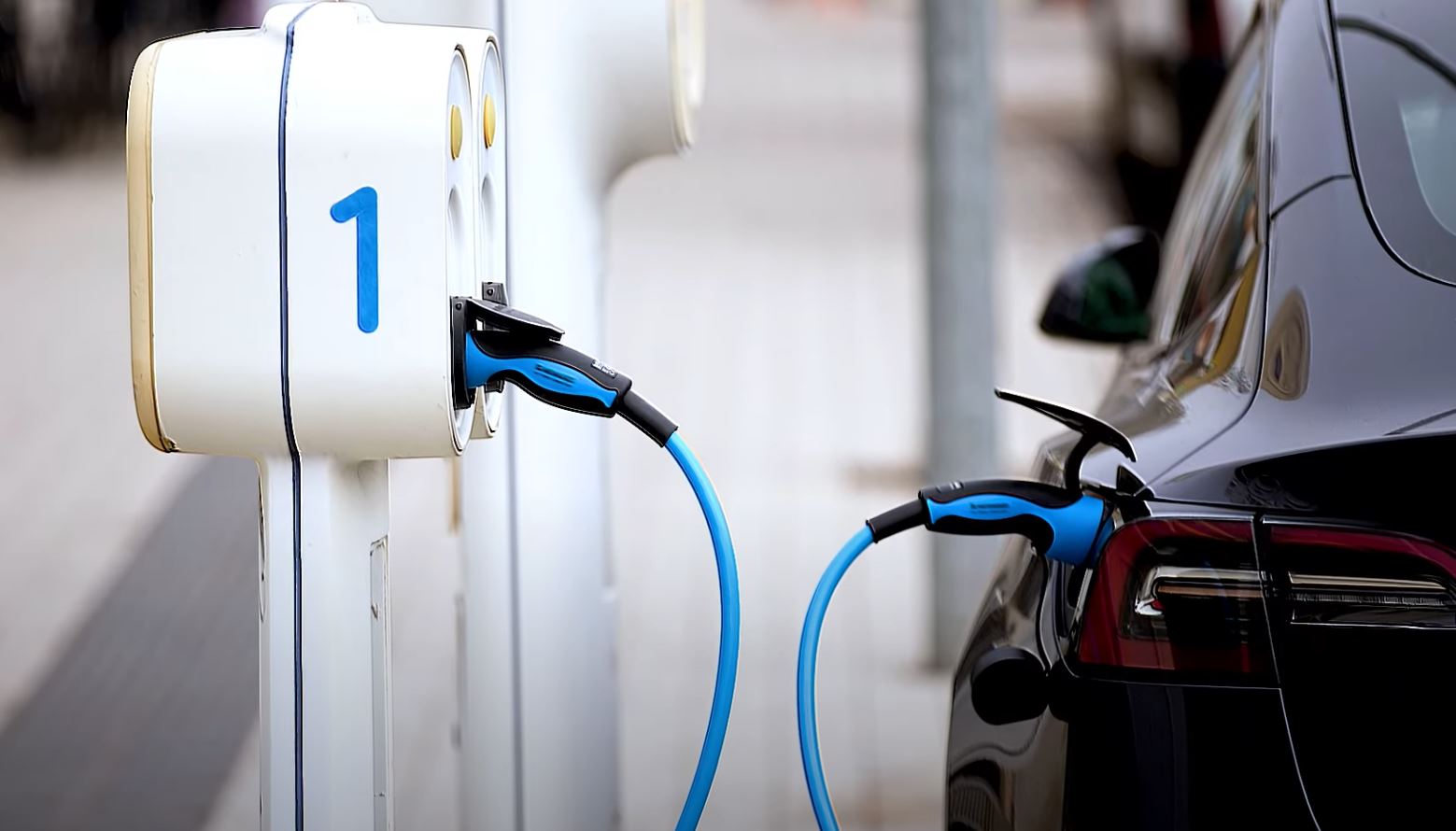
Sweden’s electric vehicle charging infrastructure tells a story of ambition meeting reality. Fast-charging stations built during the height of EV optimism now sit idle approximately 92% of the time, according to Swedish Energy Agency data compiled for Swedish Television (SVT). Yet beneath this apparent failure lies a more nuanced transition—one that reveals critical lessons for Nordic business leaders navigating the electrification economy.
The Investment Bet That Outpaced Demand
When electric vehicle sales surged in the early 2020s, fuel retailers and infrastructure operators positioned themselves for a transportation revolution. Circle K, among others, made substantial bets on rapid charging expansion based on compelling forecasts.
“We saw that electric car sales would increase. In the forecasts, 2025 was the magic year when many saw a tipping point, where electric cars would have the same or lower purchase price than gasoline and diesel cars. Then it would take off even more,” explains Jenni Alterling, Product Manager for Charging at Circle K.
The arithmetic seemed straightforward: 660,000 electric vehicles would populate Swedish roads by 2025. The reality proved more modest—approximately 430,000 EVs are currently registered, representing a 35% shortfall from projections.
Policy Whiplash and Market Stagnation
The divergence between infrastructure supply and vehicle demand stems largely from abrupt policy shifts. The Swedish government’s removal of the General Electric car bonus in November 2022, combined with reduced fuel taxes and weakened biofuel blending requirements, fundamentally altered the total cost of ownership equation for consumers.
The consequences were immediate and persistent. After peaking at 81,795 units in 2023, battery electric vehicle registrations declined 10.2% in 2024. For three consecutive years, pure electric vehicles have maintained a stagnant 36% share of new car sales—a plateau that stands in stark contrast to Nordic neighbours. Denmark has accelerated to 82% BEV market share, while Norway approaches universal electrification at 96%.
The Utilisation Crisis: A Closer Look
The 8% average utilisation rate recorded during weeks 3-6 of this year falls dramatically below the 20% threshold typically required to justify continued network expansion. This metric, however, masks significant geographic variation that offers strategic insight for operators.
“Several gas stations in the Stockholm area are being used as much as intended,” notes Alterling, highlighting that location strategy—not merely capacity—determines success. Urban density and traffic patterns create natural demand clusters that rural highway installations cannot replicate.
The infrastructure overbuild presents both immediate challenges and longer-term opportunities. With public charging points growing 38% in 2025 to reach 58,138 total points nationwide—including 10,571 rapid chargers—the network now exceeds current demand. Yet this capacity may prove prescient as market dynamics shift.
The Recovery Horizon: Signs of Market Recalibration
Current data suggests Sweden’s EV market is stabilizing rather than stagnating. Full-year 2025 registrations reached approximately 99,723 battery electric vehicles, representing a 5.7% increase over 2024. More significantly, combined plug-in vehicles (BEVs and PHEVs) captured 61% of new registrations, indicating sustained consumer interest in electrification despite policy headwinds.
Economic fundamentals are shifting in favour of renewed growth. Sweden’s economy is projected to expand 1.6% in 2025, accelerating to 2.6% in 2026, with inflation declining toward the 2% target. Minister of Energy and Enterprise Ebba Busch anticipates these macroeconomic improvements will translate into accelerated EV adoption.
Perhaps most consequential for future demand: Sweden will introduce a targeted BEV subsidy in 2026, offering up to SEK 64,800 for lower-income households. This represents a strategic pivot from universal incentives to equity-focused policy—addressing the upfront cost barrier that has constrained working-class adoption while maintaining market momentum.
Strategic Implications for Charging Operators
The current oversupply creates a Darwinian environment for Charging Point Operators (CPOs). As Roland Berger analysts observe, “focus will shift to differentiating via quality, uptime and location, rather than pure expansion”.
Price competition is intensifying markedly. Charging rates for 150+ kW infrastructure range from SEK 1.80 to SEK 6.80 per kWh—a spread that reflects both operational efficiency disparities and strategic positioning among operators. This compression will likely accelerate market consolidation.
Forward-thinking operators are already pivoting toward experiential differentiation. Circle K’s Gothenburg installation—featuring ultra-fast chargers exclusively alongside convenience retail—represents a template for transforming charging stops from utilitarian necessities into destination experiences.
The Fleet Transformation Wildcard
While passenger vehicle electrification has disappointed projections, commercial vehicle adoption is exceeding expectations. Heavy-duty electric truck registrations surged to 391 units in 2025, up 6% year-over-year, now comprising 19% of new heavy truck sales. The Swedish Energy Agency has responded with SEK 600 million in dedicated funding for truck charging infrastructure.
This segment offers fundamentally different economics. Fleet operators prioritise predictable depot charging and corridor reliability over consumer convenience, creating opportunities for specialised infrastructure providers. The expansion from 60 to 250 truck charging stations by year-end, with 1,000 targeted by 2030, represents a parallel infrastructure buildout with distinct operational requirements.
Nordic Comparative Analysis: Lessons from the Frontier
Sweden’s experience contrasts instructively with Norway’s trajectory. Despite Norway’s 93% EV sales penetration, its charging infrastructure has grown just 5% annually—creating 34 EVs per public charging point versus Sweden’s improving ratio of 15:1. Norway’s reliance on home charging (73% of miles versus Sweden’s 62%) has constrained public infrastructure development, suggesting Sweden’s current overcapacity may ultimately prove advantageous as apartment-dwelling urbanites—who lack home charging access—transition to electric mobility.
Denmark’s remarkable acceleration to 82% BEV market share (+17 percentage points year-over-year) demonstrates that policy consistency and purchase incentives remain powerful levers when maintained . Sweden’s intermittent approach has created demand volatility that complicates infrastructure planning.
Investment Outlook: Beyond the Utilization Gap
The 92% idle rate, while alarming superficially, must be contextualised within infrastructure lifecycles. Charging networks are long-duration assets; utilisation curves typically follow S-patterns as vehicle adoption accelerates. Current underutilisation represents a capital efficiency challenge rather than a stranded asset crisis—provided operators can sustain operations through the trough.
Critical variables determining sector profitability include:
– Residential charging penetration: With 51% of Swedes in detached housing capable of home charging, public infrastructure serves a specific urban and transient need
– Fleet electrification timing: Commercial vehicle charging offers higher utilization potential and contracted revenue streams
– Interoperability and payment friction: EU Alternative Fuels Infrastructure Regulation compliance is reducing barriers to network access
– Grid integration capabilities: Smart charging and vehicle-to-grid technology may transform idle capacity into grid stabilisation assets
Conclusion: The Infrastructure Paradox Resolved
Sweden’s empty charging stations represent neither failure nor excess, but rather the necessary overbuild preceding mass adoption. The 430,000 electric vehicles on Swedish roads—while below forecasts—constitute a foundation that will likely expand substantially as economic conditions improve and targeted subsidies take effect.
For business leaders, the imperative is clear: location quality, operational excellence, and diversified revenue streams will separate viable operators from casualties in the consolidation phase. The charging infrastructure built during the boom years will ultimately find its demand—the question is which operators will survive to serve it.
Next in Our Series: The Fleet Electrification Opportunity—How Commercial Vehicle Charging Is Reshaping Nordic Infrastructure Economics
Follow Nordic Business Journal for continuing coverage of the electrification transition. Connect with our editorial team at editor@nordicbusinessjournal.com and join the conversation on LinkedIn.
Published April 2026 | Analysis