
A Critical Analysis of Data Privacy Failures in Nordic Banking
The Breach: What Happened
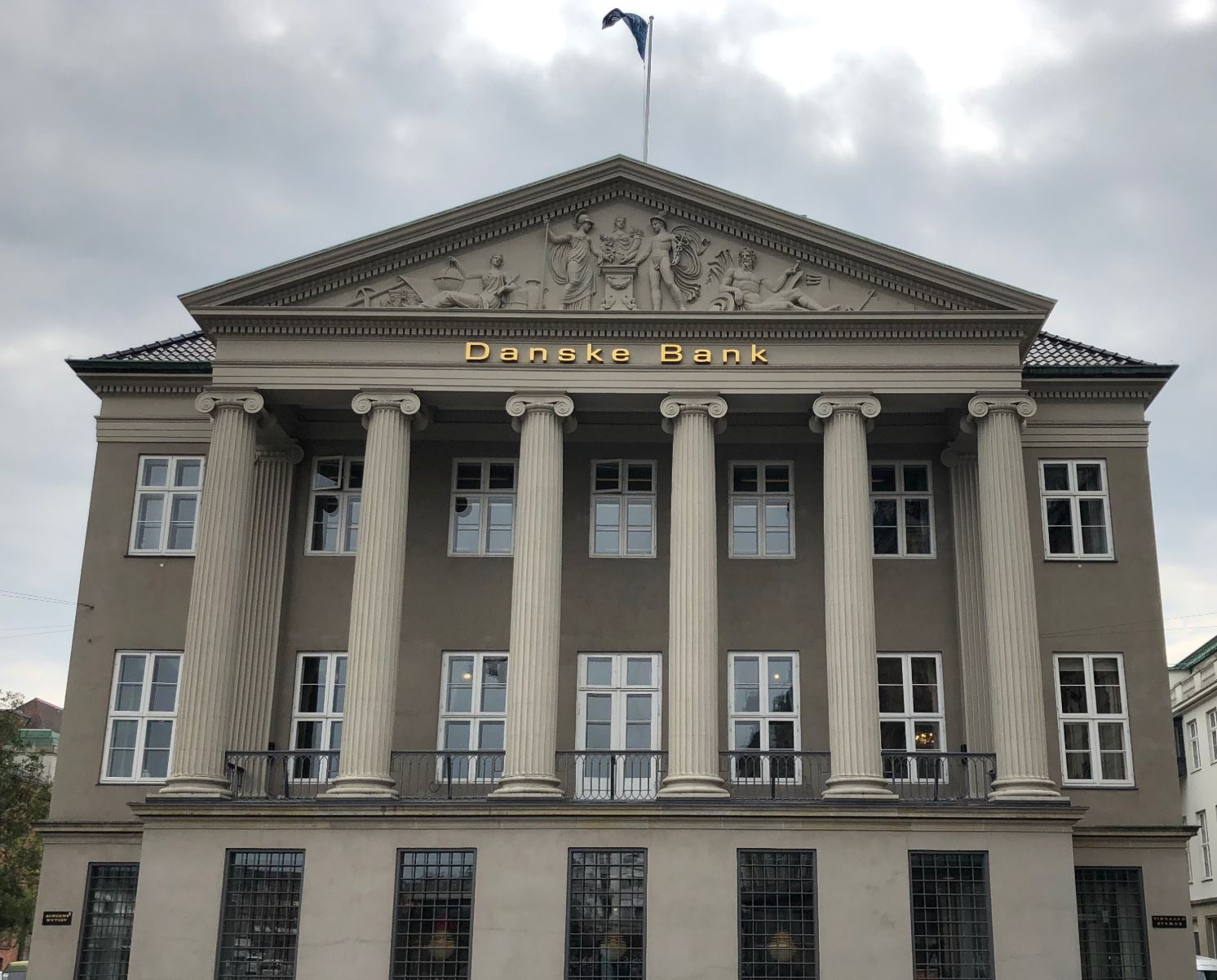
Danske Bank, Denmark’s largest financial institution, has disclosed a serious data privacy incident affecting 20,600 customers with protected addresses—individuals who have specifically requested confidentiality due to safety concerns, often victims of domestic violence, stalking, or high-profile individuals requiring privacy.
The breach occurred during a three-month period in early 2025 (January through March), when a system error in the bank’s domestic payment infrastructure caused protected addresses to be visible to payment recipients. When customers with confidential addresses transferred money, recipients could view the sender’s full address details in the payment information—directly contradicting the bank’s privacy obligations.
Danske Bank discovered the error in October 2024 (during system testing), but delayed customer notification until April 2026—nearly six months later. The bank’s justification: preventing further exposure by avoiding system changes that might trigger additional data leaks during the remediation process.
Strategic Analysis: Why This Matters
1. The Trust Deficit in Nordic Banking
This incident strikes at the heart of a fundamental value proposition in Nordic banking: trust. The Nordic region has historically positioned itself as a global benchmark for data protection and digital security. Yet this breach reveals a troubling pattern.
Danske Bank’s explanation for the notification delay—to “avoid further exposure”—raises serious questions about incident response protocols. While technical caution is prudent, GDPR mandates breach notification within 72 hours to supervisory authorities (with justification for delays) and “without undue delay” to affected individuals. A six-month delay to customers stretches the boundaries of regulatory compliance and customer care.
2. Regulatory Pressure Intensifies
This breach arrives at a critical inflection point for European banking regulation. The Digital Operational Resilience Act (DORA) came into force in January 2025, establishing strict requirements for ICT risk management, incident reporting, and resilience testing. Simultaneously, the NIS2 Directive expands cybersecurity obligations across critical infrastructure.
For Danske Bank, this incident is particularly problematic given its history of GDPR violations. In 2022, the Danish Data Protection Agency (Datatilsynet) fined the bank €1.3 million (DKK 10 million) for failing to demonstrate compliant data deletion processes across 400+ systems. The authority specifically noted that Danske Bank “violated one of the basic principles of the General Data Protection Regulation” regarding storage limitation.
3. The “Protected Address” Paradox
The affected customers represent a vulnerable demographic. In Denmark, “protected address” (beskyttet adresse) status is granted to individuals facing genuine safety threats—domestic violence survivors, stalking victims, witnesses in criminal cases, and public figures requiring security measures.
The exposure of these addresses creates asymmetric risk: while the breach may seem minor technically (addresses visible only to payment recipients), the consequences for affected individuals could be severe. A domestic violence survivor whose address becomes visible to an abuser faces existential safety risks, not mere inconvenience.
This raises questions about data minimization and privacy by design—core GDPR principles that require systems to process only necessary data and embed privacy protections from inception.
4. Nordic Banking’s Cybersecurity Landscape
The Danske Bank incident must be viewed within a broader regional context. In September 2024, Nordea suffered what its Head of Information Security described as the “largest DDoS attack in the bank’s history”—400 coordinated attacks over 40 days using approximately 15 different attack techniques. The attackers targeted not just Nordea but the entire Swedish banking sector and Finnish institutions, suggesting state-sponsored or organized cybercriminal capabilities.
Danmarks Nationalbank’s 2024 oversight report highlights increasing cyber resilience requirements, including mandatory participation in the TIBER-DK threat intelligence program and compliance with DORA stress testing . The central bank specifically warns that “the evolving threat landscape means that there is an ongoing need to strengthen resilience”.
Business Impact & Risk Assessment
Reputational Risk: For Danske Bank, already recovering from its €200 billion money laundering scandal involving its Estonian branch, this incident compounds trust deficits. The bank has invested heavily in compliance infrastructure, including appointing its Chief Compliance Officer to the Executive Board and allocating DKK 2 billion to financial crime controls. Yet operational failures continue to undermine these efforts.
Regulatory Risk: Datatilsynet has demonstrated willingness to impose substantial fines on Danske Bank. Given the sensitive nature of the exposed data (protected addresses) and the notification delay, a new enforcement action is plausible. Under GDPR, fines can reach 4% of global annual turnover—potentially hundreds of millions for a bank of Danske’s scale.
Competitive Risk: Nordic banking customers increasingly prioritize security credentials. S-Bank in Finland was fined €1.8 million in August 2025 for GDPR breaches related to insufficient online banking authentication security. As regulatory enforcement intensifies, banks with clean compliance records gain competitive advantage.
Technical Deep Dive: The System Error
The breach originated in Danske Bank’s domestic payment transfer system, where protected address flags failed to propagate correctly to recipient-facing interfaces. This suggests:
– Insufficient testing of edge cases involving privacy-sensitive data flags
– Legacy system integration challenges, as Danske Bank has struggled with complex, interlocked IT systems across its Nordic operations
– Potential gaps in data classification protocols that should automatically redact protected information
The bank’s remediation approach—taking six months to notify customers while quietly fixing the error—indicates risk management prioritized operational stability over transparency. This calculus may prove costly under DORA’s explicit requirements for incident disclosure.
Nordic Business Journal Assessment
This incident represents a systemic failure of operational resilience rather than an isolated technical glitch. Three critical failures are evident:
1. Design Failure: A payment system architecture that allows protected data to bypass privacy controls
2. Detection Failure: A three-month exposure window before discovery during routine testing
3. Response Failure: A six-month customer notification delay that prioritises system stability over individual safety
For Nordic business leaders, this case offers several lessons:
– Data privacy is operational risk, not merely a compliance checkbox. The €1.3 million GDPR fine Danske Bank paid in 2022 clearly failed to catalyse sufficient organizational change.
– Legacy IT modernisation remains critical. Danske Bank’s “complex and time-consuming” data deletion challenges mirror broader Nordic banking struggles with aging infrastructure.
– Transparency as strategy: The notification delay has generated more negative coverage than the breach itself. In an era of mandatory disclosure under DORA, early, proactive communication is the only viable approach.
Official Statement
Mark Wraa-Hansen, Head of Private Banking at Danske Bank, stated:
“We deeply regret the incident that has affected customers with a protected address. We are aware that this situation may cause concern and frustration, and we apologise for that.”
The bank has established dedicated support channels for affected customers and reports the error has been fully resolved.
Looking Forward: The Regulatory Horizon
As Nordic banks operate under increasingly stringent DORA and NIS2 requirements, this incident serves as a case study in the gap between compliance investment and operational reality. The Danish Financial Supervisory Authority (Finanstilsynet) and Datatilsynet will likely scrutinize whether Danske Bank’s incident response met the “without undue delay” standard for breach notification.
For the broader Nordic financial sector, the message is clear: operational resilience is the new competitive battleground. Banks that treat privacy engineering as a core competency—not a regulatory burden—will emerge stronger in an era of intensifying cyber threats and regulatory enforcement.
What’s Next?
In our upcoming feature, Nordic Business Journal will investigate how Nordic banks are restructuring their Chief Information Security Officer (CISO) and Data Protection Officer (DPO) reporting lines to ensure privacy and security risks reach board level with appropriate urgency. We’ll also examine the Nordic Financial CERT (NFCERT) information sharing framework and whether regional collaboration is sufficient against sophisticated cross-border threats.
Connect With Us
Have insights on Nordic banking cybersecurity or operational resilience? Contact our editorial team at editor@nordicbusinessjournal.com or connect with us on LinkedIn. Nordic Business Journal is committed to independent analysis of the region’s most critical business risks and opportunities.
Sources: Danske Bank Press Release (April 14, 2026); Danish Data Protection Agency enforcement records; Danmarks Nationalbank Oversight Report 2024; Nordic Financial CERT Threat Landscape Report 2024; Copenhagen Post; MarketsScreener; Finans (Denmark).
Published April 14, 2026 | Nordic Business Journal