
From Exceptionalism to Competition: The Arctic’s Strategic Transformation
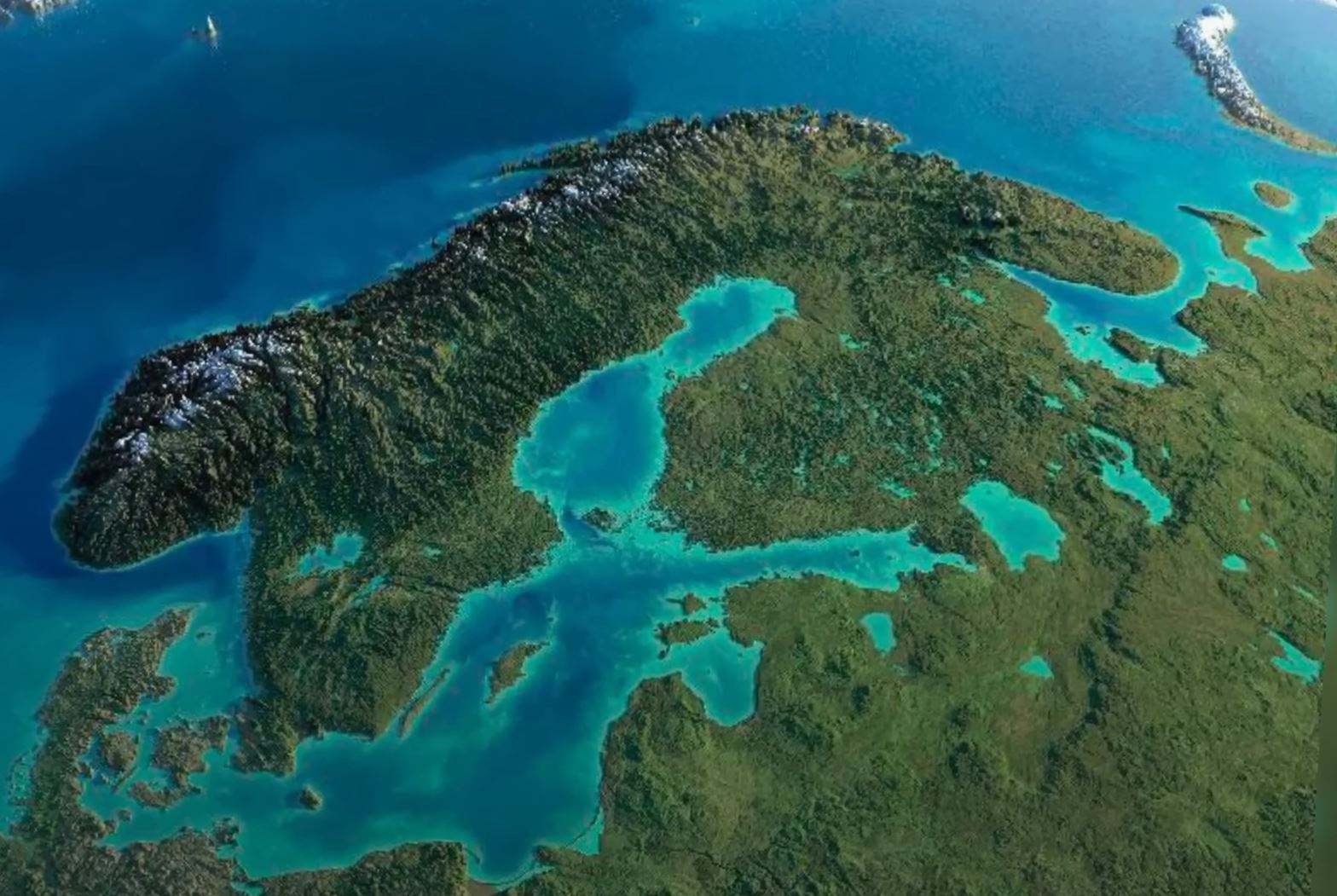
The Arctic is no longer a frozen frontier governed by cooperation and isolation. A fundamental shift is underway—from Arctic exceptionalism to open military competition. This transformation carries profound implications for Nordic businesses operating in or dependent on the High North.
Four converging forces are driving this new reality: Russia’s reinforced Arctic military posture; NATO’s strategic recalibration following Sweden and Finland’s accession; climate change opening new maritime routes and resource access; and the political shockwaves from the Greenland sovereignty dispute that forced allies to demonstrate presence with unprecedented speed.
What this means for business: The Arctic is transitioning from a region of scientific cooperation and limited commercial activity to a contested strategic theatre. Companies in shipping, energy, telecommunications, and logistics must now factor geopolitical risk into their Arctic strategies—a consideration that was largely absent a decade ago.
The Drivers: A Multi-Domain Security Challenge
Russia’s Arctic Fortress
Russia treats the Arctic as a strategic bastion for its Northern Fleet, maintaining nuclear submarines and long-range aviation capabilities on the Kola Peninsula. NATO assessments indicate Moscow has systematically expanded Arctic bases, reopened Soviet-era installations, and increased military activity across the region.
The Kremlin’s Arctic militarisation serves dual purposes: protecting its second-strike nuclear capability and controlling emerging sea lanes that could slash shipping times between Asia and Europe.
NATO’s Strategic Response
NATO’s own strategic calculus is clear: the Arctic matters because it serves as the gateway between North America and Europe. Any increase in Russian surveillance, submarine activity, or bomber patrols immediately raises the alliance’s alert level.
Climate change is accelerating operational importance. As ice recedes, both sides are investing heavily in Intelligence, Surveillance, and Reconnaissance (ISR), ice-capable vessels, autonomous systems, satellites, and cold-weather logistics infrastructure.
Business insight: This capability race creates opportunities in defence technology, satellite communications, Arctic-capable engineering, and specialised logistics. Nordic firms with cold-climate expertise are positioned to capture contracts in this expanding market.
Sweden’s Central Role: From Neutral Observer to Arctic Enabler
Sweden’s NATO membership has fundamentally altered the alliance’s Arctic posture, providing strategic depth and operational flexibility across the Nordic and High North theatre. The Swedish Gripen deployment to Iceland and Greenland is not merely symbolic—it represents a concrete contribution to NATO’s Arctic Sentry initiative launched in February 2026.
As Prime Minister Ulf Kristersson stated: “As a NATO Ally, Sweden has a responsibility to contribute to the security of the entire territory of the Alliance. The Arctic region is becoming increasingly important from a strategic perspective”.
This transforms Sweden from a regional spectator into a practical enabler of Nordic air policing and maritime surveillance. The operational integration includes:
- Swedish Gripen fighters patrolling Greenland and Icelandic airspace
- Leadership of NATO’s Forward Land Forces in Finland
- Coordination through the new Combined Air Operations Centre in Bodø, Norway
Business impact: Swedish defence and aerospace sectors gain access to integrated NATO procurement chains. Cross-border Nordic defence collaboration is accelerating, creating economies of scale for suppliers across the region.
Operation Arctic Sentry: Understanding the New Reality
American reconnaissance and air-policing flights over Iceland are not emergency measures—they continue a NATO presence established at Keflavík since 2008. What has changed is the intensity and political messaging.
NATO launched Arctic Sentry on February 11, 2026, as an enhanced Vigilance Activity (eVA) synchronising allied operations across multiple domains. Led by Joint Force Command Norfolk, the mission coordinates activities across air, sea, land, cyber, and space.
The flights serve dual purposes: operational monitoring for Russian bomber activity and deterrent signalling to reassure allies while demonstrating that North Atlantic approaches are defended.
Recent developments: Exercise Cold Response 26, concluded March 20, 2026, involved 25,000 personnel from 14 nations and served as the first major test of Arctic Sentry coordination. Russia responded with missile warnings in the Barents Sea—clear signalling that Moscow views increased NATO activity as a direct challenge to its regional dominance.
Why Tensions Escalated: The Greenland Catalyst
The immediate accelerant was the Greenland crisis that erupted in early 2026. President Trump’s pressure on Denmark to transfer sovereignty, including threats of military force and punitive tariffs, created unprecedented strain within NATO.
The crisis pushed allies to demonstrate commitment to Arctic security with unusual visibility. Denmark deployed hundreds of elite Arctic warfare troops to Greenland, joined by forces from Sweden, Norway, Germany, France, and other allies in Operation Arctic Endurance.
This rapid military response—unprecedented in scale for Greenland—occurred simultaneously with diplomatic efforts to manage the transatlantic rupture. The episode revealed both NATO’s fragility and its resilience: while political tensions threatened alliance cohesion, the operational response demonstrated collective defence capabilities.
Strategic takeaway: The Greenland episode proved that Arctic security can no longer be taken for granted. It exposed vulnerabilities in allied coordination while simultaneously validating NATO’s ability to mobilise rapidly.
The Underlying Risk: Action-Reaction Dynamics
The primary risk is a classic security dilemma: increased NATO patrols and exercises prompt enhanced Russian military activity, which in turn justifies further allied reinforcement. This cycle raises the probability of miscalculation, particularly given the harsh operational environment where aircraft, submarines, bombers, and surveillance assets operate in close proximity.
The Arctic is becoming a sharper military frontier because geography, climate change, and great-power politics are converging in the same direction.
Business risk assessment: Companies must incorporate:
- Operational disruption risk: Military exercises and heightened alert states can restrict commercial air and maritime traffic
- Infrastructure vulnerability: Undersea cables and remote installations face increased monitoring and potential interference
- Regulatory uncertainty: Rapidly evolving security frameworks may impose new compliance requirements on Arctic operations
- Insurance and financing: Risk premiums for Arctic projects are likely to rise as geopolitical tensions increase
Strategic Implications for Nordic Business
The Arctic transformation creates a dual-use economy where civilian and military interests increasingly overlap. Nordic businesses should consider:
1. Defence-industrial opportunities: The NORTHLINK Arctic satellite project, icebreaker procurement, and cold-weather equipment programs represent substantial contracting opportunities.
2. Critical infrastructure protection: As NATO focuses on safeguarding undersea cables and remote installations, cybersecurity and physical security services will see increased demand.
3. Sustainable resource development: The tension between environmental protection and security imperatives creates complexity for energy and mining projects. Firms demonstrating dual capabilities—commercial viability with security compliance—will have competitive advantage.
4. Logistics and connectivity: New Arctic shipping routes offer potential cost savings, but require robust risk management frameworks given the militarisation trend.
Conclusion: The New Arctic Paradigm
The heightened Arctic security environment stems from Russia’s military consolidation, NATO’s Nordic expansion, climate-driven accessibility, and the political aftershocks of the Greenland dispute. This is not a temporary spike in tensions but a structural shift requiring sustained strategic attention.
For Nordic businesses, the message is clear: the Arctic is transitioning from a peripheral region to a central strategic theatre. Success in this environment requires understanding that commercial and security interests are now inseparable in the High North.
Next In This Series: Our upcoming feature will examine the emerging Arctic defence economy—identifying specific procurement trends, investment flows, and partnership opportunities for Nordic enterprises in the new security landscape. We will analyse the NORTHLINK satellite project, icebreaker fleet modernization, and the growing market for dual-use Arctic technologies.
Connect with Nordic Business Journal: Follow our coverage here and join the conversation using NordicArctic. For editorial inquiries or to contribute expert commentary, contact our defence and security desk in the comment box below. Subscribe to our Arctic Business Brief for weekly intelligence on High North commercial developments.
Sources: NATO official statements; Swedish Government press releases; Reuters reporting; Congressional Research Service analysis