
Recent government-backed analysis points to a material, near-term prize for Norway: using advanced recovery techniques to extract between 350 and 700 million barrels of oil equivalent from fields already on the Norwegian Continental Shelf (NCS). At the high end this is roughly equivalent to the expected remaining lifetime output of Johan Sverdrup, one of the North Sea’s largest finds. For an economy built on high-quality hydrocarbons, well-developed infrastructure and a sovereign wealth fund designed to smooth the transition, unlocking those “brownfield barrels” is strategically and economically attractive — but the window to do so is narrowing.
What the numbers mean for business and policy
Scale: 350–700 million boe is not trivial. It would materially extend production from mature areas without the lead times, permitting hurdles and capex profile of new greenfield developments. That makes EOR (Enhanced Oil Recovery) a potentially efficient way to convert stranded or marginal reserves into government revenue and private-sector cash flow.
Timing: Reservoirs lose pressure and permeability over time. The technical success and commercial viability of EOR decline as fields mature. Projects that look profitable today can become uneconomic in a matter of years as wells degrade and infrastructure is decommissioned.
Value capture: Brownfield development typically requires lower incremental capital than new discoveries. If operators and the state can accelerate project selection and execution, the NCS can realise higher net present value from existing assets, which in turn supports sovereign returns and the transition financing task assigned to the Government Pension Fund Global.
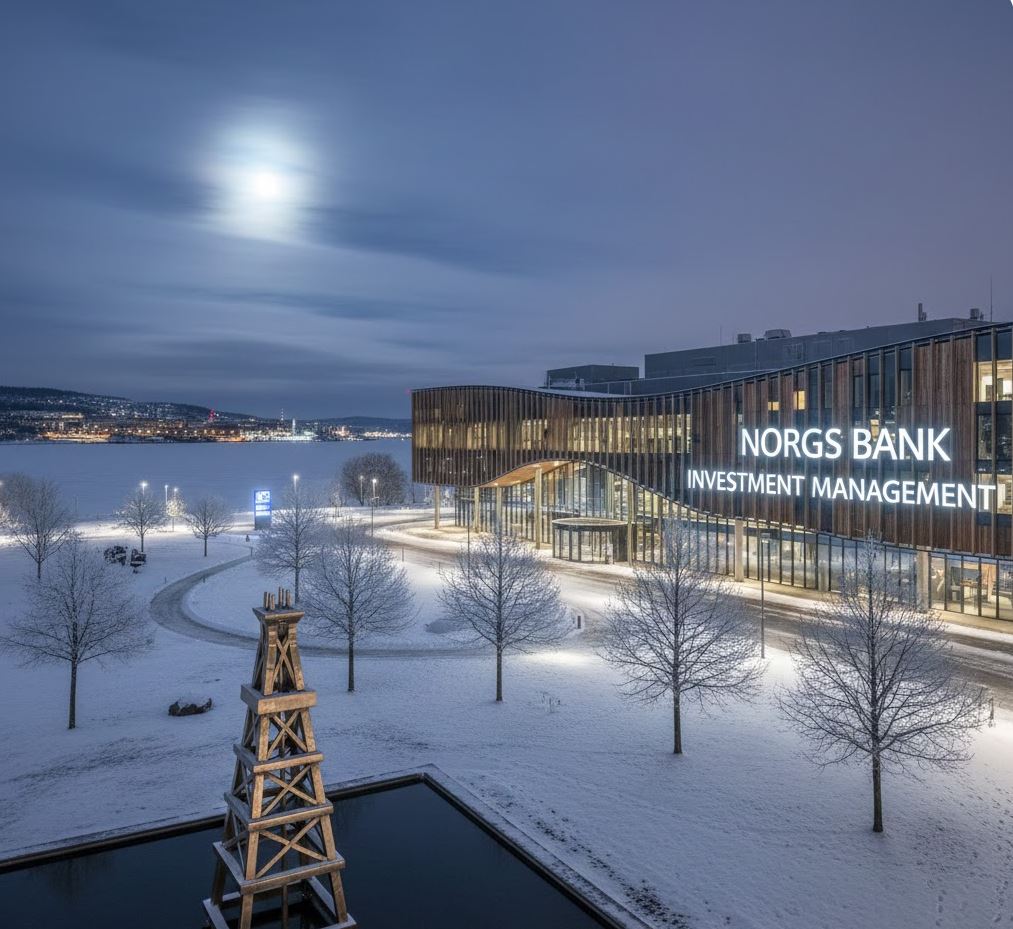
Which EOR options matter for the NCS
The practical toolbox for Norwegian offshore EOR includes:
- Gas and water injection (pressure maintenance and WAG — water alternating gas). These are proven offshore techniques with relatively low technical risk.
- CO2-EOR, which can both improve recovery and be coupled with storage — attractive given Norway’s CCS leadership (Longship and other projects).
- Chemical EOR (polymers, surfactants) and thermal methods (less relevant offshore) — higher cost and complexity, often field-specific.
- Digital EOR: advanced reservoir simulation, downhole sensors, and AI-enabled production optimisation can increase recovery with modest hardware additions.
Implementation challenges and how to solve them
Field heterogeneity requires bespoke solutions. There is no one-size-fits-all: each reservoir needs a tailored plan, pilot and scale-up path.
- Commercial alignment.
Operators, service companies and the state must share project risk in late-life fields where profitability margins can be thin. Fiscal incentives, investment allowances or time-limited tax relief for late-life investments can mobilise capital.
- Infrastructure life and decommissioning timelines.
Connecting incremental production to existing platforms or subsea systems is often feasible — but only if done before facilities reach the end of their designed operating life.
- Emissions and reputational risk.
Expanding hydrocarbon production without robust emissions mitigation will attract regulatory, investor and social scrutiny.
Geopolitics and market context — why urgency is growing
Recent cycles of geopolitical tension (from attacks on shipping to instability in key producing regions) underscore the value of supply flexibility. Norway’s high-quality crude and stable contracts mean additional production from the NCS can help Europe manage disruptions. At the same time, forward-looking demand is uncertain: industrial decarbonisation and electrification trajectories could suppress long-term hydrocarbon demand. The resulting commercial imperative is straightforward: where EOR projects are profitable under reasonable price scenarios and can be delivered quickly, Norway should move.
Environmental and climate considerations
EOR raises a fundamental policy trade-off: more oil produced today can generate public revenue that funds the green transition, but it also increases lifecycle emissions unless paired with mitigation:
- Pairing CO2-EOR with permanent storage can convert an oil recovery project into a net-positive climate investment if the CO2 is sourced from industrial capture and stored securely.
- Electrifying operations and using low-carbon power for compression and water treatment reduces the carbon intensity of incremental production.
- Rigorous measurement and verification systems (including methane monitoring) will be essential to maintain licence to operate in export markets and with international investors.
Practical roadmap for industry and government
1. Fast-track a prioritized, field-by-field screening. Use a consistent economic and emissions framework to rank opportunities — identify a short list of high-potential pilots within 12–18 months.
2. Launch targeted pilots. Deploy pilot CO2- and gas-injection projects now to de-risk scale-up decisions. Expect pilot results within 2–4 years to inform broader rollouts.
3. Align fiscal and regulatory incentives. Introduce time-bound tax allowances or accelerated depreciation for late-life recovery investments, linked to robust emissions controls.
4. Integrate EOR with Norway’s CCS backbone. Prioritise projects that can co-benefit from Longship and associated transport/storage infrastructure.
5. Mobilise technology and services. Promote R&D into polymer chemistries, subsea injection equipment and digital reservoir management suited for NCS conditions.
Bottom line
EOR presents Norway with a pragmatic, lower-cost option to extract additional value from existing infrastructure while buying time for a managed energy transition. Success will depend on rapid, selective action: commercial pilots today, clear policy signals from government, and disciplined measurement of climate impacts. Norway is well placed to capitalise — but only if industry and policymakers act before reservoir conditions and infrastructure lifetimes make late-life investments prohibitively expensive.
What we will cover next and how to connect
In our next piece we will take a deep dive into field-level economics: a comparative case study of two NCS candidates for EOR (a CO2-suitable reservoir and a candidate for chemical EOR), modelling cashflows, tax impacts and lifecycle emissions. To suggest fields, submit data, or join the conversation, contact the Nordic Business Journal editorial team at editorial@nordicbusinessjournal.com, follow our LinkedIn page, or send feedback via the comments form on our website.