
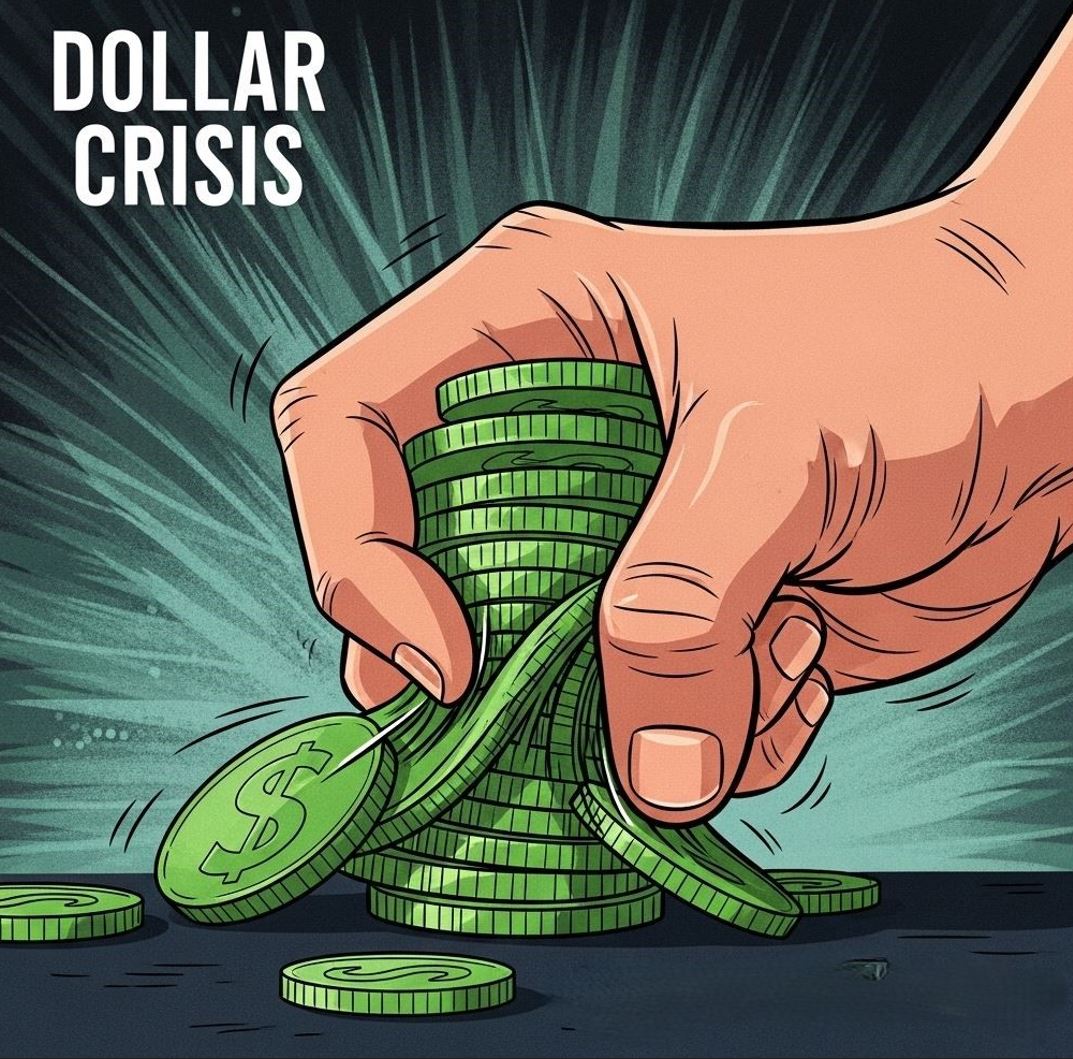
The International Monetary Fund and other major forecasters have flagged rising U.S. federal debt as a systemic risk to the global economy. Some projections put gross U.S. federal debt on a path toward or beyond $39 trillion over the coming decade. For Nordic economies—deeply integrated into global capital markets, export chains and pension-investment networks—those numbers are not abstract. They shape interest rates, asset prices, currency stability and the fiscal headroom available to respond to future shocks. At the same time, breakthroughs in artificial intelligence promise to reshape productivity and public finances. This article explains the channels of risk and opportunity, evaluates how realistic AI-led solutions are, and offers practical steps for Nordic policymakers, companies and institutional investors.
Why U.S. debt levels are a global issue
Upward pressure on interest rates: Large and persistent U.S. fiscal deficits increase the supply of Treasury securities. If demand does not keep pace, long-term yields rise. Because global capital markets are highly integrated, a sustained rise in U.S. yields pushes borrowing costs higher worldwide—raising the cost of corporate investment and sovereign borrowing in Europe and the Nordics.
Crowding out and capital allocation: A surge in risk-free U.S. paper can divert global capital away from private investment abroad. That can slow international capital formation, reducing growth prospects in trading partners and raising funding costs for Nordic exporters and innovators.
Market volatility and reserve-currency dynamics: The U.S. dollar remains the primary global reserve and settlement currency. Shifts in confidence about U.S. fiscal sustainability could trigger abrupt capital flows, currency swings and stress in funding markets (FX swaps, repo). Nordic financial systems are exposed through cross-border banking, foreign-currency funding and large institutional portfolios.
Shrinking fiscal buffers: Rising interest costs can consume a larger share of U.S. government revenues, leaving less room for timely global crisis response—be it pandemics, a sharp trade shock, or a geopolitical escalation. A U.S. with limited fiscal space raises the tail risk of global recessions.
Pension and asset‑manager vulnerability: Nordic pension funds and insurers hold significant positions in global fixed income, equities and derivatives. Higher long-term yields compress valuations (particularly for long-duration assets) and can widen funding gaps.
Nordic exposure—practical implications
Monetary policy spillovers: Norges Bank, the Riksbank and the ECB all watch U.S. yields closely. A persistent U.S.-driven rise in global yields could force Nordic central banks to reconsider rate paths even if local inflation is subdued.
Export and supply‑chain impacts: Higher global borrowing costs and softer global demand would weigh on Nordic exporters—particularly capital‑intensive sectors like shipping, industrials and advanced manufacturing.
Financial stability monitoring: Nordic regulators should stress-test pensions and insurers for scenarios of higher long rates, greater FX volatility, and sudden re‑pricing of U.S. Treasuries.
Diversification strategies: Sovereign wealth funds and large institutional investors in the Nordics may need to reassess duration exposures, counterparty concentration and currency hedging strategies.
Can AI “save” the fiscal outlook?
AI is widely touted by institutions, including economists who advise the IMF, as a potential “macro‑critical” technology that could materially boost productivity and hence fiscal revenues. But turning that promise into stable debt reduction is neither automatic nor guaranteed.
Potential upside
Growth-led debt relief: Even modest, sustained improvements in productivity—estimates commonly cited in the 0.5–1.5% annual range for aggregate GDP growth attributable to AI over a multi‑year window—would raise tax receipts and could reduce debt-to-GDP ratios without disruptive spending cuts.
Disinflationary effects: Productivity-enhancing AI can lower unit production costs and increase supply responsiveness, putting downward pressure on inflation over time and allowing central banks to lower rates—reducing the interest burden on public debt.
Public-sector efficiencies: Automation and AI in tax administration, fraud detection, healthcare delivery and infrastructure planning can reduce operating costs and raise net revenues if implemented judiciously.
Material caveats and risks
Timing mismatch: Markets may price in expected AI gains long before they materialise. If expectations outrun reality, yields could rise as investors demand higher real returns, worsening debt dynamics in the near term.
Distributional consequences: AI could raise aggregate GDP while worsening wage inequality and displacing workers in sectors with less mobility. This can increase demand for social transfers and active labour-market spending, offsetting fiscal gains.
Sectoral concentration: Productivity improvements may cluster in a handful of digital‑intensive sectors, leaving broad parts of the economy less affected. The public‑finance benefits depend on how widely and rapidly AI diffusion occurs across services, healthcare, manufacturing and SMEs.
Implementation risk: Realising AI gains at scale requires investment, complementary policies (training, infrastructure, regulation) and time. Without these, productivity may plateau and markets could punish overoptimistic forecasts.
Scenario framing for Nordic decision‑makers
Base case (probable near term): Gradual AI adoption produces modest productivity gains; markets remain vigilant; yields fluctuate but do not spike uncontrollably. Nordic economies experience mixed spillovers—some export demand softening offset by tech-enabled efficiency gains.
Upside (conditional): Rapid, broad-based AI adoption lifts productivity meaningfully, allowing fiscal positions in the U.S. to stabilize via higher GDP and tax revenues—global yields normalize downward—Nordic economies benefit from stronger demand and lower borrowing costs.
Downside (risk event): Market re-pricing of U.S. fiscal risk or a disappointment in AI’s timing triggers higher real yields, tightening global financial conditions and a sharp move in FX and asset prices, posing substantial stress for high‑duration portfolios and for smaller open economies.
Actionable recommendations for Nordic policymakers and investors
For central banks and regulators:
- Intensify scenario-based stress testing of pension funds and insurers for higher-yield and FX-volatility shocks.
- Coordinate macroprudential buffers and ensure liquidity backstops for cross-border funding stress.
For fiscal authorities:
- Maintain credible medium‑term fiscal plans and transparent debt management strategies to reassure markets.
- Invest in education, upskilling and transition programs that increase labour mobility and capture AI gains more broadly.
For institutional investors:
– Review duration risk and consider dynamic hedging strategies for long-duration liabilities.
– Re-assess counterparty and funding concentrations; diversify reserve allocations where prudent.
For Nordic businesses:
- Accelerate targeted AI adoption that complements human capital—particularly in manufacturing, logistics, maritime, and healthcare—to capture productivity gains and improve competitiveness.
- Collaborate on sectoral reskilling partnerships with public institutions to lower transition costs and preserve demand.
What to watch—leading indicators
- U.S. ten-year Treasury yield and term premia: sustained moves up or persistent volatility signal changing global funding conditions.
- Market pricing of Fed policy vs. actual economic data: divergence can presage volatility.
- AI diffusion metrics: investment in AI-capable capital, labour reallocation rates, and productivity measures at the firm level.
- Social-spending trends and labour-market displacement indicators: rising unemployment claims in tech-exposed sectors, or growing claims for retraining, could increase near-term fiscal demands.
U.S. sovereign debt dynamics are a global public-good problem: their trajectory affects interest rates, market stability and the policy space available to respond to shocks. AI offers a plausible path to improved productivity and fiscal relief, but it is neither a quick fix nor an automatic stabilizer. For Nordic stakeholders the sensible strategy is hedged optimism: invest in AI adoption and human-capital upgrades while strengthening financial resilience and fiscal credibility. That dual approach helps capture upside while limiting downside exposure to a world where U.S. debt and market sentiment remain central drivers.
Next article and how to connect
In our next piece we will map sector-level contributions to AI-driven growth with a detailed breakdown of healthcare, manufacturing, shipping, finance and public administration—quantifying plausible productivity gains and fiscal impacts for Nordic economies. Tell us which sector you want analysed first.
Connect with Nordic Business Journal: share tips and requests, or subscribe for updates at our editorial desk email: editorial@nordicbusinessjournal.com and follow us on LinkedIn and X for real-time commentary.