
The blockade of the Strait of Hormuz—now in its eighth week and described as the largest disruption to global energy supply since the 1970s oil crises —is proving to be an unexpected catalyst for the green transition. While the immediate human and economic costs are severe, the crisis is accelerating a structural shift in energy policy that years of climate diplomacy could not achieve.
Brent crude prices surged past $126 per barrel at their peak in March 2026, with the largest monthly oil price increase on record. For Asia’s import-dependent economies, this has not been a theoretical debate—it has been a wake-up call. And the response is already reshaping global energy markets.
Asia’s Pivot: From Crisis to Opportunity
The fuel crisis hit Asia first and hardest. Japan, which obtains roughly 95% of its crude oil from Middle Eastern suppliers and routes approximately 70% of those shipments through the Hormuz chokepoint, saw its refiners urgently request government strategic reserve releases. Rather than simply absorbing the shock, several Asian governments have turned it into policy momentum.
In Japan, a major liquefied natural gas operator terminated supply contracts in response to the disruption. Cambodia eliminated import duties on electric vehicles. Indonesia’s President Prabowo Subianto announced decisive new legislation mandating that all new scooters and motorcycles sold domestically must be electric—a move framed explicitly as a matter of national energy independence.
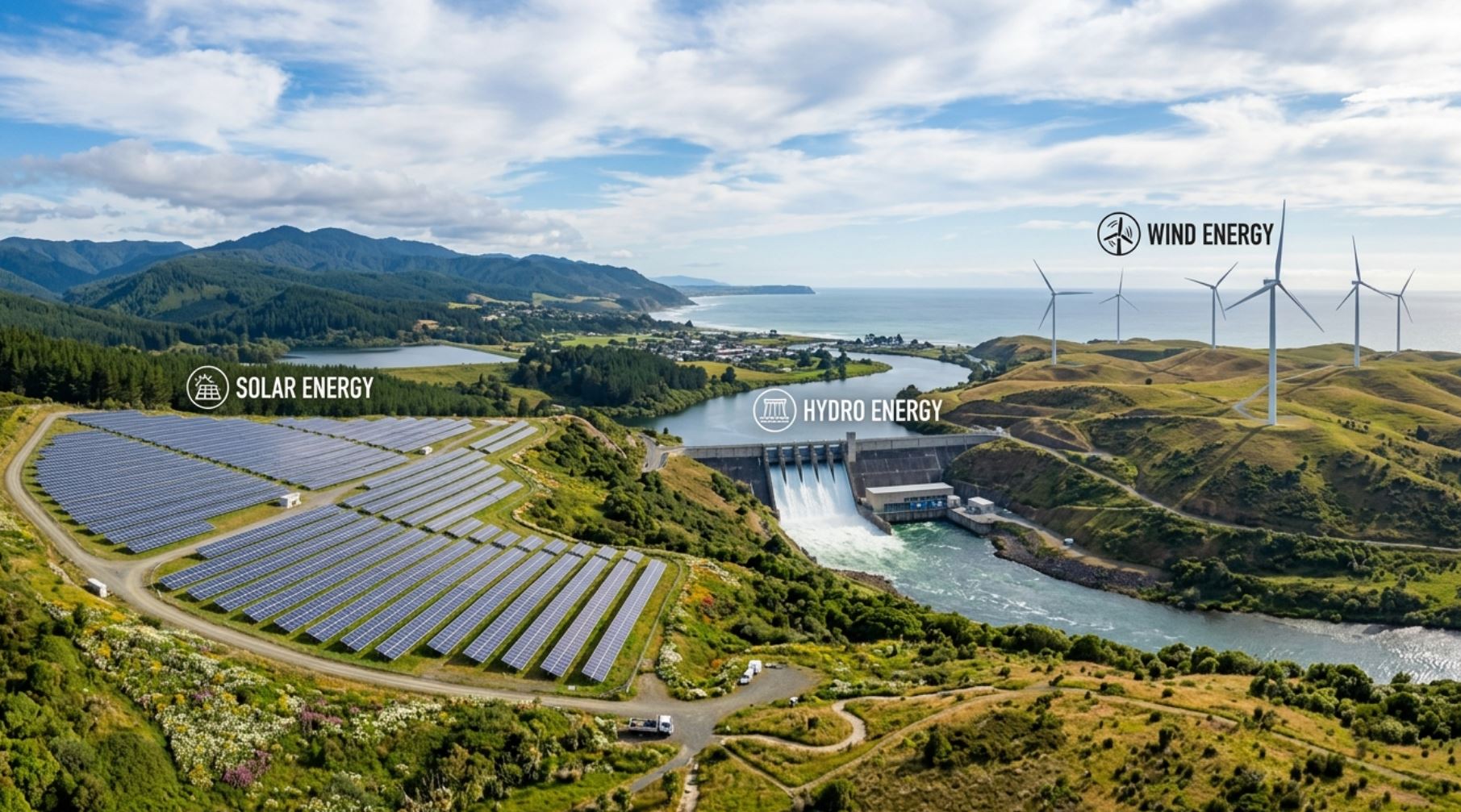
These are not isolated gestures. They represent a strategic reorientation: energy security and climate policy are converging in real time. For decades, the green transition was sold on environmental grounds. The Hormuz crisis is demonstrating that it is also a hard-nosed geopolitical imperative.
The Security Policy Dimension
Torsten Hasforth, Chief Economist at the Danish green think tank Concito, argues that the crisis should be understood as a “booster shot”—a painful but necessary reminder of the vulnerabilities inherent in fossil fuel dependency.
“It is a reminder of how problematic it is that we do not have our own oil and gas, and how problematic oil and gas are in general. And it is an opportunity to revisit the green transition and ask: ‘Are we doing it fast enough?'”
Hasforth draws a direct parallel to the 2022 European energy crisis, when Russia’s invasion of Ukraine exposed the continent’s dangerous reliance on Russian fossil fuels. At that time, Russian gas covered 45% of EU consumption, 30% of oil, and 46% of coal imports. The EU moved with uncharacteristic speed to phase out Russian energy. The current crisis, Hasforth suggests, should trigger an equally decisive acceleration of the green transition—this time on a global scale.
The Strategic Advantage of Renewables
A common critique of the green transition is that it merely replaces one dependency with another—swapping Middle Eastern oil for Chinese rare earth minerals and battery components. Hasforth acknowledges the risk but argues the structural logic favours renewables:
“One advantage that green technologies have is that once you have purchased the technology, you have the opportunity to produce your energy continuously, unlike fossil fuels, because you are dependent on continuously importing oil.”
This distinction matters for business strategy. Once capital is deployed in solar arrays, wind farms, and electrified transport infrastructure, the ongoing fuel cost is zero and the geopolitical exposure is minimal. The sun and wind are not subject to blockades, embargoes, or price shocks.
A Mea Culpa from the Green Movement
Hasforth concedes that green advocates have historically underplayed the energy security argument:
“You might be able to blame us for that, but you could say that we were naive and believed the rational argument that when we emit CO2, it harms our climate, and when we harm our climate, we also harm ourselves.”
The implication is significant: the business case for decarbonisation is now stronger than the moral case. Nordic companies and investors who have positioned themselves in clean technology, grid infrastructure, and electrification are not merely doing the right thing—they are building resilience against precisely the kind of systemic shock the world is currently experiencing.
The Nordic Angle: Competitive Advantage in a Fragmented World
For Nordic businesses, the Hormuz crisis presents both risks and opportunities. Denmark, Norway, and Sweden have already made substantial investments in offshore wind, green hydrogen, and EV infrastructure. As Asian markets accelerate their own transitions—driven now by security concerns rather than climate targets alone—Nordic expertise in renewable energy systems, grid integration, and maritime electrification becomes a strategic export asset.
The crisis also underscores the vulnerability of global supply chains. With fertilizer prices up 50%, aluminium production disrupted, and even helium supplies rationed, businesses must rethink sourcing strategies. The Nordic model of regional energy cooperation and domestic renewable generation offers a template for corporate energy resilience.
What Happens Next
Even if the Strait of Hormuz reopens fully—and current signals suggest a volatile, stop-start normalisation—analysts warn it could take months for oil shipments to return to pre-war levels. Backlogged tanker traffic, damaged infrastructure, and lingering security concerns will keep energy markets unsettled well into 2026.
More importantly, the psychological threshold has been crossed. Policymakers and boardrooms across Asia and Europe have now experienced what fossil fuel dependency looks like when the chokepoint closes. The green transition is no longer an abstract climate target—it is a live operational priority.
Follow-Up Direction: Our next issue will examine how Nordic clean-tech exporters can capture market share in Asia’s accelerated energy transition, with a focus on offshore wind partnerships, green hydrogen offtake agreements, and the emerging regulatory frameworks in Japan, Indonesia, and Thailand.
Connect with us: Share your perspective on how the Hormuz crisis is reshaping your industry’s energy strategy. Reach the editorial team at editor@nordicbusinessjournal.com or join the conversation on LinkedIn.
Published in Nordic Business Journal | April 2026