
The Central Banker’s Dilemma
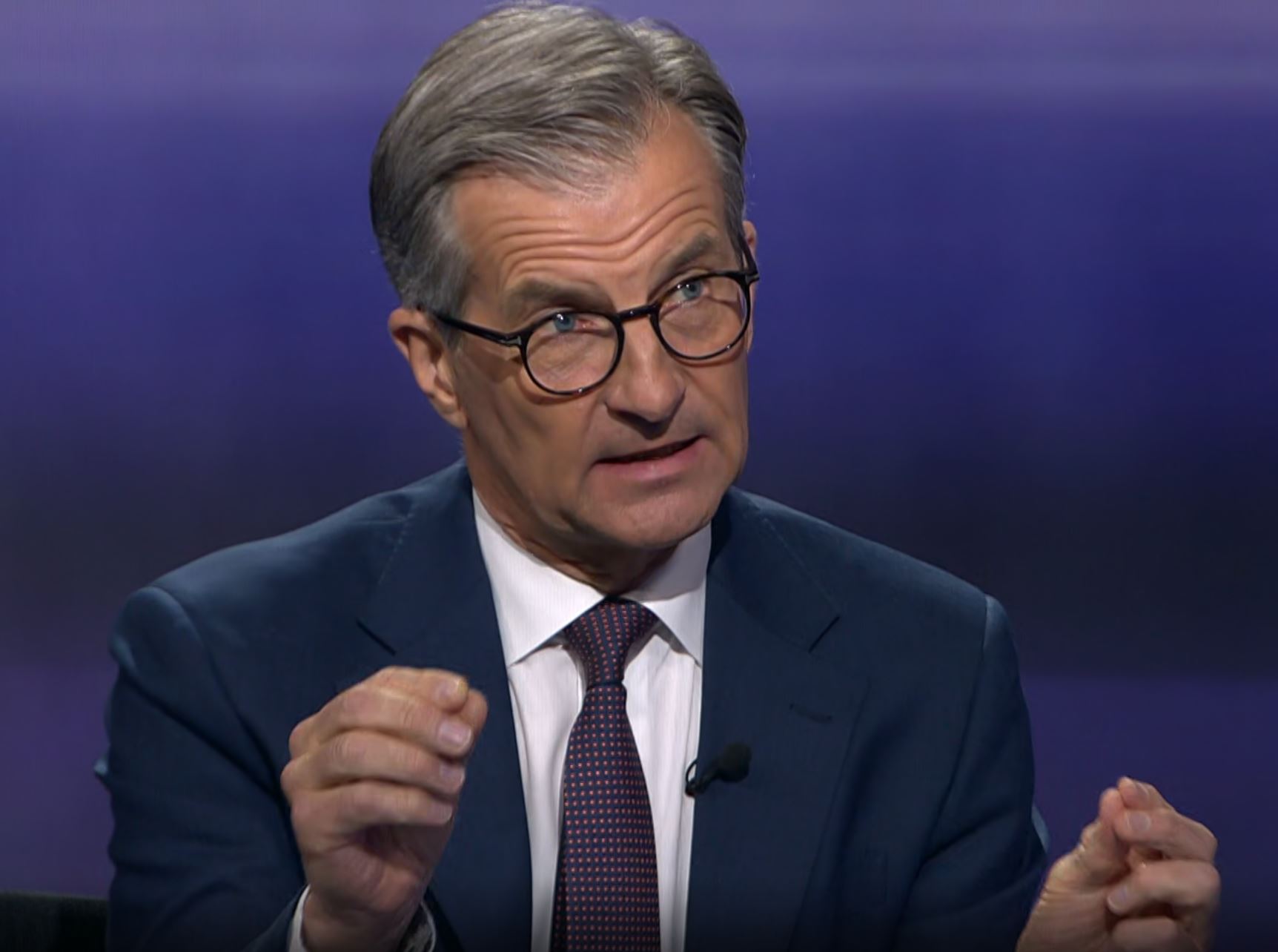
When Riksbank Governor Erik Thedéen sat down with SVT’s 30 Minuten in late April, he did not mince words. Sweden, he warned, is already showing “tendencies towards stagflation” — the toxic economic cocktail of stagnant growth and rising inflation that keeps central bankers awake at night.
“It is a nightmare,” Thedéen admitted. “But we’ve already gone a little in that direction”.
His candour is striking. For a governor who has spent the past year carefully guiding Sweden’s economy out of a prolonged period of near-stagnation, the admission marks a sobering pivot. The Riksbank had held its policy rate steady at 1.75% through March 2026, with inflation — measured by the CPIF — having decelerated to a 15-month low of 1.6% in March. The recovery, however fragile, was within sight.
Then came the Strait of Hormuz.
From “Limited” to “Significant”: Government Recalibrates
At a press conference on April 23, Prime Minister Ulf Kristersson and Finance Minister Elisabeth Svantesson delivered a stark revision of Sweden’s economic outlook. The impact of the Iran war on the Swedish economy had shifted, in the government’s own assessment, from “limited” to “significant”.
“We have now moved from the main scenario of limited impact to the scenario of significant impact on the Swedish economy,” Kristersson stated.
The shift is not merely rhetorical. The Strait of Hormuz blockade — which has stranded roughly 20% of global oil and gas shipments since early March — has sent Brent crude surging past $120 per barrel and triggered what the International Energy Agency has called the “largest supply disruption in the history of the global oil market”. For Sweden, a highly industrialised, import-dependent economy with limited domestic fossil fuel production, the shockwaves are both direct and insidious.
The government has already implemented temporary fuel tax cuts — 1 krona per litre on petrol and 0.4 kronor on diesel from May through September — at a cost of 1.64 billion kronor, alongside 3.4 billion kronor in household compensation for elevated electricity and gas prices . Yet these measures, while politically expedient six months ahead of a general election, are palliative rather than curative.
The Supply Shock Paradox
What makes the current crisis particularly treacherous for monetary policymakers is its nature: a negative supply shock.
In a speech to the Stockholm Chamber of Commerce on April 22, Thedéen elaborated on the fundamental challenge. “Supply shocks increase companies’ costs and constrain output, dampening economic activity while increasing inflationary pressures,” he explained. “For central bank policy-makers, supply shocks are more difficult to handle than demand shocks, as a trade-off has to be made between curbing inflation and supporting demand”.
This is the stagflation bind in its purest form. Raise rates to crush inflation, and you risk throttling an already fragile recovery. Cut rates to support growth, and you risk embedding inflationary expectations. The Riksbank’s March forecast already raised its 2026 inflation projection to 1.5% from 0.9% seen in December — and that was before the most recent escalation.
The governor’s message was unambiguous: “If there is an increased risk of high inflation that could deviate permanently from the target, monetary policy may need to act to prevent this” . Translation: rate hikes are not off the table, even if they come at the cost of weaker economic activity.
Sweden’s Vulnerabilities: Beyond Oil
While energy prices dominate headlines, the Iran war’s economic impact on Sweden runs deeper than the petrol pump.
Aviation and Logistics: With Middle Eastern airspace largely closed and major hubs like Dubai International Airport sustaining damage, global air freight capacity has contracted sharply. SAS and other carriers have been forced onto longer, costlier routes. The government has convened stakeholders including SAS and the Swedish Farmers’ Federation to assess raw material flow disruptions — a tacit acknowledgment that supply chains are fraying.
Industrial Input Costs: The Gulf produces approximately 9% of global aluminium supply, and prices have already risen 8% since March. For Sweden’s automotive, aerospace, and packaging sectors — already squeezed by electricity costs — this adds another layer of margin pressure. Sulphur and nitrogen shortages, meanwhile, threaten to cascade into agricultural and food production costs.
Labour Market Fragility: Sweden’s unemployment rate peaked at 9% in 2025 and was expected to decline gradually to 7.9% by 2027. A stagflationary environment risks arresting this recovery. If companies face both rising input costs and weakening demand, hiring freezes and layoffs become the rational response — precisely the “stagnation” component Thedéen fears.
The Political Calculus
The timing could hardly be worse for Kristersson’s centre-right government. Trailing the opposition bloc by roughly six percentage points in opinion polls, the administration faces an electorate already battered by three years of near-stagnation, elevated mortgage costs, and now a fresh energy crisis.
Finance Minister Svantesson has not ruled out fuel rationing, stating that “you can’t rule anything out” while emphasising that “government rationing is certainly something we want to avoid” . The government will present an updated economic prognosis on May 1, which markets will scrutinise for both fiscal credibility and political intent.
The opposition, meanwhile, has criticised the fuel tax cuts as environmentally regressive — a short-term populist fix that undermines Sweden’s green transition while failing to address structural energy dependence.
Comparative Resilience: Sweden vs. Europe
Despite the gloom, Sweden retains certain defensive advantages. Unlike Germany or Italy — where the ECB warns of imminent technical recession if the Hormuz blockade persists through summer — Sweden entered the crisis with inflation close to target, stable government finances, and a policy rate (1.75%) that provides some manoeuvring room.
The European Commission’s autumn 2025 forecast had projected Swedish GDP growth of 2.6% for 2026, supported by tax reductions, lower food VAT (from 12% to 6% from April 2026), and recovering household consumption. Whether these tailwinds can offset the Hormuz headwinds is the critical question.
Thedéen himself struck a measured tone: “Our low inflation starting point means that we have some scope to try to get a clearer picture of the economic consequences”. This is central-bank speak for “we are not panicking yet” — but the margin for error is narrowing.
The Bitter Pill
For Swedish households, the immediate implications are unambiguous. Mortgage holders — already sensitised to rate volatility after the 2022-2024 hiking cycle — face the prospect of renewed pressure if the Riksbank is forced to tighten. Thedéen acknowledged as much: “In the short term, this will be a bitter pill”.
Yet the alternative — allowing inflationary expectations to de-anchor — would be worse. Sweden’s experience of the 1970s energy crises, which ushered in a decade of wage-price spirals and currency instability, remains a cautionary tale in the Riksbank’s institutional memory.
The governor’s long-term commitment to the 2% inflation target is non-negotiable. “In the long term, it is good for the Swedish economy,” he insisted. The challenge is navigating the path without triggering the very recession he seeks to avoid.
What Stagflation Means — And Why It Matters
For readers less familiar with the term, stagflation represents the worst of both worlds: economic stagnation (growth below 2-3% annually, or outright contraction) combined with persistent inflation. Normally, high unemployment suppresses wages and prices. In stagflation, supply-side shocks — such as war-driven energy crises — break that relationship, pushing prices up even as output falls.
The 1970s oil shocks created the textbook case. Today’s scenario differs in important respects — Sweden’s labour market is more flexible, its energy mix is greener, and its central bank has clearer inflation-targeting credibility — but the structural parallels are uncomfortably close.
Looking Ahead: The May 1 Prognosis and Beyond
All eyes now turn to the government’s updated economic forecast on May 1. Markets will be watching for three signals:
1. Inflation trajectory: Does the government expect CPIF to breach the Riksbank’s 2% target sustainably?
2. Growth revision: How deeply will 2026 GDP projections be cut?
3. Fiscal response: Will new targeted measures emerge, or will Stockholm rely on existing tax cuts and the automatic stabilisers?
The Riksbank’s next monetary policy report is due June 17, with an update on May 7. By then, the governor’s “nightmare” may have either receded — or materialised.
Editor’s Note: Follow the Thread
The Nordic Business Journal will continue to track Sweden’s economic trajectory through the Hormuz crisis. Our next deep-dive will examine the May 1 government prognosis and analyse whether Sweden’s green energy transition can accelerate fast enough to insulate the economy from future fossil fuel shocks. We will also assess the implications for Nordic corporate debt markets and the krona’s exchange rate stability.
Connect with us: Follow our coverage at nordicbusinessjournal.com and join the conversation on LinkedIn and X. For editorial inquiries or to contribute analysis, contact our economics desk at editor@nordicbusinessjournal.com.
Sources: Sveriges Riksbank, Statistics Sweden, European Commission, Free Malaysia Today, Financial Post/Bloomberg, Straits Times, Focus Economics, Wikipedia/Economic Impact of 2026 Iran War, Trading Economics.