As hybrid threats multiply in the Baltic Sea, Sweden’s Supreme Commander warns that Moscow may probe NATO cohesion sooner than anticipated. For executives and investors, the implications extend far beyond defence procurement: supply-chain resilience, energy infrastructure, maritime insurance, and regional capital flows now hinge on credible deterrence. This is not merely a security briefing—it is a strategic risk assessment for decision-makers shaping Nordic competitiveness in an era of renewed great-power competition.
A Shift in the Threat Timeline
Sweden’s Supreme Commander, General Michael Claesson, has issued a calibrated but urgent assessment: Russia could test NATO’s collective defence posture in the Baltic Sea region “at any time,” potentially through a limited operation targeting a strategically positioned island. This is not speculation about full-scale invasion, but a warning about calibrated escalation—designed to exploit perceived delays in allied rearmament and to probe political cohesion within the alliance.
The logic is strategic, not tactical. As Claesson notes, Moscow understands it cannot defeat NATO militarily; instead, it may seek to fracture political resolve by creating ambiguity around Article 5 commitments. A small-scale maritime incident—framed as an accident, a “peacekeeping” intervention, or a response to alleged provocation—could force allies into a fraught decision: escalate or accommodate. Either outcome serves Russian objectives.
For business leaders, the critical insight is temporal: the window for preventive deterrence is narrowing. Previous NATO intelligence assessments placed a potential Russian threat to alliance territory within a one-to-five-year horizon. Claesson’s assessment compresses that timeline, suggesting vulnerability peaks now, while European forces are still rebuilding capacity and before new defence investments yield operational readiness.
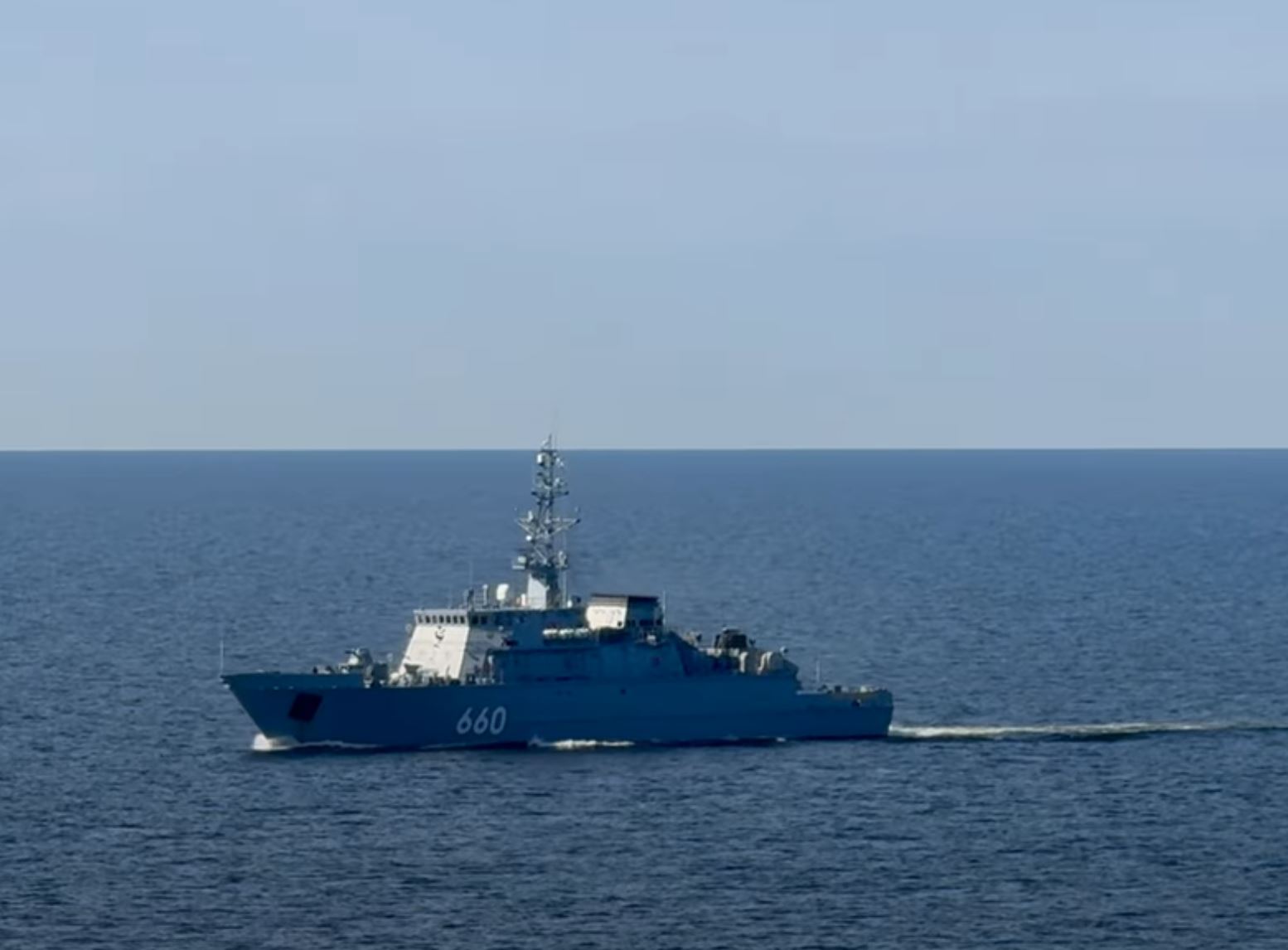
The Shadow Fleet: Sanctions Evasion as Strategic Leverage
Central to this heightened risk environment is the expansion of Russia’s so-called “shadow fleet”—a network of ageing tankers and cargo vessels operating outside conventional regulatory frameworks to circumvent energy sanctions. These vessels now traverse the Baltic Sea with increased frequency, often accompanied by naval escorts or intelligence-gathering assets.
This activity creates layered risks:
Maritime safety: Older vessels with limited insurance coverage raise the probability of accidents, oil spills, or navigational incidents in congested shipping lanes.
Hybrid escalation: Shadow fleet operations provide plausible deniability for sabotage, electronic warfare, or intelligence collection under the guise of commercial activity.
Regulatory friction: Coastal states face difficult choices between enforcing sanctions rigorously—potentially disrupting legitimate trade—and maintaining open sea lanes essential to regional commerce.
Sweden and Finland have responded with heightened maritime surveillance and coordinated inspections, but enforcement remains politically sensitive. For insurers, logistics firms, and port operators, this ambiguity translates into elevated risk premiums, compliance complexity, and potential supply-chain disruption.
Nordic Defence Industrial Cooperation: From Necessity to Competitive Advantage
The security imperative is accelerating a parallel economic opportunity: the integration of Nordic defence industrial capabilities. Sweden brings an unusually comprehensive defence manufacturing base—including combat aircraft, submarines, and advanced sensors—while Denmark, Norway, and Finland contribute specialised expertise in naval systems, cyber defence, and ammunition production.
Recent initiatives illustrate the momentum:
The Swedish-Danish joint procurement of CV90 armoured vehicles demonstrates how pooled demand can secure scale, reduce unit costs, and deepen interoperability.
The multinational Common Armoured Vehicle System (CAVS) programme, coordinated from Finland, provides a template for aligning requirements, sharing R&D costs, and sustaining production pipelines across borders.
Cross-border ownership structures—such as Norway’s Nammo operating a new Danish ammunition plant, with Finnish Patria as co-owner—create resilient, regionally embedded supply chains less vulnerable to external coercion.
For investors, this convergence of security need and industrial capability signals a structural shift. Defence is no longer a cyclical budget item but a long-term strategic priority backed by multi-year funding commitments across the Nordic region. Companies that can deliver dual-use technologies—cybersecurity, autonomous systems, secure communications, sustainable materials—are positioned to benefit from both public procurement and private-sector demand for resilience.
The Business Case for Deterrence: Why Stability Is an Economic Asset
Critically, credible deterrence is not a cost centre; it is foundational to regional investment attractiveness. The Nordic-Baltic region has long marketed itself as a stable, rules-based environment for innovation and trade. That value proposition depends on the perceived reliability of security guarantees.
Consider three interconnected dimensions:
1. Infrastructure protection: Undersea cables, energy interconnectors, and port facilities are both economic lifelines and potential targets. Investment in maritime domain awareness and rapid-response capabilities protects physical assets critical to digital and energy transitions.
2. Capital confidence: Political risk assessments increasingly factor in regional defence posture. Visible progress on NATO integration, joint exercises, and industrial cooperation signals commitment to stability—reducing the risk premium on Nordic assets.
3. Talent and innovation: A secure environment enables the region to continue attracting global talent and R&D investment. Conversely, prolonged uncertainty could divert capital to perceived safer jurisdictions.
The Nordic model—combining high trust, technological sophistication, and collaborative governance—offers a distinctive advantage in building deterrence that is both effective and sustainable. But it requires continued political will, transparent procurement, and strategic patience.
Forward View: Scenarios and Strategic Preparedness
Looking ahead, three scenarios warrant executive attention:
| Scenario | Likelihood (12–24 months) | Business Implications |
| Calibrated probe: Limited Russian action in Baltic waters to test NATO response thresholds | Moderate | Short-term market volatility; increased demand for maritime security, insurance, and crisis communications services |
| Hybrid escalation: Coordinated disinformation, cyber incidents, and shadow fleet activity to erode confidence | High | Need for integrated risk management, resilient supply chains, and public-private information sharing |
| Deterrence consolidation: Accelerated Nordic defence integration and NATO readiness, restoring strategic stability | Achievable with sustained investment | Long-term premium on regional stability; opportunities in defence tech, infrastructure hardening, and dual-use innovation |
The decisive variable is not Russian intent—which remains adaptive—but allied resolve and execution. Sweden’s accession to NATO has strengthened the regional architecture, but integration takes time. The next 18 months will be critical for converting political commitments into operational capability.
Conclusion: Leadership in an Era of Strategic Competition
General Claesson’s warning is not an invitation to alarmism, but a call for disciplined preparedness. For Nordic executives, investors, and policymakers, the imperative is clear: treat security as a strategic enabler, not a peripheral concern.
This means:
– Integrating geopolitical risk into enterprise strategy, scenario planning, and capital allocation decisions.
– Supporting transparent, innovation-friendly defence procurement that leverages Nordic technological strengths while fostering cross-border industrial collaboration.
– Advocating for policies that align economic resilience with collective defence—recognising that sustainable competitiveness in the 21st century requires both open markets and credible deterrence.
The Baltic Sea is more than a maritime corridor; it is a barometer of European security and a testing ground for the Nordic model’s adaptability. How the region responds to emerging threats will shape not only its security but its economic trajectory for decades. For decision-makers, the time to act is now—not when the test arrives, but while there is still space to shape the outcome.
Nordic Business Journal provides strategic intelligence for leaders navigating the intersection of geopolitics, innovation, and sustainable growth in Northern Europe.