While Washington and Beijing dominate the front pages, a quieter but structurally deeper shift is unfolding across Europe. Under Donald Trump’s second term, the transatlantic partnership has moved from periodic friction to functional decoupling. For Nordic economies—deeply embedded in European value chains, highly export-dependent, and strategically positioned between US tech capital and Asian manufacturing—this isn’t just diplomatic theatre. It’s a market inflection point.
The Transatlantic Pivot: From Partnership to Parallel Paths
The narrative that the US remains Europe’s indispensable anchor no longer holds in practice, even if politicians still pay it lip service. Over the past twelve months, European capitals have stopped waiting for Washington’s signals and started building parallel frameworks. The EU has moved ahead with tech regulation despite explicit threats of US retaliation. Foreign ministers have initiated independent diplomatic channels on Ukraine and the Middle East, sidelining American-backed negotiation tracks. Defence planning has shifted from reliance on US force projection to European industrial scaling, with NATO Secretary General Mark Rutte and former chief Anders Fogh Rasmussen both acknowledging that Europe must secure its own perimeter.
This isn’t ideological rebellion. It’s risk management. European leaders have internalised a simple reality: US foreign policy, trade posture, and multilateral commitments are now unpredictable variables. The rules-based order that post-war Europe relied on is being renegotiated in real time. Europe’s response isn’t to replace the US, but to build redundancy.
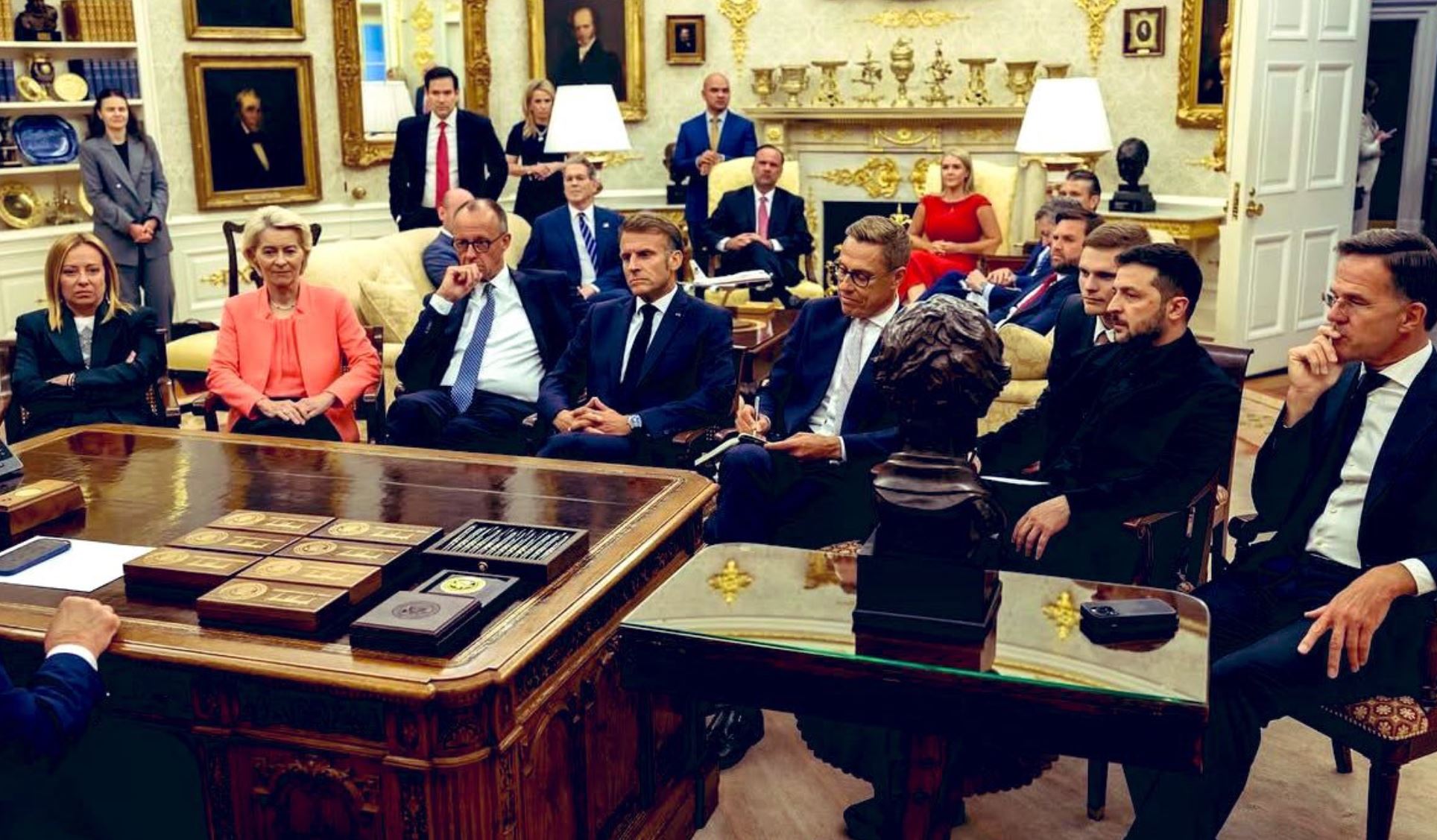
Why the Nordics Can’t Afford to Wait on the Sidelines
Nordic economies don’t have the luxury of treating this as a distant geopolitical trend. Three structural exposures make the transatlantic drift immediately relevant:
1. Trade & Tariff Vulnerability: Nordic exports in machinery, pharmaceuticals, precision engineering, and clean tech are deeply integrated into both EU and US supply chains. Renewed US tariff threats on European autos and industrial goods don’t just hit German or French manufacturers; they ripple through Swedish component suppliers, Danish maritime tech firms, and Finnish battery material exporters. Companies that still price US market access as a fixed cost are exposed to margin compression and sudden compliance overhead.
2. Regulatory Divergence in Tech & AI: The EU’s push to regulate data governance, AI deployment, and platform accountability is accelerating. US tech giants operating in Copenhagen, Stockholm, and Helsinki now face dual compliance regimes. Conversely, Nordic scale-ups like Spotify, Klarna, and Unity are navigating a fragmented transatlantic landscape where EU standards increasingly dictate global product architecture. The companies that treat Brussels’ regulatory direction as a constraint rather than a competitive moat will lose pricing power.
3. Defence Industrial Scaling: Finland and Sweden’s NATO accession coincided with a European push for strategic autonomy. That’s translated into record defence procurement budgets across the Nordics. Saab, Kongsberg, Patria, and Terma are scaling production, but supply chain bottlenecks in semiconductors, advanced composites, and dual-use software remain. The real opportunity isn’t just in hardware exports; it’s in interoperable European defence standards, which Nordic firms are uniquely positioned to influence.
Strategic Autonomy vs. Fragmentation: The EU’s Missing Piece
Let’s be clear: Europe isn’t yet a geopolitical heavyweight. Capital markets remain fragmented. Pension savings leak offshore instead of funding European infrastructure. Defence procurement is still nationalized. Political consensus on common debt, integrated energy grids, or unified industrial policy remains elusive.
But fragmentation creates niches. Nordic economies thrive on high-trust institutions, agile public-private R&D, and export-oriented SME ecosystems. Where larger EU states struggle with consensus, the Nordics can move faster on pilot frameworks: cross-border green hydrogen corridors, shared AI testing sandboxes, joint defence procurement vehicles, and standardized ESG reporting that attracts long-term institutional capital. The goal isn’t to wait for Brussels to deliver a unified market. It’s to build interoperable nodes that pull Europe forward.
What Nordic Leaders Must Do Now
– Map tariff and regulatory exposure across US-EU value chains. Model scenarios for divergent standards and build compliance flexibility into product roadmaps.
– Leverage EU regulatory leadership as a competitive advantage. Nordic tech and cleantech firms that align early with EU frameworks can set de facto global standards.
– Scale defence-adjacent innovation with a focus on interoperability. Dual-use tech, cybersecurity, logistics software, and sustainable materials will see sustained public procurement.
– Redirect Nordic institutional capital toward European infrastructure and industrial scaling. AP7, KLP, Nordea, and Danish pension funds have the balance sheets to anchor capital market integration if deployed strategically.
– Engage at the EU level, not just nationally. Trade, tech, and defense policy are increasingly decided in Brussels. Nordic business coalitions that coordinate early will shape implementation details.
The transatlantic partnership isn’t dead, but it’s no longer the default operating system for European commerce. The Nordics don’t need to choose between Washington and Brussels. They need to design for a world where the two increasingly run on different code. Companies that adapt their supply chains, regulatory strategy, and capital allocation now will outpace those still waiting for the old order to return.
What’s next: In our upcoming issue, we’ll examine how EU defence procurement reform is opening new pathways for Nordic dual-tech and aerospace firms—and which policy hurdles still block cross-border scaling.
Stay ahead of the curve: Join our monthly Nordic Business Strategy Brief for data-driven analysis, executive interviews, and actionable market intelligence. Reply to this newsletter, connect with our editorial team at editor@nordicbusinessjournal.com or follow our expert roundtables on LinkedIn. Your voice shapes our coverage.