Executive Summary
The Nordic model has long been the global benchmark for combining prosperity with equity. Yet beneath the surface of robust welfare states and compressed wage structures, a structural divergence is underway. While Nordic disposable income inequality remains among the lowest in the OECD, wealth concentration has reached levels that challenge the region’s egalitarian foundations. This article examines the mechanics of this paradox—how coordinated wage bargaining sustains income equality while capital accumulation, tax asymmetries, and demographic pressures erode wealth equity—and explores the policy recalibrations underway across Denmark, Norway, and Sweden.
The Strategic Case for Equality
Economic equality is not merely a social objective; it is a structural determinant of long-term competitiveness. Research consistently demonstrates that high inequality damages GDP growth trajectories, triggers social instability, and corrodes institutional trust. For decision-makers, the business case is clear: economies with moderate inequality generate superior human capital outcomes, more stable domestic demand, and higher social cohesion.
Human capital formation operates more efficiently in equitable contexts. When lower-income families can access quality education and healthcare without catastrophic financial exposure, the economy develops a deeper skills reservoir. This is particularly relevant in knowledge-intensive economies where talent scarcity is the primary constraint on growth.
Demand stability follows from consumption patterns. Middle and lower-income households exhibit higher marginal propensities to consume domestically, creating resilient, broad-based growth. Conversely, wealth concentration tends to channel marginal income into asset markets or offshore investment, reducing the fiscal multiplier effect.
Social trust—a variable with measurable economic returns—degrades rapidly as inequality widens. The political externalities are equally significant: rising populism, regulatory volatility, and institutional scepticism create uncertainty premiums that depress long-term investment.
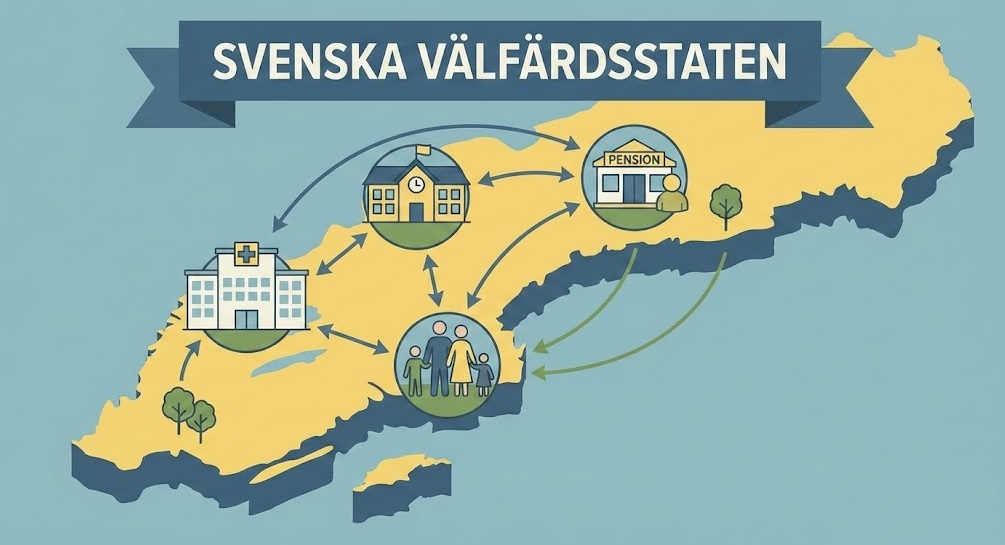
The Nordic Reality: A Bifurcated Picture
The Nordic countries—Denmark, Finland, Norway, and Sweden—continue to register among the world’s most equal societies when measured by disposable income. Nordic Gini coefficients for post-tax, post-transfer income average approximately 0.27, compared to 0.39 in the United States and an OECD average of 0.31. This is achieved through a combination of progressive taxation, comprehensive transfers, and—critically—coordinated wage compression that limits dispersion in hourly earnings before government intervention even begins.
However, this income equality masks a more troubling wealth dynamic. The average wealth Gini coefficient across the Nordics stands at 0.67, with significant variation: Finland at 0.61, Norway at 0.63, Sweden at 0.74, and Denmark at 0.81. These figures place Nordic wealth concentration firmly in the upper tier of developed economies and reveal a fundamental asymmetry: the mechanisms that compress wages do not effectively distribute asset ownership.
| Dimension | Historical Baseline | Current Reality |
| Income Inequality | Record-low Gini coefficients globally (~0.20–0.25) | Gradually rising; wage compression weakening under global pressure |
| Wealth Concentration | Assumed broadly distributed | Severely concentrated; Denmark and Sweden above 0.70–0.80 on wealth Gini |
| Demographics | Homogeneous, young populations | Rapidly aging; immigration now critical for labour supply but integration uneven |
The divergence between income and wealth inequality is not a statistical curiosity—it represents a structural vulnerability. An individual’s economic security and intergenerational mobility depend increasingly on asset ownership rather than labour income alone. When wealth concentrates while wages compress, the result is a two-tier society that the traditional Nordic model was designed to prevent.
Why Equality Has Become Exponentially Harder to Maintain
Three macro-structural shifts are systematically undermining egalitarian outcomes across advanced economies, including the Nordics. Each operates with particular force in the region due to its deep integration into global capital markets and high exposure to technological disruption.
1. The Technology Premium and Labor Market Polarisation
Automation, artificial intelligence, and advanced software systems are amplifying returns to cognitive, non-routine labour while displacing or degrading wages in administrative, retail, and manufacturing roles. The Nordic labour market, despite its strong vocational training systems, is not immune. The wage compression mechanism—historically maintained through centralized bargaining—faces pressure as firms compete globally for specialized technical talent while routine work faces algorithmic substitution.
The critical insight for business leaders: this is not merely a distributional issue. Labor market polarisation reduces aggregate demand elasticity and increases reliance on transfer systems, creating fiscal pressures that eventually translate into higher tax burdens or reduced public investment.
2. Financialisaton and the Capital-Labor Divergence
Wealth accumulation through asset ownership now systematically outpaces wage growth. Real estate, equity markets, and private equity have delivered compound returns that hourly labour cannot match. This creates a self-reinforcing cycle: asset owners can leverage existing wealth to capture future gains, while wage-dependent households face declining homeownership rates and limited market participation.
The Nordic countries exhibit this pattern acutely. Despite high labor force participation and compressed wages, asset ownership—particularly housing and equity—has become increasingly concentrated. The result is a growing divergence between those who work for wealth and those whose wealth works for them.
3. Hyper-Globalisation and Erosion of Bargaining Power
Global supply chain integration and digital service delivery have weakened the collective bargaining power that underpinned the Nordic wage compression model. When production can be relocated or services delivered remotely, the leverage of domestic labour institutions diminishes. This is particularly evident in sectors exposed to international competition, where firms can credibly threaten offshoring to resist wage demands.
The irony is stark: the very openness that enabled Nordic prosperity—trade integration, foreign direct investment, and capital mobility—now undermines the institutional mechanisms that distributed that prosperity equitably.
Income Inequality vs. Wealth Inequality: A Critical Distinction
Understanding the Nordic paradox requires precision in distinguishing these two measures.
Income inequality measures the distribution of flows—wages, transfers, and realised capital gains over a defined period. It is amenable to policy intervention through progressive taxation and social transfers, which is why Nordic performance remains strong on this metric.
Wealth inequality measures the distribution of stocks—accumulated assets minus liabilities. It is far more resistant to policy intervention because it reflects decades of compounding returns, inheritance patterns, and asset price appreciation. Wealth is also more geographically mobile, making it susceptible to cross-border tax planning and jurisdictional arbitrage.
The distinction matters strategically. A society can achieve low-income inequality while tolerating high wealth concentration, but only for a limited time. Eventually, wealth converts into political influence, educational access, and network advantages that undermine meritocratic outcomes. The Nordic countries are approaching this inflection point.
The Tax Architecture: Where the System Breaks Down
Nordic tax systems are famously progressive on labour income. In 2024, the tax wedge for an average worker stood at 36.1% in Denmark, 36.4% in Norway, and 41.5% in Sweden—significantly above the OECD average of 34.9% and the US level of 30.1%. This heavy taxation of labour, combined with robust transfers, sustains the post-tax income equality for which the region is renowned.
However, the treatment of capital income reveals a structural regressive bias. Denmark and Norway impose top capital gains and dividend tax rates of 42% and 37.84% respectively—among the highest in the OECD—while Sweden applies a 30% rate, closer to the US combined federal-state rate of 28.73%. Yet statutory rates obscure effective tax burdens.
Research on Norwegian tax data reveals a critical mechanism: the shareholder income tax system creates powerful incentives to retain earnings within corporate structures rather than distribute them as taxable dividends. This “lock-in effect” allows wealthy owners to defer personal taxation indefinitely while accumulating unrealized gains. The result is a regressive effective tax structure at the top: the richest 1% in Norway paid an average effective tax rate of approximately 22% between 2004 and 2018, while the 90th–99th percentile paid 33%. Among the top 0.1%, effective rates fell as low as 9%.
This pattern—high statutory rates on capital but low effective rates due to deferral, exemption, and income shifting—is not unique to Norway. OECD analysis confirms that across member states, dividends and capital gains receive preferential treatment relative to labour income when total tax burdens at both corporate and personal levels are considered. The policy implication is unambiguous: tax systems that nominally target capital while practically enabling deferral and sheltering systematically favour wealth holders over wage earners.

Policy Recalibration: How the Nordics Are Responding
Faced with these structural pressures, Nordic governments are pursuing differentiated strategies that reflect their distinct economic contexts and political constraints.
Denmark: Confronting Extreme Wealth Concentration
With a wealth Gini of 0.81, Denmark faces the most acute wealth concentration in the region. The policy response has focused on tightening housing market regulations to curb speculative accumulation and exploring wealth tax mechanisms that target net worth rather than income flows. The political economy is delicate: Denmark’s high capital mobility means that aggressive wealth taxation risks capital flight, particularly given the ease of relocation within the EU single market.
Norway: Addressing the Petroleum Paradox
Norway’s unique position—corporate tax revenue at 9.8% of GDP, driven by a 78% tax rate on petroleum extraction—provides fiscal capacity but also complicates wealth distribution. The Government Pension Fund Global, while collectively owned, does not translate into individual wealth equality. Norwegian policy debates increasingly centre on whether to strengthen the taxation of retained earnings and unrealised gains to prevent the lock-in effects documented in recent research.
Sweden: Sustaining Wage Compression Amid De-Unionization
Sweden’s wealth Gini of 0.74 reflects both historical entrepreneurial concentration and recent asset price inflation. The policy priority has been to sustain centralised wage bargaining despite declining union density. The 2023–2027 “Talent Boost” initiative, while primarily focused on immigration, signals recognition that labour supply constraints in high-skill sectors threaten to break the compression mechanism. Sweden also faces the region’s most complex integration challenge, with the highest share of elderly immigrants (15% of the foreign-born population aged 65+) creating dual fiscal pressures.
Finland: Immigration as Structural Policy
Finland’s comparatively moderate wealth Gini (0.61) and aggressive talent attraction strategy position it as an outlier. The “Talent Boost” program has reduced residence permit processing times from 146 to under 30 days, with specialist permits processed in as little as one week. This reflects a strategic bet: that importing working-age human capital can simultaneously address labour shortages, sustain the tax base, and mitigate demographic aging without resorting to politically contentious wealth redistribution.
The Business Implications
For executives, investors, and policymakers engaging with the Nordic region, several strategic considerations emerge.
Labour Cost Trajectories: Wage compression is under structural pressure from technology and globalisation. Firms should anticipate gradual dispersion in high-skill segments, particularly in tech and finance, even as low-skill wages remain institutionally supported. This creates opportunities in premium service segments but risks in mass-market consumer exposure.
Regulatory Environment: The divergence between income and wealth inequality is becoming politically salient. Expect intensified scrutiny of capital taxation, housing policy, and executive compensation. Firms with complex cross-border ownership structures should prepare for enhanced transparency requirements and potential wealth tax experimentation.
Demographic Arbitrage: The Nordic labour market is increasingly dependent on immigrant talent, but integration outcomes vary significantly. Firms with sophisticated workforce development and inclusion strategies will access a deeper talent pool than competitors relying on traditional recruitment channels.
Investment Climate: The region’s fundamental strengths—rule of law, institutional quality, innovation capacity—remain intact. However, the erosion of egalitarian foundations introduces political risk premiums that have been historically absent. Portfolio and direct investment strategies should incorporate scenarios of tax regime change and social policy volatility.
Conclusion: The Stakes of the Nordic Experiment
The Nordic countries are engaged in a high-stakes policy experiment: whether a society can maintain broad-based prosperity when its traditional equality mechanisms are undermined by global capital mobility, technological disruption, and demographic transformation. The outcome will have implications far beyond the region.
If the Nordics succeed in recalibrating—strengthening capital taxation without triggering flight, sustaining wage compression without sacrificing competitiveness, integrating immigrant labour without fracturing social cohesion—they will redefine the possibilities of egalitarian capitalism for the twenty-first century. If they fail, they will demonstrate that even the most robust institutional frameworks cannot withstand the centrifugal forces of globalised wealth accumulation.
For the international business community, the watchword is vigilance. The Nordic model is not collapsing, but it is evolving under stress. The executives and investors who understand the mechanics of this evolution—who can distinguish between income and wealth dynamics, who anticipate tax and labour market adjustments, who position for demographic shifts—will be best placed to navigate the next decade of Nordic business.
The egalitarian baseline is shifting. The question is whether policy innovation can outpace structural erosion. The answer will shape not only Nordic competitiveness but the global conversation about capitalism, equity, and sustainable growth.
This analysis draws on recent data from the OECD, Nordic Statistics, the Norwegian School of Economics, and the Journal of Economic Literature.