Why This Matters Now
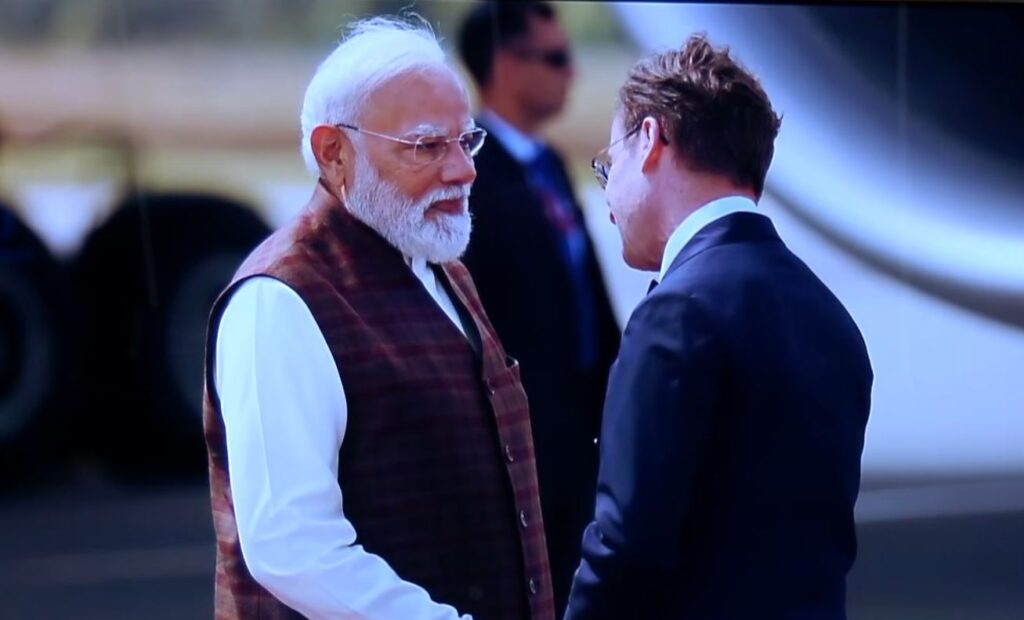
In an era of accelerating geopolitical realignment and supply-chain restructuring, the elevation of Sweden–India relations to a formal Strategic Partnership marks a significant inflection point for Nordic capital, technology, and diplomacy. The announcement, made during Indian Prime Minister Narendra Modi’s official visit to Gothenburg on 17 May 2026, signals that Stockholm and New Delhi are moving beyond transactional trade ties toward a deeper, structurally anchored collaboration spanning defence, space, climate technology, and digital infrastructure.
For Nordic business leaders, investors, and policymakers, the partnership arrives at a critical juncture. India is now the world’s fifth-largest economy and a pivotal player in the Indo-Pacific, while Sweden—fresh from overtaking the United States as the world’s second-most innovative economy in 2023—brings world-class R&D intensity, green industrial know-how, and a defence-technology ecosystem that aligns with India’s “Atmanirbhar Bharat” (self-reliant India) agenda. The two Prime Ministers, Ulf Kristersson and Narendra Modi, have set an explicit target: double bilateral trade within five years, from a 2025 baseline of USD 7.75 billion and Swedish cumulative FDI of USD 2.825 billion (2000–2025). The ambition is bold, but the structural tailwinds—India-EU FTA momentum, the India-EFTA Trade and Economic Partnership Agreement, and converging strategic interests—suggest it is achievable.
From Industrial Cooperation to Strategic Convergence
The Gothenburg summit was not merely ceremonial. It was framed by a trilateral press conference that included European Commission President Ursula von der Leyen, underscoring the broader EU-India strategic context. Von der Leyen described the moment as a “dynamic new era” in EU-India relations, a sentiment that reflects Brussels’ increasing recognition of India as a indispensable partner in trade, technology, and resilient supply chains.
For Sweden, the strategic partnership is a natural evolution. The two countries have long cooperated through the LeadIT (Leadership Group for Industry Transition) initiative, launched at COP25, which now brings together 18 countries and 27 companies committed to decarbonising heavy industry. At COP30, ministers from both nations announced that Swedish and Indian companies had been shortlisted to develop pre-pilot steel and cement projects in India under the India–Sweden Industry Transition Partnership (ITP)—a concrete step toward low-carbon industrial solutions that reaches beyond policy rhetoric into joint implementation.
What distinguishes this new phase is the explicit inclusion of defence and security in the bilateral architecture. Swedish defence major Saab—already the only foreign company approved for 100 percent ownership of an India-based defence operation—has offered to establish an independent industrial base for its Gripen fighter aircraft in India, with local production of 96 units following an initial Swedish-built batch of 18. The Carl-Gustaf weapon systems facility, already under construction in India, exemplifies a “Make in India” model that transfers technology rather than merely exporting hardware. For Swedish defence exporters, this represents a template that could extend to cybersecurity, aerospace, and undersea systems as India modernises its military amid regional tensions.
Space: The New Frontier of Nordic-Indian Collaboration
Space cooperation has emerged as one of the most symbolically potent and commercially promising pillars of the partnership. Sweden has officially joined ISRO’s Venus Orbiter Mission (VOM), scheduled for launch in 2028, contributing the Venusian Neutrals Analyzer (VNA) instrument developed by the Swedish Institute of Space Physics (IRF). This is not a token gesture; it is the ninth generation of IRF’s miniaturised ion and energetic neutral atom instruments, following the successful SARA experiment aboard India’s Chandrayaan-1 lunar mission in 2008.
The strategic significance extends beyond scientific prestige. Sweden’s Esrange Space Centre in Kiruna has supported telemetry for India’s Chandrayaan-3 mission and for private Indian space company Dhruva Space. As India opens its space sector to 100 percent FDI and private participation through IN-SPACe, Swedish ground-station capabilities, Arctic satellite tracking, and Earth-observation data infrastructure offer high-value entry points for Nordic technology firms. The potential for an Indian Arctic ground station in Sweden—improving satellite data frequency for agriculture, weather forecasting, and disaster management—has been explicitly recommended by strategic analysts, linking space cooperation to climate resilience and food security.
Prime Minister Kristersson’s remarks at the press conference captured the forward-looking tone: “As everyone understands, you don’t put a person on Venus, for many reasons, but to jointly explore parts of space that are not yet explored—there is enormous potential there.” The comment, while understated, points to a shared recognition that space is increasingly a domain of economic competition, not merely scientific inquiry.
The Digital and Green Transition Nexus
No contemporary strategic partnership can ignore the digital-green nexus, and Sweden and India are positioning themselves at its forefront. A bilateral meeting in February 2026 between India’s Communications Minister Jyotiraditya Scindia and Sweden’s Deputy Prime Minister Ebba Busch mapped out cooperation in 5G-Advanced, 6G research, Open RAN, quantum technologies, and cybersecurity. With India having completed the world’s fastest 5G rollout in 21 months and targeting universal 4G saturation by mid-2026, the scale of deployment offers Swedish firms like Ericsson an unrivalled testbed for next-generation infrastructure. India’s Bharat 6G Alliance, which aims to secure at least 10 percent of global 6G patents, has already drawn Swedish participation.
The partnership also carries geopolitical weight. Both nations emphasise trusted supply chains, interoperable open architectures, and resilient digital ecosystems—language that implicitly acknowledges the risks of technological dependency in an era of great-power competition. For Nordic policymakers, India’s Digital Public Infrastructure model (Aadhaar, UPI, DigiLocker) offers a scalable framework for inclusive digital governance that contrasts with more centralised alternatives.
The Nordic Dimension: Oslo and Beyond
Modi’s departure from Gothenburg for the 3rd India–Nordic Summit in Oslo on 19 May 2026 places the Sweden-India bilateral agreement within a wider regional framework. The summit—bringing together the Prime Ministers of Denmark, Finland, Iceland, Norway, and Sweden—will focus on sustainability, blue economy, Arctic governance, and defence. With India-Nordic bilateral trade reaching USD 19 billion in 2024, the Nordic bloc represents a coherent, high-trust market for Indian capital and a gateway for Indian firms into European regulatory and innovation ecosystems.
For Sweden specifically, the strategic partnership leverages its historical role as a bridge-builder. The 2018 India-Nordic Summit in Stockholm established the institutional rhythm; the 2026 Gothenburg bilateral has now given Sweden a first-mover advantage in defining the substance of that engagement. As the Nordic countries deepen their Indo-Pacific focus—evidenced by Sweden’s 2024 defence policy emphasis on the region’s “increasing importance in a turbulent world”—the partnership with India offers a practical outlet for strategic ambition that does not rely on NATO-centric frameworks alone.
Risks, Realities, and the Road Ahead
Despite the optimism, the doubling of trade within five years faces headwinds. Swedish companies have historically been cautious entrants into the Indian market, deterred by regulatory complexity, infrastructure gaps, and local-content requirements. The India-EU FTA, concluded recently, should ease tariff barriers, but non-tariff obstacles—particularly in public procurement and standards harmonisation—will require sustained diplomatic attention.
Defence cooperation, while advancing, remains contingent on India’s prolonged procurement cycles and strategic hedging between Western, Russian, and indigenous platforms. Saab’s Gripen offer, though technically compelling, competes with American, French, and domestic alternatives in a market where political considerations often outweigh industrial logic.
Climate and industrial transition collaboration, meanwhile, must demonstrate commercial viability at scale. The LeadIT and ITP frameworks are promising, but the steel and cement sectors in India are dominated by public-sector incumbents and price-sensitive markets. Swedish green-tech exporters will need patient capital and risk-sharing mechanisms to penetrate these segments.
Conclusion: A Partnership of Strategic Necessity
The elevation of Sweden-India ties to a Strategic Partnership is more than diplomatic choreography. It reflects a hard-headed assessment in both Stockholm and New Delhi that their interests—technological, economic, and geopolitical—are increasingly aligned in a fragmenting global order. For Sweden, India offers scale, market access, and a democratic counterweight in the Indo-Pacific. For India, Sweden provides innovation capital, green industrial solutions, and a credible entry point into European technology and defence ecosystems.
As Prime Minister Modi receives Sweden’s Royal Order of the Polar Star—the highest distinction for a head of government—the symbolism is apt. The award recognises not merely past contributions but a bet on future convergence. The coming five years will test whether that bet translates into the trade volumes, joint ventures, and strategic depth that both leaders have promised. For the Nordic business community, the message is clear: the door to India is now open wider than ever, but walking through it will require the same long-term commitment, adaptability, and innovation that define Sweden’s own economic model.