A strategic analysis of military expansion along NATO’s newest frontier—and its implications for investors, executives, and policymakers
Executive Summary
New satellite imagery released through a coordinated investigation by Nordic public broadcasters reveals a systematic and substantial expansion of Russian military infrastructure along the Finnish border—an area now constituting NATO’s most contested frontier following Finland and Sweden’s accession to the Alliance. The findings, verified by Swedish military intelligence (MUST) and corroborated by defence ministries across the region, indicate that Russia is constructing permanent facilities capable of housing approximately 80,000 troops—four times previous deployment levels—within striking distance of Alliance territory.
For senior executives, institutional investors, and decision-makers operating in the Nordic region, this development represents more than a geopolitical headline. It signals a fundamental restructuring of the security environment that will reshape regional economic dynamics, defence procurement markets, infrastructure investment priorities, and the strategic calculus of doing business across the Baltic and Arctic corridors.
This analysis examines what the evidence shows, why it matters now, and what it portends for the region’s economic future.
The Evidence: Reading the Infrastructure Playbook
The investigation—conducted collaboratively by Sweden’s SVT, Denmark’s DR, Norway’s NRK, and Estonia’s Delfi under the “Eyes on Russia” initiative, with satellite imagery provided by Planet Labs—presents a granular account of construction activity that has accelerated throughout the winter months along Russia’s northwestern frontier.
“…satellite imagery confirms that Russia is preparing for a long-term presence by constructing modern, climate-controlled bunkers (Delfi 2025).”
What the imagery captures is not merely an incremental increase in garrison capacity. The structures being erected include modern, climate-controlled warehouses; hardened ammunition storage facilities; expanded barracks complexes; and vehicle maintenance infrastructure spanning multiple locations across the Finnish border region. These are permanent installations, not field deployments—the kind of infrastructure that signals long-term strategic intent rather than temporary operational posturing.
Finnish Army Chief Pasi Välimäki’s assessment is stark: the anticipated troop presence could reach 80,000 personnel, compared to approximately 20,000 prior to the current construction phase. The Swedish Military Intelligence and Security Service (MUST) has characterised this as a development demanding serious attention, with Defence Minister Pål Jonson confirming that Stockholm is actively monitoring the structural expansion.
The scale and permanence of these installations distinguish this from previous patterns of Russian military activity in the region. This is infrastructure designed to endure—and to be activated.
Strategic Implications: The “Hollow Structure” Doctrine
The most analytically significant dimension of the satellite findings is not the current troop presence but the strategic architecture being constructed for future deployment. Military intelligence analysts have described Russia’s approach as a “hollow structure” strategy: building the physical skeleton of military capacity now, with the expectation that the war in Ukraine—currently absorbing the bulk of Russia’s deployable forces—will eventually wind down, releasing personnel and equipment for rapid redeployment.
This interpretation carries substantial weight. The facilities under construction are not designed for the force levels Russia currently maintains in the region. They are designed for a force Russia intends to have there—and is investing now to ensure it materialises.
A further dimension involves the reorganization of Russian military command structures. Moscow has announced plans to re-establish the Leningrad and Moscow military districts, with explicit reference to countering the NATO accession of Finland and Sweden. Smaller brigades positioned near Nordic borders are being expanded into full-scale divisions. Expert assessments suggest that once newly constructed facilities reach operational capacity, Russian troop levels in Sweden’s immediate vicinity could triple.
For business leaders, this structural reality demands a recalibration of assumptions. The security environment along NATO’s northern flank is not a temporary anomaly awaiting resolution. It is a new permanent condition—one that will reshape defence spending trajectories, infrastructure investment patterns, and the risk parameters governing commercial activity across the region.
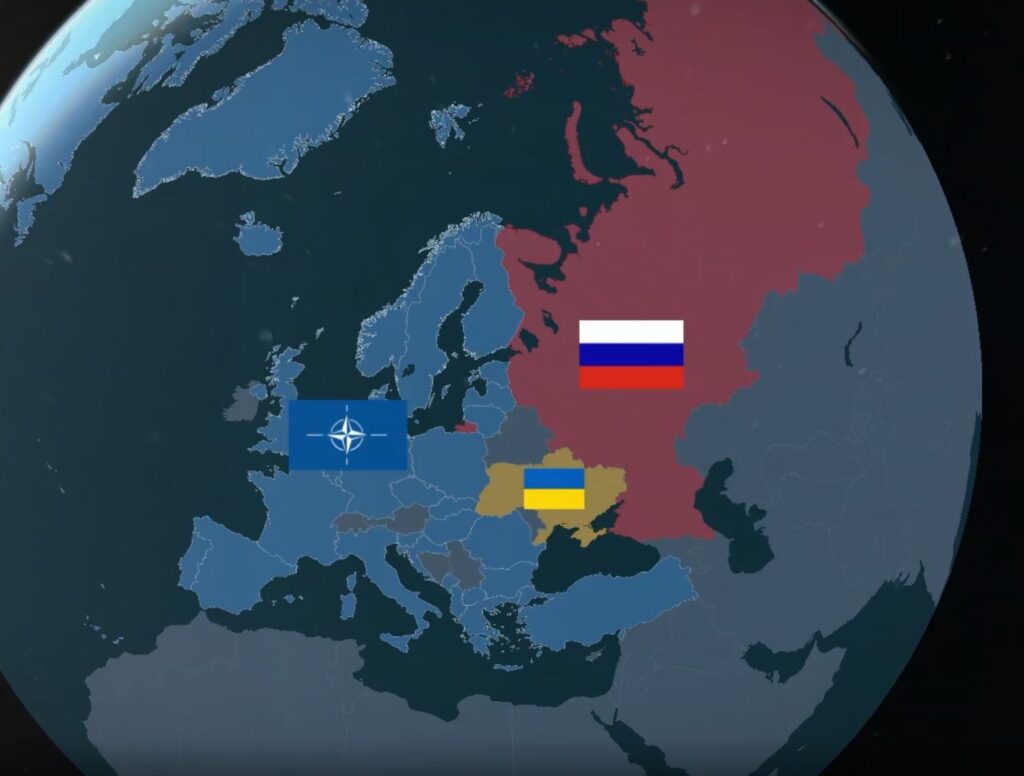
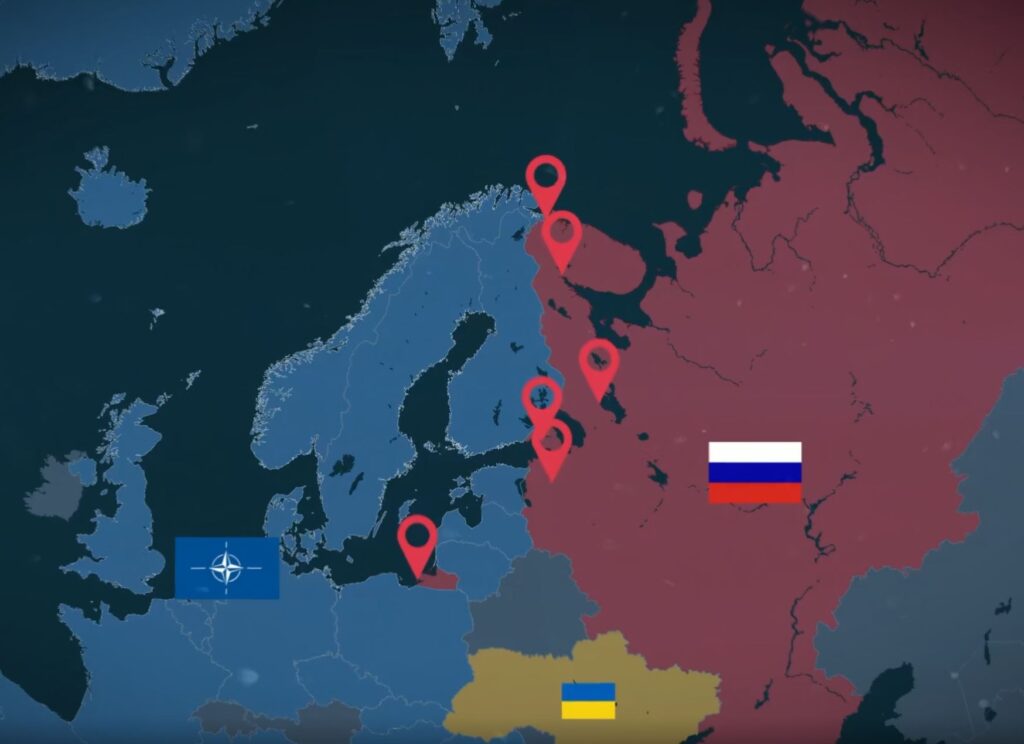
New satellite images showing Russia increasing its armaments in Sweden’s vicinity. Source: SVT
Nordic Defence Responses: From Rearguard to Forward Posture
The satellite revelations have catalysed tangible defensive adaptations across the Nordic region, each carrying economic and strategic implications.
Sweden’s Strategic Leap: Stockholm’s response has been notably direct. In direct response to the monitoring challenges highlighted by this investigation, Sweden launched its first dedicated military surveillance satellite, acquiring real-time space-based situational awareness capabilities previously unavailable. This represents a step-change in national defence posture—and a signal of the region’s determination to close intelligence gaps that the satellite imagery itself exposed.
“…the structural build-up serves as a ‘hollow structure’ intended to be rapidly filled with soldiers once active combat slows down (MUST 2025).”
Legislative Countermeasures: The Swedish government has initiated legislative reforms to its Expropriation Act, enabling the state to seize private properties owned by Russian citizens near critical military installations. While a specific policy intervention, this measure reflects a broader pattern of tightening security parameters around strategic infrastructure—parameters that will increasingly affect property markets, foreign investment screening, and due diligence requirements for transactions involving assets near defence-sensitive sites.
NATO Integration and the New Baltic Flank: These developments have accelerated the transformation of the Nordic-Baltic region from a historically low-tension zone into a heavily fortified defensive flank of the Alliance. U.S. and Nordic Arctic war games have intensified in frequency and scope. Finland and Sweden, as NATO’s newest members, now anchor the Alliance’s northern posture—a reality that elevates regional strategic significance and, by extension, the security assurances extended to allied nations operating in the area.
For investors and executives, the defence spending implications are considerable. NATO’s renewed focus on northern reinforcement creates sustained demand signals for defence contractors, security technology providers, infrastructure firms with defence-adjacent capabilities, and the broader Nordic industrial base positioned to benefit from long-term security investment.
Economic and Business Ripple Effects: Reading the Strategic Environment
The military intelligence picture, while significant in its own right, must be understood within a broader context of economic transformation in the Nordic region. Several intersecting dynamics merit attention.
Defence Procurement and Industrial Capacity: Finland and Sweden bring substantial defence industrial capabilities to NATO— Saab, Patria, and a robust domestic supply chain representing significant aggregate capacity. As Alliance posture reinforces, demand for Nordic defence production will intensify. Companies positioned within this supply chain, or adjacent sectors such as advanced manufacturing, cybersecurity, and critical communications infrastructure, face a favourable demand environment extending well beyond current planning horizons.
Infrastructure Investment in Contested Geography: The reinforcement of NATO’s northern flank implies sustained investment in physical infrastructure—logistics corridors, port facilities, communications networks, and energy security infrastructure—along routes that must now be considered strategically sensitive. This creates both opportunities and constraints for infrastructure investors and developers.
The Risk Calculus for Foreign Direct Investment: The geopolitical environment introduces new risk dimensions for cross-border investment in the region. While Nordic economies remain among the world’s most stable and business-friendly, the expanded security perimeter raises questions about investment screening, sector-specific restrictions, and the long-term stability of operating environments in areas proximate to military installations. These are not prohibitive concerns—but they are factors that sophisticated investors will price and manage.
Energy Security and the Arctic Dimension: The Arctic emerges increasingly as a zone of both strategic competition and economic opportunity. Russia’s military posture reinforces the importance of energy security infrastructure for the Nordic region—LNG terminals, pipeline alternatives, and the strategic diversification of energy supply chains. Companies operating in energy, logistics, and infrastructure should factor these dynamics into medium-term strategic planning.
Regional Competitive Dynamics: The Nordic Model Under Pressure?
A broader analytical question concerns the implications of sustained security tension for the Nordic economic model—a model characterised by openness, neutrality, and integration across Eastern and Western markets.
Finland and Sweden abandoned their traditional non-alignment within a remarkably compressed timeframe, driven by precisely the security dynamics now being documented in satellite imagery. This shift reflects a recognition that the strategic environment had already changed fundamentally, and that institutional postures needed to catch up with operational realities.
For the region’s broader economic identity, the implications are nuanced. The Nordic model has thrived on stability, institutional predictability, and the premium associated with low-risk operating environments. A permanently reinforced security perimeter, while creating certain constraints, also reinforces the credibility of Nordic institutional commitment to stability—and the reliability of the region as a strategic partner for allied nations and businesses.
The question is not whether the Nordic model will endure, but how it will adapt. The evidence suggests adaptation is already underway.
Conclusion: Strategic Bearings for Decision-Makers
The satellite evidence emerging from Russia’s northwestern frontier tells a story of infrastructure designed for a future that Russia intends to bring about—not the dissolution of tensions, but their permanent institutionalization in a new military configuration along NATO’s newest front.
For senior executives, investors, and policymakers, several conclusions emerge with clarity:
The security environment of the Nordic region has undergone a structural transformation that will not reverse on any near-term horizon. Defence spending, security investment, and the hardening of critical infrastructure will define a significant portion of regional public expenditure for the foreseeable future.
The economic opportunities created by this shift are substantial and durable—centred on defence and security industries, critical infrastructure, energy security, and the industrial capacity of nations now positioned at the centre of Alliance strategy.
The risks are equally real: supply chain exposure in contested logistics corridors, investment screening complexities, and the potential for escalation dynamics to affect commercial activity in ways that cannot be fully anticipated.
The most sophisticated decision-makers will treat this analysis not as a geopolitical curiosity, but as essential intelligence for strategic planning. The North is being remade. Those who understand the remaking earliest will position themselves most advantageously within it.
Editorial Outlook
As the Nordic region absorbs the strategic implications of Russia’s military infrastructure build-up, a critical follow-up analysis would examine the cascade effects on Nordic capital markets and institutional investment strategies. How are sovereign wealth funds, pension funds, and major institutional investors recalibrating their risk models in response to the new security environment? What sectors are attracting strategic capital as a result of the defence spending surge—and which are experiencing headwinds as investors reassess geographic exposure?
A deeper examination of the defence industrial ecosystem across Finland, Sweden, and the broader Nordic region would also illuminate important dynamics: the capacity of domestic defence producers to meet Alliance demand, the potential for consolidation and specialization, and the strategic implications of Nordic defence industrial integration into NATO’s broader supply chain.
Furthermore, the intersection of energy security and military strategy in the Arctic represents an underexplored analytical frontier—one with profound implications for LNG infrastructure investment, pipeline politics, and the future trajectory of European energy independence.
Nordic Business Journal will return to these questions in forthcoming editions.
Nordic Business Journal delivers strategic intelligence, market analysis, and forward-looking commentary for senior executives, investors, policymakers, and internationally minded business leaders. We invite readers to connect with our editorial team to discuss the implications of these developments for your organisation, explore partnership opportunities, and contribute to the strategic dialogue shaping the Nordic business landscape.
For further insights, exclusive analysis, and invitation-only discussion forums, reach out to our editorial team. We welcome perspectives from business leaders navigating the evolving Nordic and European strategic environment.
Nordic Business Journal — Strategic intelligence for the decisions that matter.
Sources
Primary Investigative & Media Sources
- Delfi (2025). Eyes on Russia. Tallinn: Delfi Estonia / Investigative Journalism for Europe (IJ4EU).
- DR (2025). Eyes on Russia: Satellite images reveal Russian military rearmament near Nordic borders. Copenhagen: Danmarks Radio.
- NRK (2025). Russian bases expand along the Arctic and Nordic frontiers. Oslo: Norsk rikskringkasting AS.
- SVT Nyheter (2025). Planet Labs satellite analysis: Russia builds ‘hollow structures’ in Sweden’s vicinity. Stockholm: Sveriges Television AB.
Intelligence & Défense Sources
- Militära underrättelse- och säkerhetstjänsten (MUST) (2025). Strategic Assessment: Russian structural build-up and military reorganization post-Ukraine. Stockholm: Försvarsmakten (Swedish Armed Forces).
- Swedish Armed Forces (2026). Sweden launches first spy satellite to track Russian troop movements. Stockholm: Försvarsmakten / Space Division.
International News & Analytical Sources
- Investigative Journalism for Europe (IJ4EU) (2025). Project Profile: Eyes on Russia – Mapping military bases along the EU/NATO eastern frontier. Vienna: International Press Institute.
- O’Donnell, W. (2025). Satellite Images Reveal Russian Military Build-Up Along Finland’s Border. Operational Analysis Report.
- The Moscow Times (2025). Satellite Images Show Russian Military Buildup Near Finland – NYT. Amsterdam: TMT LLC.