How Sweden, Norway, Denmark and Finland built different trust architectures for the digital economy
The Nordic region is often treated as a single digital market. In practice, it is not.
Its electronic identity systems reflect four distinct policy choices about trust, market access and state capacity.
Sweden and Norway illustrate this clearly. Both rely on BankID, yet the systems are separate, non-interoperable and governed differently. Denmark and Finland present another contrast. Denmark has built a tightly coordinated national model around MitID, while Finland has favoured a federated trust structure through the Finnish Trust Network.
For executives, investors and policymakers, these differences matter. Digital identity is no longer a technical utility alone. It shapes onboarding costs, compliance models, platform design, customer reach and the balance of power between banks, the state and digital service providers.
It also matters now because Europe is entering a new phase. The coming European Digital Identity wallet framework will push every national system to reassess interoperability, data sharing and user control. Nordic countries start from positions of strength. However, they are not starting from the same architecture.
A region united by outcomes, divided by design
Across the Nordics, electronic identity has become essential infrastructure. It supports banking, tax filing, healthcare access, e-commerce and digital signatures. Yet similar public outcomes have been achieved through different institutional models.
At the highest level, the divide is between centralized mandate and federated trust.
- Sweden relies on a dominant bank-led model with broad business integration.
- Norway combines bank-led identity with stronger intermediation and a public fallback option.
- Denmark has built a national, state-backed identity standard with near-universal penetration.
- Finland has opted for a network model that coordinates multiple private providers rather than one national monopoly.
These distinctions affect more than user experience. They shape competition, resilience, inclusion and regulatory risk.
Sweden and Norway: the two BankIDs that are not the same
Despite the shared brand, Sweden’s BankID and Norway’s BankID are separate systems. They are operated by different national banking structures and do not interoperate.
That distinction is often overlooked outside the region. It should not be.
Sweden: scale, speed and market dominance
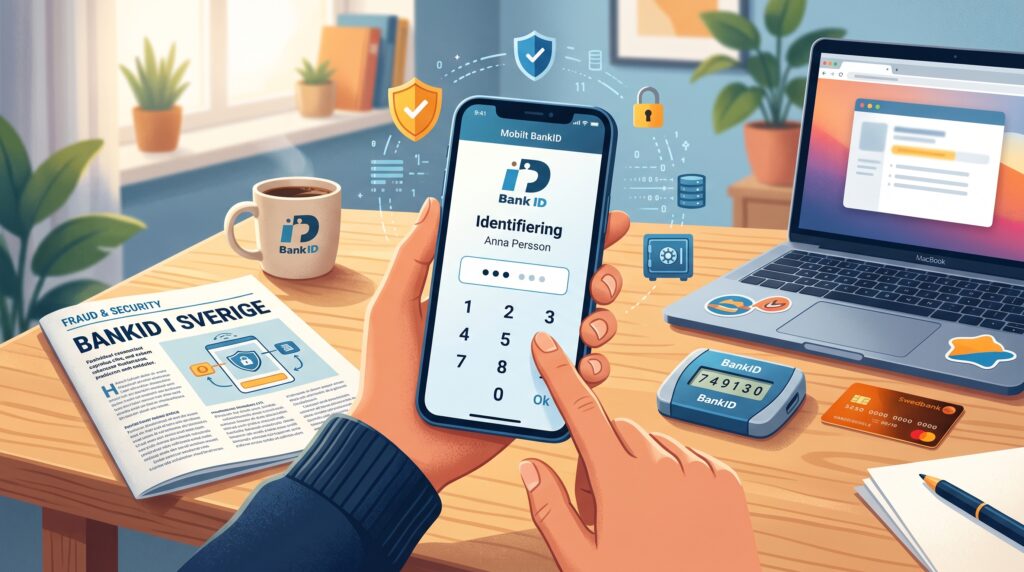
Sweden’s BankID operates as the closest thing to a private digital identity monopoly in the region. It has achieved overwhelming adoption and deep integration across both public and private services.
Its commercial strength lies in direct integration. Swedish businesses can connect BankID into their own software environments without a mandatory broker layer. This reduces friction for developers and supports rapid rollout across banking, insurance, retail and mobility services.
That model has advantages:
- fast implementation
- strong user familiarity
- lower integration complexity
- high transaction volumes
However, market concentration also creates strategic questions.
A highly dominant identity infrastructure can accelerate innovation in the short term. Yet it may also narrow competition over time. Dependence on one identity rail can increase systemic vulnerability and make inclusion gaps more visible.
Sweden has already faced this issue. BankID typically requires both a Swedish personal identity number and a local banking relationship. That created practical barriers for some foreign residents, newcomers and people outside mainstream banking channels. As a result, alternative solutions such as Freja eID have gained relevance as inclusion tools.
Norway: stronger controls, more layered access
Norway’s BankID sits in a more structured environment. Businesses generally access the system through approved intermediaries rather than through direct integrations. That broker-based approach imposes more control over access and data flows.
From a policy perspective, this reflects a different view of trust infrastructure. Norway gives more weight to controlled intermediation and legal robustness.
That has several consequences:
- businesses face a more mediated integration process
- data routing is more tightly governed
- the identity ecosystem is less exposed to direct commercial coupling
Norway also benefits from a public alternative, MinID, which acts as a baseline access mechanism for public services. This is important. It means participation in digital society is not wholly dependent on holding a commercial banking relationship.
For policymakers elsewhere, this is a notable design choice. It introduces redundancy into the system and reduces the social risk of exclusion.
Signatures, trust and legal weight
The two BankID systems also differ in emphasis.
Sweden has prioritized high-volume authentication at scale. Norway, by contrast, has developed strong capabilities in legally robust digital signing, including support for higher-assurance signature use cases.
For sectors such as real estate, legal services, lending and procurement, that difference is material. Authentication speed matters. So does evidentiary strength.
Denmark and Finland: mandate versus federation
If Sweden and Norway show different versions of bank-led identity, Denmark and Finland present a deeper philosophical divide.
Denmark: a coordinated national model
Denmark’s MitID is a tightly managed public-private system. It is embedded in a broader policy framework that treats digital interaction with the state as the default.
This approach gives Denmark several advantages:
- a unified user interface
- consistent national standards
- rapid policy implementation
- broad penetration across the population
MitID also reflects a deliberate security choice. It avoids using the national personal identifier as a casual login credential. Instead, it relies on app-based or hardware-based authentication and separate user identifiers. That helps reduce misuse and strengthens privacy safeguards.
For business, Denmark’s model offers predictability. A common identity layer can simplify service design and reduce fragmentation. Yet the same centralization also places pressure on governance. When one system becomes universal, operational resilience and public trust become strategic priorities.
There is little room for visible failure in a mandatory infrastructure.
Finland: choice, flexibility and friction
Finland has historically taken a more distributed path. Rather than building one mandatory identity monopoly, it created the Finnish Trust Network, which coordinates banking credentials and telecom-based certificates within a common framework.
This offers pluralism and provider choice. It also avoids placing excessive control in one institutional centre.
Yet federation comes with trade-offs.
For users, the experience can be less seamless. Authentication often depends on the specific bank or telecom provider, which can introduce extra steps and inconsistent journeys across services.
For companies, a federated model can support competition. However, it may increase integration complexity and weaken interface consistency.
Finland’s current direction suggests recognition of this tension. The country is working toward a state-issued digital identity wallet model aligned with broader European developments. If executed well, that could preserve user choice while reducing friction.
The real strategic issue: identity architecture shapes market structure
For many businesses, digital identity is still treated as a compliance function. That is too narrow.
Identity architecture influences:
- customer acquisition costs
- conversion rates during onboarding
- fraud exposure
- AML and KYC efficiency
- public-private service integration
- cross-border expansion readiness
In Sweden, a direct integration model may support faster product scaling. In Norway, Denmark and Finland, broker-based access can create more formal control points, which may strengthen governance but add layers to the commercial process.
This is not merely a technical difference. It affects which firms gain speed, which incumbents keep leverage and how easily new entrants can compete.
For investors, identity infrastructure is therefore an indirect indicator of digital market openness.
Why GDPR limits commercial exploitation
A common misconception is that Nordic eID systems function as broad identity databases for private sector use. They do not.
Under GDPR, these systems are designed to verify identity, not to act as open repositories of personal data for commercial extraction.
Token, not profile
When a user logs into a private service through a Nordic eID, the company does not receive unrestricted access to state or bank-held records.
What it typically receives is:
- a cryptographic confirmation that the user has been verified
- a limited set of attributes relevant to the service
- in some cases, a persistent unique identifier
What it does not receive, unless there is a specific legal basis, includes:
- bank balances
- tax records
- broader public-service history
- unrelated personal data
This distinction is central. The value of these systems lies in trust verification, not data resale.
Data minimization in practice
GDPR requires that only necessary data be transmitted for a specific purpose.
That means the data passed can vary by use case:
- Age-restricted commerce: confirmation of age eligibility, or sometimes birth date only
- Standard private services: typically name and a verified identifier
- Regulated financial services: fuller identity details, but only where AML or KYC obligations provide legal grounds
This framework limits unnecessary data exposure. It also means that well-designed identity systems can reduce compliance risk while still enabling commercial activity.
Purpose limitation and prohibited reuse
An identity verification event cannot be freely repurposed for advertising, profiling or unrelated analytics.
That prohibition has clear implications:
- eID operators cannot lawfully turn identity events into general consumer intelligence products
- service providers cannot automatically repurpose login metadata for AI training or ad targeting without a valid legal basis and, where required, explicit consent
For business leaders, this is a reminder that trust infrastructure is not a substitute for lawful data strategy.
Broker models as a privacy and market control mechanism
Norway, Denmark and Finland make greater use of brokers or intermediary layers. This has both technical and strategic importance.
A broker model can help:
- separate the merchant from the core identity provider
- reduce continuous tracking across services
- standardize access controls
- create audit points for security and compliance
It can also alter market power. Intermediaries can become important commercial gatekeepers in their own right.
Sweden’s more direct integration model offers speed. Broker-heavy systems may offer stronger shielding and oversight. Neither model is inherently superior in all contexts. The right choice depends on whether a country prioritizes competition, control, inclusion or operational simplicity.
Inclusion is becoming a first-order issue
The next stage of digital identity policy will be judged less by adoption rates alone and more by who remains excluded.
That is especially relevant in the Nordics, where digital participation is now closely tied to economic and civic participation.
Sweden’s earlier dependence on bank-linked identity revealed the risks of excluding residents without full banking access. Norway’s MinID offers one answer. Finland’s plural model offers another. Denmark’s universal framework solves many access issues, but it also raises the stakes around usability and support for vulnerable users.
As regulation tightens and digital public services expand, inclusion will become both a political and commercial issue. Companies that assume universal access may discover hidden customer losses in edge cases such as foreign hires, temporary residents, younger users and people with weak banking histories.
The European dimension is approaching fast
The next major shift will come from the European Digital Identity framework.
This matters because the new wallet model aims to give citizens more selective control over what data they share and with whom. That could gradually move Europe beyond today’s login-centric systems toward reusable, verifiable digital credentials.
For Nordic countries, this is both an opportunity and a challenge.
They already possess mature digital identity ecosystems. However, maturity can create inertia. Systems built for national efficiency must now adapt to cross-border portability, credential interoperability and new user control expectations.
That transition will likely raise strategic questions:
- Will national champions remain dominant in a wallet-based environment?
- Will banks retain their central role?
- Will state-led models gain ground as Europe pushes common standards?
- How will private platforms adapt product flows to selective disclosure models?
The Nordic region is well placed to influence this next phase. Still, leadership will depend on adapting strong domestic systems to a more integrated European trust framework.
Comparative snapshot
| Metric | Sweden (BankID) | Norway (BankID) | Denmark (MitID) | Finland (FTN) |
|---|---|---|---|---|
| Primary owner | Bank consortium | Bank consortium | Public-private partnership | Federated banks and telcos |
| Integration model | Direct API access | Broker-based access | Broker-based access | Broker-based access |
| Public fallback | Freja eID as alternative | MinID | No separate universal fallback in the same sense | Citizen certificate and evolving state options |
| Core philosophy | Dominant private infrastructure | Controlled layered access | Centralized national standard | Federated trust model |
| Strategic strength | Scale and simplicity | Governance and resilience | Unified national coordination | Choice and competition |
| Strategic risk | Concentration and exclusion | Added complexity for business access | Single-point dependency | Fragmented user experience |
Conclusion
The Nordic region remains a global benchmark in digital identity. Yet its success should not obscure the reality that it runs on different institutional logics.
Sweden shows the power of scale and direct business integration. Norway demonstrates the value of layered safeguards and public fallback access. Denmark offers a model of coordinated national execution. Finland preserves market diversity through federation, even at the cost of some friction.
For decision-makers, the lesson is straightforward. Digital identity is not just a back-end utility. It is a strategic layer of the digital economy, with consequences for market access, compliance, inclusion and long-term competitiveness.
The next contest will not be over adoption. It will be over interoperability, user control and who governs trust in an increasingly European digital market.
Editorial Outlook
A strong follow-up article would examine how the forthcoming European Digital Identity Wallet could reshape Nordic digital identity models.
A sharper strategic angle would be this: Will the EUDI Wallet weaken bank-led identity monopolies by shifting power toward citizen-controlled credentials and state-backed interoperability?
That article could assess:
- how selective disclosure changes data economics
- whether banks lose strategic relevance in authentication
- how Nordic incumbents may defend or adapt their positions
- what cross-border business gains from a common European trust layer
- where regulatory friction or implementation delays could emerge
An alternative legal and regulatory angle would explore a Nordic enforcement case involving unlawful eID-related tracking or metadata misuse. That would connect privacy law directly to platform governance and corporate risk.
Connect with Nordic Business Journal
For further insight on Nordic markets, digital infrastructure, policy risk and cross-border business strategy, connect with Nordic Business Journal.
We welcome discussion with executives, investors, policymakers and entrepreneurs seeking sharper perspectives on the region’s evolving economic landscape, partnership opportunities and long-term strategic trends.
References
Global Governance & Competitiveness Benchmarks
- The UN E-Government Survey (2024)
Published by the United Nations Department of Economic and Social Affairs (UNDESA). This biennial flagship report tracks the E-Government Development Index (EGDI) across 193 member states.- Key Data: Ranked Denmark #1 globally with a composite score of 0.9847.
- Source Link: Available via the United Nations E-Government Knowledge Base.
- The OECD Digital Government Index (DGI)
Released by the Organisation for Economic Co-operation and Development. It evaluates 42 countries across 6 primary transformation indices (including proactiveness and user-driven architecture).- Key Data: Ranked South Korea #1 (0.95 points), Norway #5, and Denmark #8 (0.83 points).
- Source Link: Access the complete analysis on the OECD iLibrary Publications.
- The IMD World Digital Competitiveness Ranking
An annual report produced by the International Institute for Management Development (IMD) World Competitiveness Center. It measures knowledge, tech capital, and future readiness across 69 global economies.- Key Data: Ranks Switzerland #1, the United States #2, and Denmark #5 globally.
- Source Link: Reviewed via the IMD World Competitiveness Center.
Regulatory Frameworks & Infrastructure Briefs
- EU General Data Protection Regulation (GDPR), Article 5
The official statutory text regulating data handling within the EU, heavily policing European eID frameworks.- Core Clause: Article 5(1)(c) enforces strict “Data Minimisation,” ensuring that platforms only pass the exact minimum data required to a private merchant.
- Source Link: Reference documentation found via the Official EU GDPR Portal.