
Severe flash floods triggered by heavy seasonal rains have devastated Nigeria’s northeastern Adamawa state, resulting in at least 23 confirmed deaths and the displacement of thousands of residents. The United Nations humanitarian agency (OCHA) reported on Tuesday that several neighbourhoods in Yola, the capital of Adamawa, were inundated over the weekend, causing widespread destruction and forcing over 5,500 people to flee their homes.
The flooding began on Sunday across five communities in the Yola South Local Government Area, with substantial rainfall causing rivers and drainage systems to overflow. The scale of the disaster has left many residents injured and at least 11 individuals still missing, with emergency services conducting ongoing search and rescue operations.
Local authorities, supported by both governmental and non-governmental organizations, have responded swiftly by establishing relief camps, notably at Aliyu Musdafa College in Yola, where essential supplies are being distributed to displaced persons. Despite these efforts, the humanitarian needs remain significant as residents grapple with loss of homes, possessions, and livelihoods. For instance, one flood victim, Angela Joseph, lost her entire fish farming operation in the disaster.
This catastrophic event is part of a broader pattern of flooding in Nigeria, which typically occurs during the rainy season from June through November. Nigeria experiences annual heavy rainfall that often leads to dangerous floods exacerbated by inadequate infrastructure and poor drainage systems throughout the country, especially in densely populated urban and rural areas. Since the start of the rainy season in May 2025, flooding has claimed more than 200 lives nationwide, predominantly in Niger State, north-central Nigeria.
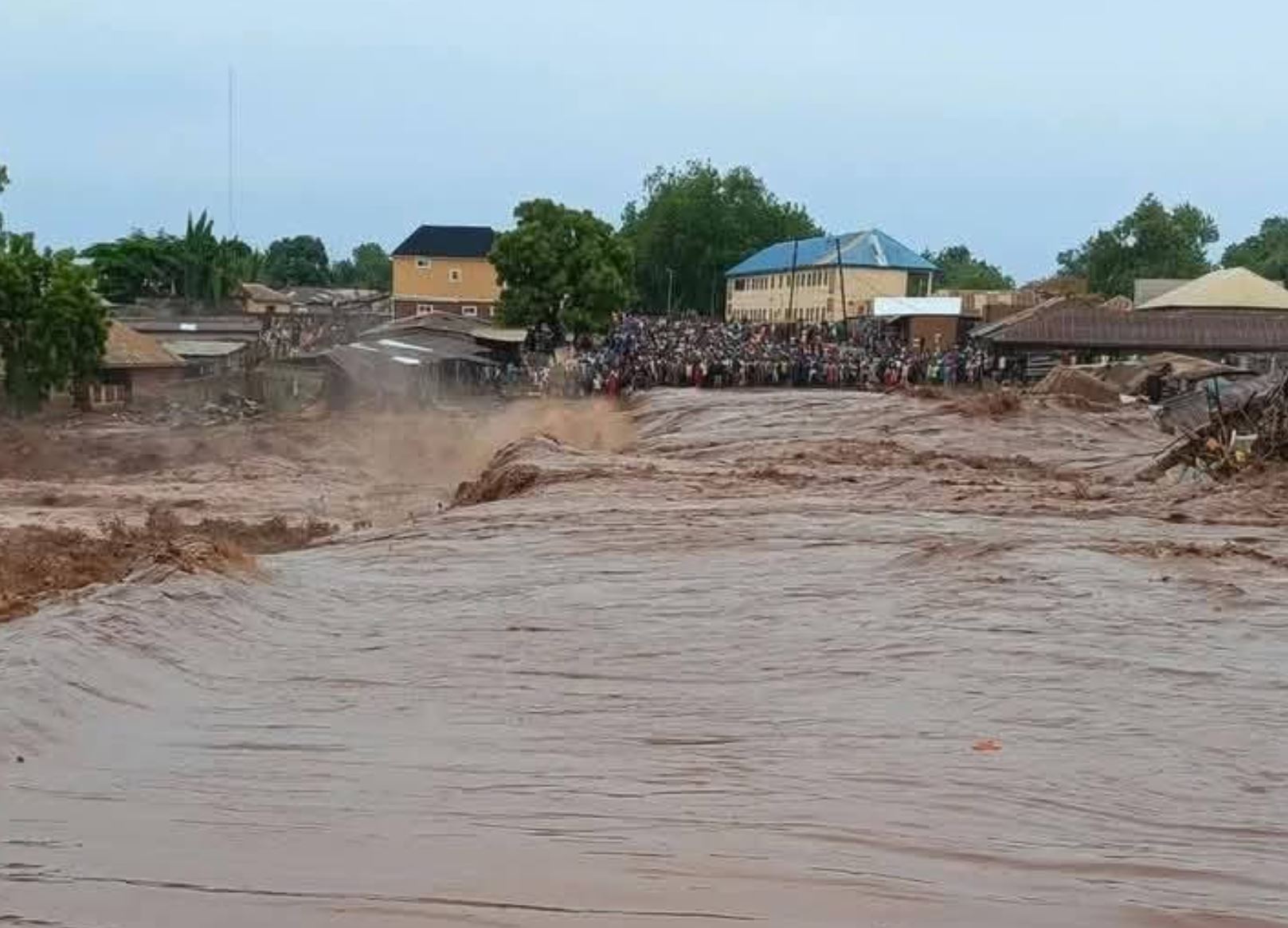
The 2024 flood season stands out as one of the worst in decades, with over 300 fatalities and the displacement of more than one million people across 34 of Nigeria’s 36 states, according to the UN. Scientists and meteorologists attribute the increasing frequency and severity of such extreme weather events in Nigeria to the impacts of climate change, which results in intensified rainfall over shorter periods. Environmental experts also highlight structural issues such as deforestation, insufficient dam maintenance, and blocked drainage systems due to poor waste management as key factors worsening the flood impact.
The Nigerian government, alongside emergency agencies like the National Emergency Management Agency (NEMA), continues to address the crisis through search and rescue, relief distribution, and public advisories urging residents in flood-prone areas to move to higher ground. However, criticisms have been raised about the government’s preparedness and long-term flood mitigation strategies. State authorities emphasize active engagement on the ground and call for unified community support during these disasters.
As heavy rains are forecasted to continue across Nigeria, especially in central and eastern regions, experts warn of potential further flooding in the coming days and weeks, underscoring the urgent need for enhanced infrastructure and climate resilience measures to reduce future flood risks.
This latest flooding tragedy in Adamawa State represents a profound humanitarian crisis demanding sustained and coordinated domestic and international response efforts to support recovery, protect vulnerable populations, and build stronger resilience against increasingly frequent climate-related disasters in Nigeria.
References: United Nations Office for the Coordination of Humanitarian Affairs (OCHA), Nigeria’s National Emergency Management Agency (NEMA), Associated Press (AP), Deutsche Welle (DW), and local Nigerian news sources July 2025 reports.