
COPENHAGEN – On paper, Denmark had been the envy of Europe: record trade surpluses, unemployment at multi-decade lows, and a stock market that seemed to levitate on the back of a single sector—pharmaceuticals. Then came last Tuesday.
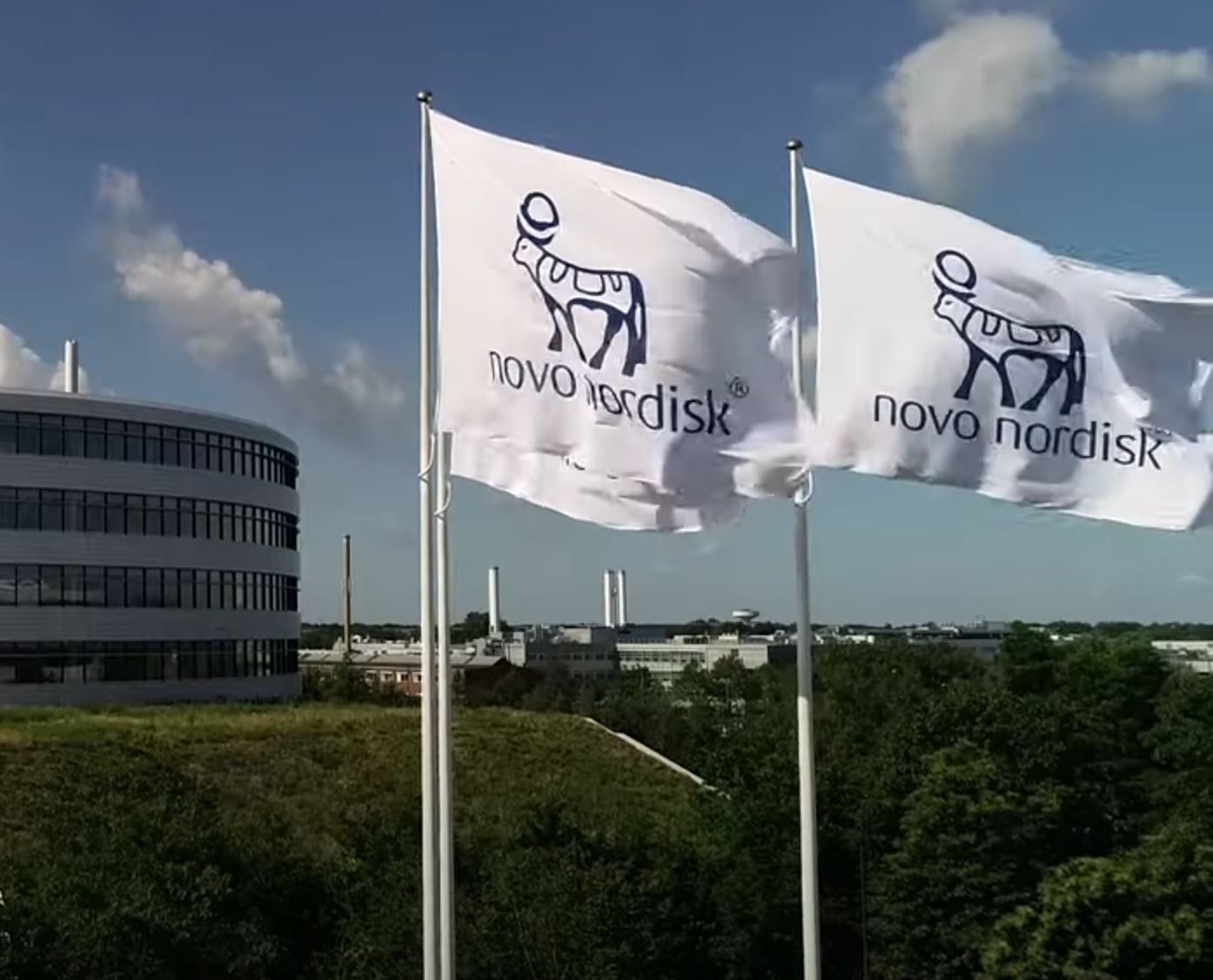
When Novo Nordisk A/S slashed its 2025 guidance for the blockbuster weight-loss drugs Wegovy and Ozempic, the aftershocks were felt far beyond the company’s gleaming glass headquarters in Bagsværd. Within 24 hours, Nykredit—Denmark’s largest mortgage bank and a systemically important financial institution—ripped up its macro-economic playbook and issued a stark revision: Danish GDP growth for 2025 was cut from 3.5 % to just 0.9 %, and the once-booming export engine is now expected to contract by 1.9 % rather than expand by 3.9 %.
“The picture of the Danish economy, which in recent years has exceeded all expectations, begins to crack,” Palle Sørensen, Chief Economist, Nykredit
The Novo Effect
To understand the scale of the reversal, consider the numbers. Novo Nordisk’s market capitalisation—above $400 bn at its peak—has, at times, exceeded Denmark’s entire annual GDP. Roughly 15 % of all Danish exports are pharmaceutical products, with Novo accounting for the lion’s share.
The company’s new guidance implies sales growth of 8–14 % in 2025 (down from 13–21 %) and operating-profit growth of 10–16 % (down from 16–24 %). That may still sound robust, but for an economy that has become structurally reliant on one industry—and one product category—it is the difference between out-performance and outright stagnation.
From Miracle to Vulnerability
Economists have long warned that Denmark’s stellar performance was, in fact, a textbook case of “Dutch disease.” The term, coined after the Netherlands’ 1970s natural-gas boom, describes how a dominant sector drives up wages and the exchange rate, crowding out other industries. Denmark’s experience has been eerily similar:
- Currency: The krone briefly weakened against the euro after Novo’s share-price rout last December, underscoring how tightly the currency now trades on pharma sentiment.
- Employment: One in three new Danish jobs created since 2021 has been linked—directly or indirectly—to Novo Nordisk’s expansion.
- Household wealth: Danes lost an estimated DKK 38 bn in listed equity portfolios on the day of Novo’s profit warning alone, according to Sydbank.
“Lower growth in Novo means lower GDP growth in Denmark—it’s that simple,” Las Olsen, Chief Economist, Danske Bank
Competitive Headwinds
The immediate trigger for the guidance cut was slower-than-expected uptake in the crucial U.S. market, where rival Eli Lilly’s competing GLP-1 drug Mounjaro has gained share. In addition, U.S. insurers are tightening reimbursement rules, and regulators are scrutinising off-label prescriptions.
Meanwhile, copy-cat versions of semaglutide—the active ingredient in Ozempic and Wegovy—are proliferating in global markets, pressuring prices. Novo Nordisk is spending more than $8 bn over the next three years to expand manufacturing in Kalundborg and Hillerød, but analysts question whether supply-side investment can outrun demand-side disappointment.
Policy Dilemma
The Danish government now faces a classic policy trilemma: how to cushion the macro-economic blow without exacerbating the very imbalances that made the country vulnerable in the first place.
- Fiscal stimulus risks overheating an already tight labour market.
- Monetary easing is constrained by the krone’s peg to the euro.
- Industrial diversification, while necessary, is a long-term project in a country of just 5.9 million people.
Finance Minister Nicolai Wammen has promised a “national growth plan” this autumn, but officials privately acknowledge that any realistic strategy will take years to offset the pharma drag.
Echoes of Nokia
The parallels with Finland’s experience two decades ago are hard to ignore. At its peak, Nokia contributed 4 % of Finnish GDP and 21 % of exports; when Apple’s iPhone disrupted the market, Finland slipped into a decade of stagnation. Denmark’s reliance on Novo Nordisk is, if anything, more extreme.
“We risk putting all our eggs in one basket—again,” Mikael Bak, CEO, Danish Shareholders’ Association
Outlook: Lower, Slower, Longer
Nykredit’s August forecast is among the gloomiest yet, but it is unlikely to be the last. The European Commission’s Spring outlook—published before Novo’s warning—still pencilled in 3.6 % Danish GDP growth for 2025. Most Nordic banks are expected to follow Nykredit in the coming weeks.
For Danish households, the shift is already tangible: job adverts for lab technicians in Kalundborg have fallen 30 % since May, and Copenhagen real-estate brokers report a 15 % drop in foreign buyer inquiries, citing “Nordisk fatigue.”
The moral of Denmark’s rollercoaster year may be that even miracle drugs have side effects—especially when the prescription is written for an entire economy.