
The ozone layer over the Arctic reached its thickest point in 45 years last year, marking a monumental milestone in the battle against ozone depletion. This achievement is a direct result of an international climate agreement forged nearly four decades ago—the Montreal Protocol—which continues to serve as a global success story in environmental protection.
A Bright Future for the Ozone Layer
In 1987, world leaders came together to sign the Montreal Protocol, an agreement aimed at phasing out the production and use of ozone-depleting substances like chlorofluorocarbons (CFCs). Since then, the world has seen an extraordinary turnaround in the state of the ozone layer. According to measurements from the Danish Meteorological Institute (DMI), the ozone layer over the Arctic is now thicker than it has been since the 1980s.
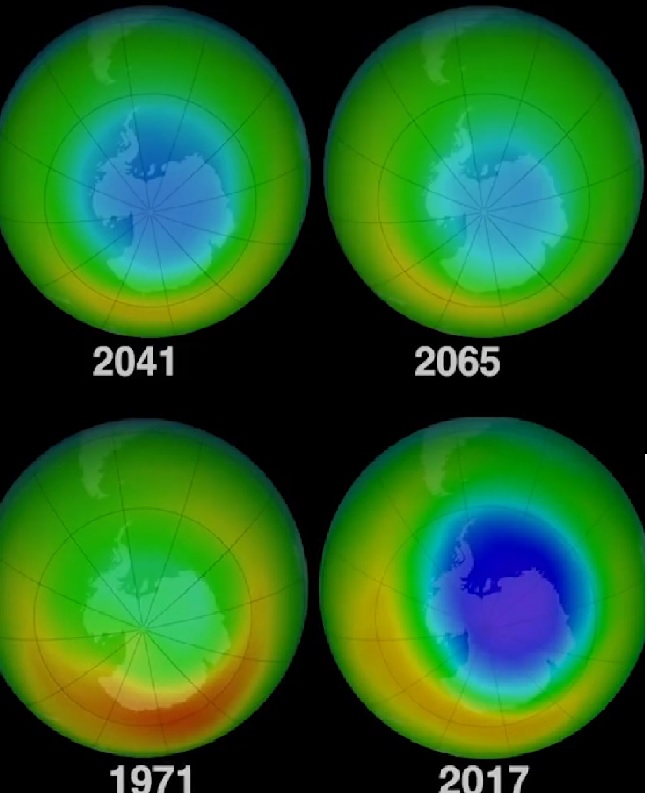
Experts are optimistic that the ozone layer will be fully restored by 2040 in the Northern Hemisphere, 2050 in the Arctic, and by 2060 in the Antarctic. Helge Jønch-Sørensen, an ozone researcher at the Danish Institute for Meteorology’s National Centre for Climate Research, notes that the recovery timeline represents a remarkable achievement, considering the scale of the problem.
“The speed with which countries came together to address ozone depletion was extraordinary,” Jønch-Sørensen remarked. “When you consider how long such environmental recovery normally takes, the success of the Montreal Protocol has been unreasonably swift.”
A Crisis Avoided
The ozone layer, which protects life on Earth from harmful ultraviolet (UV) radiation, was once under severe threat. In the 1970s, scientists discovered that gases such as CFCs were depleting the ozone layer. By the 1980s, tangible holes were appearing, particularly over Antarctica.
In response, the Montreal Protocol was adopted in 1987, with nearly every country on Earth committing to reduce the production and use of these harmful gases. Today, the Protocol is credited with reducing ozone-depleting emissions by 99%. If not for this global effort, the ozone hole over Antarctica would likely have continued to grow, exacerbating the risk of more UV radiation reaching Earth’s surface. This would have led to increased rates of skin cancer, cataracts, and other health issues, while also damaging plant life and ecosystems.
Jønch-Sørensen explains the significance of these actions: “If the international community hadn’t acted swiftly, the ozone layer would have continued to thin, with severe consequences for life on Earth.”
A Long Wait for Recovery
While the Montreal Protocol’s effects were felt almost immediately in terms of reduced emissions, the recovery of the ozone layer itself has been a slower process. Ozone-depleting substances can remain in the atmosphere for up to a century before breaking down. As a result, it took years before scientists could measure tangible signs of recovery. By the late 1990s, the first positive indicators appeared, and in 2014, scientists confirmed that the ozone layer was beginning to heal.
More recently, in 2023, researchers observed that the ozone hole over Antarctica had shrunk, providing concrete evidence that the Montreal Protocol is still working.
A Year of Record-Breaking Ozone
The ozone layer’s recent recovery over the Arctic is partly due to unique weather conditions last year. The stratosphere, the region where the ozone layer resides, was warmer than usual in 2024, significantly reducing ozone depletion. In addition, ozone-rich air from the tropics was transported to northern latitudes, contributing to the thickening of the ozone layer.
While such favourable conditions are not guaranteed every year, they have helped push the recovery process forward faster than expected. However, Jønch-Sørensen cautions that fluctuations are still part of the process. “In 2010, we saw a similar pattern, but this year we are expecting a more typical level of ozone degradation,” he said.
Despite annual variations, the overall trend remains positive. The continued progress offers hope that the ozone layer will not only stabilize but thrive in the coming decades.
A Global Example of Climate Success
The recovery of the ozone layer is a powerful reminder of the impact international agreements can have on the environment. The Montreal Protocol has not only protected human health but has also contributed to the fight against climate change by reducing the use of substances that also contribute to global warming.
Jønch-Sørensen concludes, “The recovery of the ozone layer is proof that coordinated global action can make a real difference. It should inspire further efforts to tackle other environmental challenges, particularly climate change.”
As the ozone layer continues to heal, the world has a clearer view of the power of collective action—and the promise of a healthier, more sustainable future for all.
About the Author:
Carine Johns is a journalist and analysist with Ganiley Solutions specialising in climate change, environmental policy, and sustainability. Their work has appeared in various international publications.