
STOCKHOLM — On the elegant cobblestones of Grev Turegatan, where Sweden’s real estate elite convene for Affärsvärlden’s annual theme day, a quiet revolution is unfolding. Suit-clad investors sip espresso as CEOs unveil bullish forecasts. But behind the polished presentations lies a seismic shift: foreign buyers now account for 26 percent of all Swedish real estate transactions in 2025 — the highest level in a decade.
And many of them are American.
The Great Escape: From U.S. Turmoil to Nordic Stability
“I’ve worked in real estate for 30 years and have never seen such intense international interest in Sweden,” says Max Barclay, CEO of Newsec, one of Scandinavia’s leading real estate advisory firms. Speaking to Fastighetsnytt, Barclay doesn’t mince words: “Many American investors feel a sense of unease at home — politically, economically, socially — and they’re looking for safe harbours. Europe is the answer. And within Europe, Sweden and the Nordics are winning.”
The numbers back him up. In 2024, foreign buyers made up 17 percent of Swedish property deals. Just one year later, that figure has jumped to 26 percent. The U.S., grappling with political polarization, inflation volatility, and urban unrest, is seeing its capital quietly migrate north — to cities like Stockholm, Gothenburg, and Malmö.
“Britain and Germany have lost their lustre,” Barclay notes. “Brexit uncertainty, energy instability, regulatory hurdles — Sweden, by contrast, offers transparency, institutional strength, and climate resilience. It’s a trifecta foreign capital craves.”
“When Will the Market Turn?” — Domestic Optimism Meets Global Demand
While international money floods in, domestic players are also sensing a rebound. Michael Moschewitz, CEO of Genova Property Group, told Affärsvärlden that the housing market is “starting to pick up,” particularly in metropolitan areas. “The industry was hammered by macro headwinds — interest rates, inflation, war in Europe — but now financing is loosening, transactions are accelerating, and confidence is returning.”
Johan Hugner, CEO of Nyfosa, echoed cautious optimism: “The transaction market has a new lease on life — not yet at 2021’s peak, but the momentum is clear.”
Newsec forecasts Swedish real estate transaction volume will leap from SEK 139.9 billion in 2024 to SEK 180 billion in 2025 — a staggering SEK 40 billion surge. Prime yields for top-tier office properties are expected to dip to 3.75%, signalling strong investor appetite and falling risk premiums.
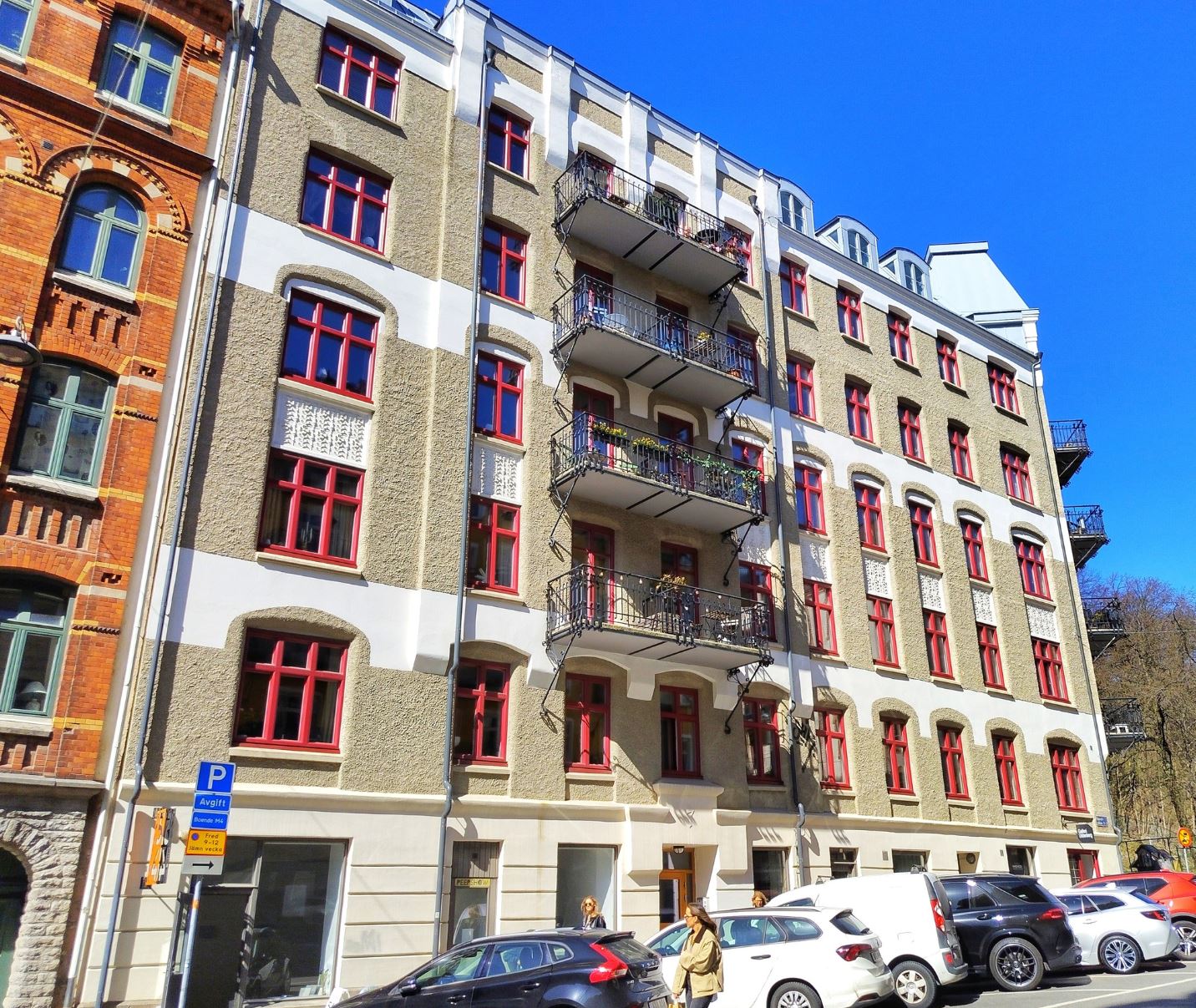
What Are Foreigners Buying? “Beds & Sheds” — And Defence Real Estate
Barclay breaks it down simply: “Classic ‘beds & sheds’ — housing and logistics.” Foreign capital is pouring into residential properties and warehouse/distribution centres — assets with stable, long-term cash flows.
But there’s another, unexpected driver: defence.
Newsec projects that defence-related real estate demand across the Nordic and Baltic regions will nearly double by 2035, reaching over 4 million square meters. Military expansion, spurred by regional security concerns, is creating urgent demand for barracks, training facilities, command centres, and support infrastructure.
“And that’s just phase one,” Barclay warns. “Where defence grows, communities follow — housing, schools, clinics, retail. The ripple effect will be massive.”
Another booming niche: senior housing and community care facilities. With Sweden’s population aging rapidly, retirement homes and assisted living centres are becoming prime targets for institutional investors seeking recession-resistant yields.
Not All Sunshine: Office Market Struggles, Vacancies Linger
Despite the optimism, not every segment is thriving. Nyfosa reports a vacancy rate exceeding 10% of rental value, largely due to corporate downsizing and hybrid work models. “Tenants are optimizing space — squeezing more people into less square footage,” says Newsec.
The office market remains under pressure. “Cost-conscious tenants are renegotiating leases, demanding flexibility, and delaying expansions,” the firm notes. While prime assets in Stockholm’s core are holding value, secondary locations face headwinds.
The Human Element: Gut Feeling Meets Data
Amid the spreadsheets and yield curves, veteran investor Patrik Cornelius scribbles notes furiously at the Stockholm conference. “Analyses are essential,” he tells Affärsvärlden, “but listening — feeling the room, reading the tone — that’s where intuition kicks in. Stocks are psychology. Real estate? Even more so.”
For investors like Karl and Per — quietly scanning the horizon for the “turning point” — Sweden’s market offers both logic and instinct: a rare blend of macroeconomic stability, geopolitical safety, and demographic tailwinds.
The Bigger Picture: Sweden as Europe’s Safe Haven
What’s unfolding isn’t just a real estate story — it’s a geopolitical and psychological one. As global uncertainty mounts, capital seeks sanctuary. Sweden — with its transparent institutions, rule of law, green transition leadership, and social cohesion — is emerging as Europe’s premier safe-haven asset class.
“Investors aren’t just buying property,” Barclay concludes. “They’re buying peace of mind.”
By the Numbers — Sweden’s Real Estate Surge
- Foreign buyer share: 17% (2024) → 26% (2025) — highest in 10 years
- Projected transaction volume: SEK 180 billion in 2025 (+SEK 40B from 2024)
- Prime office yield forecast: 3.75% (down from 4.25% in 2024)
- Defence real estate demand: 4M+ sqm by 2035 (nearly double current levels)
- Top foreign targets: Residential (“beds”) + Logistics (“sheds”) + Senior Housing
Final Thought: In an age of volatility, Sweden’s bricks and mortar are becoming more than shelter — they’re symbols of stability. And for nervous global investors, that’s priceless.