
A wave of chaos swept over two of the Nordic region’s busiest airports this week as drones shut down airspace in Copenhagen and Oslo. The disturbances have sparked not only widespread disruption but also heightened security concerns in Europe. Ukrainian President Volodymyr Zelensky has pointed the finger at Russia, linking these incidents to a broader pattern of aggression designed to destabilize the West. From disrupted flights to emergency landings, the drama unfolded swiftly, creating a tense atmosphere across Scandinavia. This attack on two major European cities raises important questions about Russia’s role in fomenting chaos and challenges faced by Western democracies.
Copenhagen in Crisis: A Night of Delays and Panic
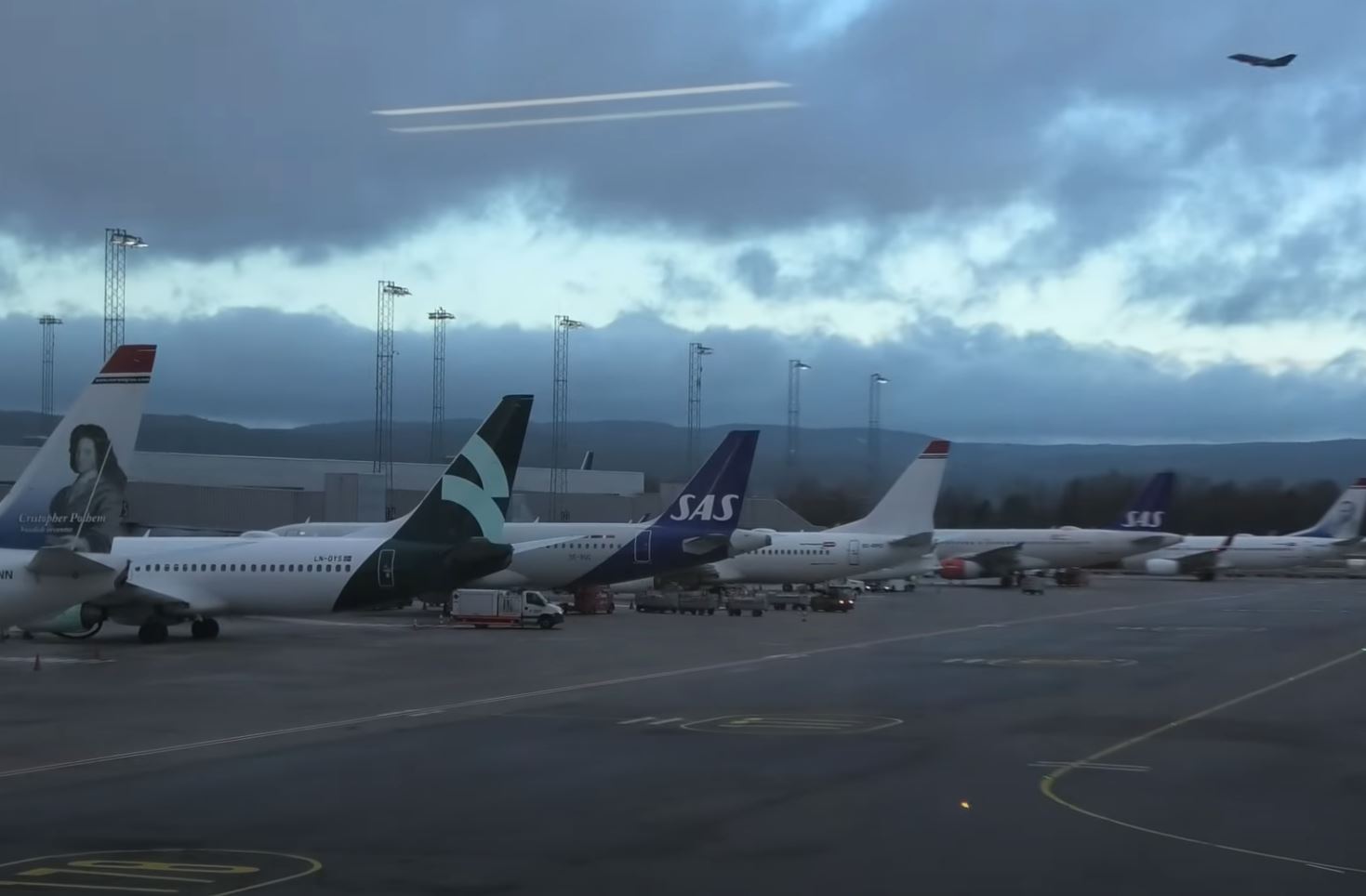
On Monday night, Copenhagen’s Kastrup Airport ground to a halt after drones were sighted in the airspace. At approximately 9 p.m., the airport’s airspace was shut down as authorities scrambled to locate the drones. Copenhagen police confirmed that two to three large drones were spotted flying above the airport, prompting a massive security response.
Kastrup remained closed until early the next morning, although by 12:30 a.m., a partial reopening was announced. Still, the chaos continued. At least 50 flights were cancelled, while another 50 were diverted to nearby airports, including Malmö, Landvetter, and Billund.
In a dramatic moment, an SAS aircraft was forced into an emergency landing due to a fuel shortage, as the flight could not be diverted in time. Police were visibly active, trying to pinpoint the drones, with the airport press manager stating, “Every now and then they light the candles,” referring to the occasional drone sightings that continued into the night.
The mysterious drones eventually disappeared, and police efforts to trace their origin continued. By morning, the airport was operational, but the disruption had already cast a shadow over the region.
Zelensky’s Strong Statement: Russia Behind the Drones?
The timing and nature of the drone sightings raised suspicions. Ukrainian President Volodymyr Zelensky pointed directly at Russia as the likely culprit behind the attack. In a post on X (formerly Twitter), Zelensky described the drone sightings in Copenhagen as part of a wider pattern of Russian provocations. “We paid particular attention to Russia’s violations of NATO airspace, including on September 22 in Copenhagen. Without a resolute response from the Allies – both countries and institutions – Russia will continue with aggressive provocations,” he wrote.
The Ukrainian president’s remarks highlight a growing concern about Russia’s tactics. Over the past year, Russian aggression has evolved beyond direct military action to include cyberattacks, the use of drones, and other forms of hybrid warfare designed to destabilize Europe. With Denmark’s active support for Ukraine, including a new ammunition manufacturing plant to bolster Ukrainian defence, it is clear why Russia would target this critical Nordic country.
Oslo Follows Suit: Another Drone Scare
Just hours after the Kastrup incident, Oslo Airport also found itself under siege by drones. Reports emerged around 9 p.m. that drones were spotted over the military area of Akershus Fortress, and by 11:30 p.m., sightings were confirmed over Oslo’s Gardermoen Airport. Norwegian authorities quickly shut down the airport, redirecting all flights to a single runway before grounding all operations.
The situation became even more alarming when a second drone sighting was reported just over an hour later, leading to a complete closure of Gardermoen. The airspace was reopened after 3 a.m., but the disruption had already caused significant delays and public concern.
Interestingly, two individuals from Singapore were arrested in connection with the drone sightings at Akershus Fortress, though it remains unclear whether there is a direct link to the airport incident. Investigations are ongoing, with Danish and Norwegian police now working together to determine the origins of the drone activity.
A Wider Geopolitical Game: Could Russia Be Behind These Attacks?
The drone incidents at Copenhagen and Oslo are raising suspicions about Russia’s motives and strategy. Zelensky’s statement regarding Russia’s role in violating NATO airspace is significant. With both Denmark and Norway actively supporting Ukraine, including military aid and resources, Russian hostility toward these nations is likely to intensify.
In fact, Denmark’s recent decision to host a Ukrainian plant to produce ammunition and military equipment has deeply angered the Kremlin, which views this as a direct threat to its interests. Could Russia be seeking to disrupt Western Europe’s economic and political stability by targeting key infrastructure, like airports?
Theories abound. Some argue that the recent ransomware attacks that grounded flights and delayed air traffic could be part of a broader Russian campaign of disruption. If so, the drones in Copenhagen and Oslo might not be isolated incidents but rather part of a larger strategy to sow discord in the West.
The Threat of Infiltration and Russian Sympathizers
There is also the issue of Russian infiltration in Western institutions. Over the past few years, intelligence agencies have raised alarms about Russian sympathizers and operatives embedded in various countries across Europe. In many cases, these individuals are skilled professionals who could be used to carry out covert operations on behalf of the Kremlin.
In the United States, the political divide has further complicated matters. President Donald Trump has been a vocal supporter of Russian President Vladimir Putin, and his influence in American politics has contributed to a weakening of the country’s support for Ukraine. Many of Trump’s allies, especially in the far-right wing, have been accused of spreading pro-Russian narratives. This has created a fertile ground for Russian propaganda to thrive, potentially undermining public support for Ukraine and weakening Western unity in the face of Russian aggression.
The situation in Norway is also troubling. With the country providing substantial support to Ukraine, including weapons and training, could Russia view this as a provocation? The sudden spike in drone activity may be a warning shot aimed not just at Denmark but also at other NATO countries that are increasingly aligning themselves with Ukraine in the face of Russian expansionism.
Conclusion: A Wake-Up Call for Western Security
The recent drone incidents in Copenhagen and Oslo serve as a wake-up call for the Western world. Russia’s hybrid warfare tactics are growing more sophisticated and disruptive, and the use of drones is a clear example of how easily these methods can bypass traditional security systems. The unsettling nature of these events underscores the need for heightened vigilance and collaboration between NATO members to safeguard critical infrastructure.
As Zelensky warned, the West must respond resolutely to these provocations. Failure to do so could embolden Russia, which may continue to undermine European security in the hopes of eroding support for Ukraine. If Russia’s ultimate goal is to weaken the West and disrupt economic activity, it seems clear that the consequences of inaction could be severe. Europe cannot afford to overlook these signs of escalation—especially when it involves its airspace and its key economic hubs.
In this uncertain geopolitical landscape, the question remains: How will the West respond to Russia’s growing threats, and what steps can be taken to prevent further destabilization? The clock is ticking.