
In an unprecedented move, the US government has raised concerns about a potential link between the use of paracetamol-containing medications during pregnancy and autism in children. This claim, which has caused a stir in the scientific community, has been met with considerable scepticism and outright rejection by many researchers, particularly in the Nordic region.
In April 2025, US Secretary of Health Robert F. Kennedy Jr. announced an initiative to investigate the causes of autism. His stance, which suggests that environmental factors such as vaccines, medications, and in particular, the use of acetaminophen (paracetamol) during pregnancy, could be contributing to the rise in autism diagnoses, has sparked significant controversy. Kennedy’s initiative was presented in collaboration with President Donald Trump, with both leaders suggesting that their conclusions show a possible link between paracetamol use and autism.
However, Nordic researchers, including experts from Sweden’s prestigious Karolinska Institutet, have been quick to criticize these claims, urging the public not to panic and questioning the validity of the evidence presented so far.
Scepticism from Nordic Experts: “There’s No Support for This Theory”
One of the most outspoken critics is Viktor H. Ahlqvist, a postdoctoral fellow at Karolinska Institutet, who led a major Swedish study in 2024 that found no evidence linking paracetamol use during pregnancy with autism. Ahlqvist, whose research was widely regarded as robust, describes the claims made by Kennedy and Trump as “shocking” and “completely crazy.”
“There is no support for this theory,” Ahlqvist asserts. “Our study, and several others, show that there is no significant link between paracetamol use and autism. It’s clear that the rise in autism diagnoses is more likely due to increased awareness and a shift in diagnostic criteria rather than any environmental factor like medication use.”
Ahlqvist’s view is shared by many in the Nordic research community. Experts argue that the growing number of autism diagnoses in recent decades can largely be attributed to societal changes: greater awareness, improved diagnostic practices, and the expansion of the autism spectrum, which now includes a wider range of behaviours and conditions than it did in the past.
Ahlqvist also expresses concern that the public might be misled by the US health authorities’ statements. He warns that the fear generated by such claims could lead to unintended consequences. “If pregnant women start avoiding paracetamol due to these concerns, they might turn to alternatives that are far riskier. In the US, opioids are often the second choice, and we know they have serious risks—not only to the mother but to the unborn child as well. Babies can even be born addicted to opioids.”
The Science Behind Paracetamol: What Do We Know?
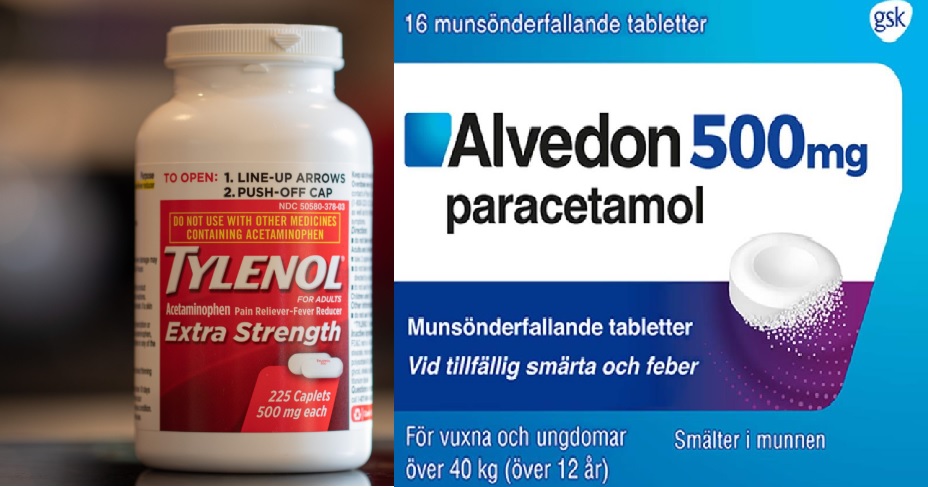
Paracetamol, also known as acetaminophen in the United States, is one of the most widely used painkillers globally. It is commonly used to treat fever, headaches, and other mild pain conditions. Its safety profile is well-established, especially when used as directed. Paracetamol works by inhibiting the production of chemicals in the body that cause pain and inflammation.
However, as with all medications, it is not without controversy. While it is generally considered safe during pregnancy when used appropriately, recent studies have raised questions about its potential effects on foetal development. Some research has suggested that prolonged use of paracetamol during pregnancy could be linked to developmental issues, including autism, though the evidence remains inconclusive.
In contrast, a large body of research, including the 2024 Swedish study led by Ahlqvist, has found no compelling evidence to support these claims. Ahlqvist and his colleagues argue that any potential risks associated with paracetamol are likely minimal compared to the risks of untreated fever or pain during pregnancy.
A Divided Debate: What Is the Bigger Picture?
The debate over paracetamol and autism is part of a broader conversation about the increasing diagnoses of autism spectrum disorder (ASD) worldwide. In the United States, the number of autism diagnoses has surged in recent decades, prompting experts to search for explanations. While some, like Kennedy Jr., point to environmental factors such as vaccines, medications, and toxins, others argue that the increase is more likely due to improved diagnostic practices, greater public awareness, and expanded definitions of ASD.
Dr. Anna Linde, a clinical psychologist at the University of Oslo, notes that while there is no denying the increase in autism diagnoses, it’s essential to separate correlation from causation. “We need to be cautious about drawing conclusions without robust evidence,” Linde says. “The increasing number of diagnoses is likely due to a combination of factors, including better detection, broader definitions, and changes in societal understanding.”
Linde also emphasizes the importance of focusing on evidence-based medicine when it comes to public health. “Parents need to trust the scientific community and rely on proven research. Right now, the overwhelming consensus is that paracetamol use during pregnancy is safe when used in moderation. Alarmist claims like these are not helpful and can lead to unnecessary anxiety.”
What Does This Mean for Nordic Women?
So, should Nordic women be concerned about using paracetamol during pregnancy? The overwhelming consensus among Nordic experts is no. Researchers like Ahlqvist and Linde believe that the US health authorities’ position is based on limited or misinterpreted data and that there is no substantial evidence linking paracetamol use with autism.
However, both researchers urge caution and recommend that pregnant women consult with their healthcare providers before taking any medication, including paracetamol. Fever and pain during pregnancy should be managed carefully, but women should be aware that avoiding medications like paracetamol could pose greater risks.
Ahlqvist also highlights the importance of continued research and the need for clear, reliable information. “Pregnant women should be able to rely on the best available evidence to make informed decisions,” he concludes. “It’s vital that we separate scientific facts from fear-based claims.”
Conclusion: A Complex and Evolving Debate
As the debate over paracetamol and autism continues to unfold, it is clear that the issue is far from settled. While the US government’s stance has generated significant concern, Nordic researchers remain largely unconvinced by the evidence presented so far. Instead, they argue that the increase in autism diagnoses is due to changes in diagnostic criteria and greater awareness, rather than a rise in environmental risks.
For now, the advice to Nordic women is clear: don’t panic. Paracetamol remains one of the safest and most widely used painkillers during pregnancy when used as directed. However, as with all medications, it’s important to consult with healthcare professionals and make decisions based on the best available evidence.
In the coming months, as further research is conducted, this issue will likely evolve. Until then, Nordic experts urge a measured, evidence-based approach to ensure that public health decisions are grounded in science—not fear.