
As the geopolitical landscape in Europe continues to evolve, the airspace violations by Russia are stirring up growing concerns among NATO countries, particularly in the Nordic region. In recent weeks, the Norwegian government has made public a series of airspace intrusions by Russian military aircraft—three incidents in total this year. These violations, while described by Norwegian officials as relatively minor in scale compared to similar incidents in other NATO countries, still represent a significant escalation of tension in a region that has long prided itself on maintaining peaceful and stable relations with its eastern neighbour.
A Stark Warning or Routine Aggression?
On Friday, NATO condemned Russia’s violation of Estonian airspace, underlining the continued security challenges facing Eastern Europe and the Baltic region. The very same week, Norway made its own announcement, detailing three separate incidents of Russian aircraft breaching Norwegian airspace. These included a Russian SU-24 fighter jet on April 24, a transport plane on July 24, and another fighter, the SU-33, on August 18. Although the duration of these violations was brief—ranging from one to four minutes—Norwegian Prime Minister Jonas Gahr Støre did not downplay their significance, labelling them as serious breaches of sovereignty.
“The incidents in Norway are smaller in scale than the violations against Estonia, Poland, and Romania, both in terms of location and duration. These are, nevertheless, incidents that we view very seriously,” Støre remarked in a government statement. This response reveals a subtle shift in the strategic stance of Norway, a country that has long maintained a careful balance between its commitment to NATO and its geographical proximity to Russia.
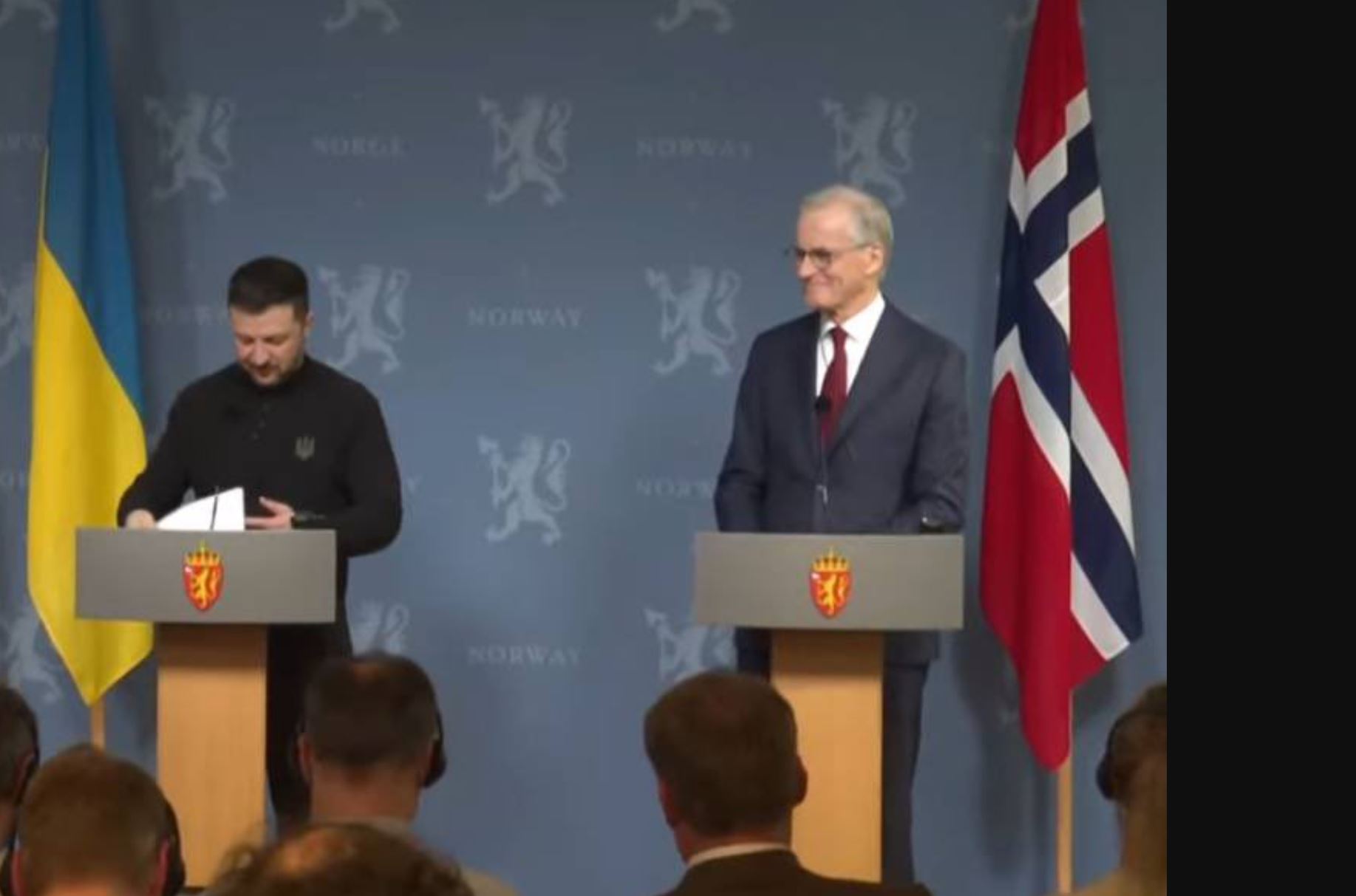
A Decade Without Precedent
While these incidents are considered relatively minor in comparison to the breaches in other NATO states, Norway has underscored the historical rarity of such violations. In the past ten years, the country has not experienced anything of this nature, making these recent intrusions a stark reminder of the shifting dynamics in global security. Notably, the Russian incursions into Norwegian airspace also coincide with similar tensions elsewhere. In particular, Estonia, Poland, and Romania have all experienced heightened violations of their airspace by Russian forces, prompting NATO to issue stern condemnations and ramp up security measures.
Norway’s reaction, while firm, remains diplomatic. The government has refrained from escalating the issue into a broader confrontation, preferring instead to use these breaches as an opportunity to reinforce Norway’s position within NATO. However, as the frequency of such incursions increases, the question remains: is this simply a tactical manoeuvre by Russia to test NATO’s resolve, or a more ominous sign of rising geopolitical tensions?
Drone Activity: An Enigmatic Development
In an unsettling parallel, Norway has also reported mysterious drone activity around its territory, particularly in the vicinity of Oslo’s airport, which was briefly closed due to security concerns. While the identity of the perpetrators remains unclear, it adds another layer of complexity to the unfolding security situation. Is this the work of state actors or non-state entities? The government has not yet attributed the drone activity to any specific group, but the potential implications of such incidents cannot be ignored. Drone technology has become a new tool for military and espionage purposes, and its use over sensitive areas like airspace could be a precursor to more disruptive tactics.
NATO’s Unified Stance
Norway’s response, in line with NATO’s broader strategy, is a clear call for solidarity. NATO’s condemnation of Russian violations of airspace in neighbouring countries serves as a powerful reminder that such actions are not isolated incidents but part of a broader pattern of aggression by Russia. It is no surprise that the alliance has taken a firm stance in defence of Estonia, Poland, and Romania, but it is now clear that the security challenges extend beyond Eastern Europe and are making their way to the Nordic countries as well.
The question that looms larger with each new breach is how NATO will react to the creeping threat posed by Russia’s increasing military presence in the skies of its neighbouring states. Will these airspace violations continue to be treated as isolated incidents, or will they trigger more significant countermeasures?
The Future of Norway’s Security
As tensions rise and Russia continues to challenge the territorial integrity of its neighbouring countries, Norway is likely to find itself at the heart of a delicate balancing act. On one hand, it must continue to honour its NATO obligations and stand firm against Russia’s provocations. On the other hand, Norway cannot afford to alienate its neighbour, especially given the long-standing historical, economic, and geopolitical ties that bind the two nations, particularly in the Arctic region.
The recent airspace violations and the mysterious drone activity only serve to highlight the complex security environment in which Norway and other NATO members find themselves. It is a fine line between diplomacy and defence, but one thing is certain: Norway’s commitment to protecting its sovereignty, as well as its role within NATO, will only grow more vital as these incidents become more frequent.
As the world watches the geopolitical developments in Eastern Europe and the Arctic closely, Norway’s response will likely serve as a bellwether for NATO’s approach to handling Russian provocations in the future. How long can this delicate balance hold, and what will it take for Norway and its allies to ensure their sovereignty is protected? Only time will tell.