
A Geologist Walks into a Cancer Lab
Emma Hammarlund never meant to become a cancer detective. For two decades she chased the planet’s oldest stories—reading 500-million-year-old sea-floor sediments for clues to Earth’s oxygen history. Then, four years ago, a chance conversation with oncologists at Lund University’s Biomedical Centre (BMC) flipped her compass.
“They were hunting for ‘silent’ chemical fingerprints that tumours leave in blood,” she recalls, “and I realised the same mass-spectrometry tricks we use on rocks might work on human tissue.”
Today the 48-year-old associate professor of translational oncology trades limestone cores for hair strands, convinced that a single snip can betray cancer long before a lump, a PSA spike or a blurry mammogram.
From Rocks to Follicles: The Science Inside the Hair
Hair is a biological time capsule. Every centimetre records roughly one month of metabolism: amino acids, lipids, hormones and—crucially—stable isotopes of carbon, nitrogen and sulphur. As cancer cells re-programme the body’s biochemistry they subtly shift these ratios. Hammarlund’s team hones in on two alterations:
1. A 0.3–0.8 ‰ enrichment of ¹³C in keratin, indicating accelerated glycolysis (the Warburg effect).
2. A drop in the sulphur isotope δ³⁴S, mirroring tumour-driven consumption of methionine.
In a double-blind U.S. pilot (n = 92) the Lund algorithm identified early-stage prostate cancer with 94 % sensitivity and 91 % specificity—on par or better than the controversial PSA test, yet requiring no blood draw, fasting or clinic visit.
The Swedish Expansion: 3 000 Strands, Two Cancers
This autumn Hammarlund’s lab began recruiting 3 000 men and women through Lund’s hospital catchment area. Participants donate one 15 cm strand (cut at the scalp), answer a lifestyle questionnaire and later undergo standard screening (mammography or MRI/PSA). Half the cohort is expected to harbour invisible tumours.
“We will lock the spectrometer data, wait for the clinical diagnosis, then un-blind,” says post-doc Lina Alriksson, who coordinates the breast-cancer arm. “If the curve holds, we’ll have a validated hair test for both major sex-hormone-driven cancers by 2027.”
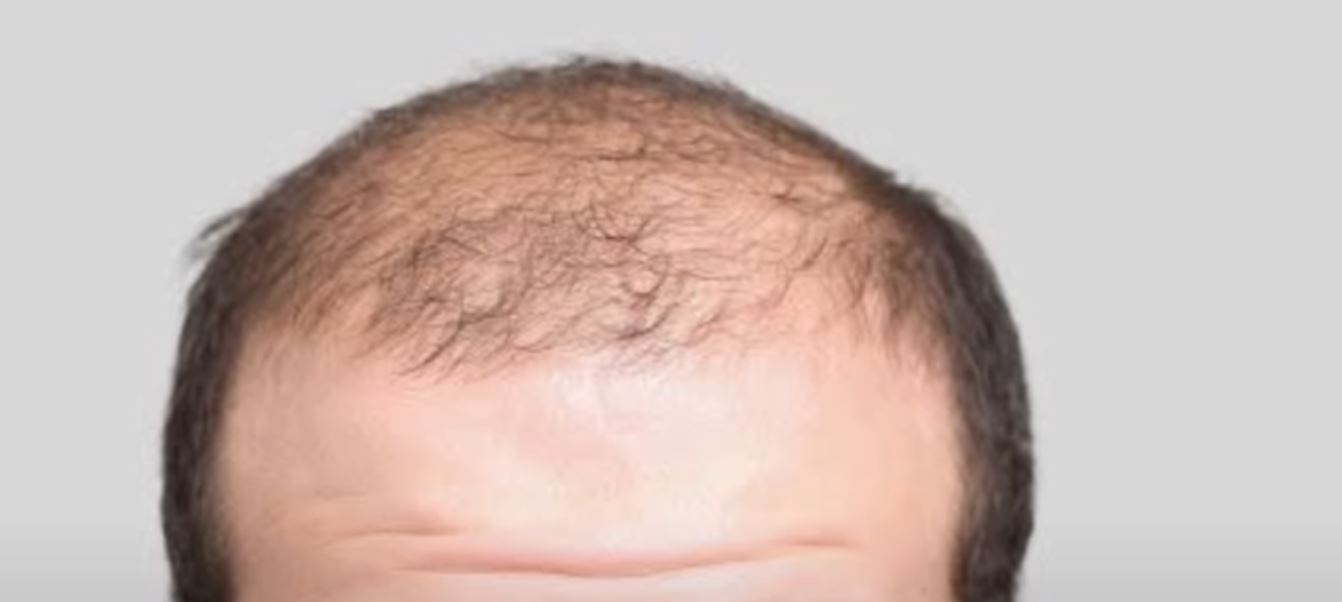
Why Hair Beats Blood
• Logistics: Samples can be mailed in an envelope; no cold chain, no centrifuge, no lab tech.
• Compliance: Offers a non-invasive option for rural women who skip mammograms due to distance, pain or cultural barriers.
• Carbon footprint: A postal envelope emits ≈ 25 g CO₂ versus ≈ 500 g for a venous-blood tube plus cold transport.
• Cost: Hammarlund estimates €18 per sample once scaled—one-tenth of a liquid-biopsy panel.
The Hurdles Ahead
1. Translation gap: Prostate findings must be replicated in European populations with different diets.
2. Hair treatments: Dye, bleach and perms alter isotope ratios; the team is building a “chemical haircut” correction matrix.
3. Over-diagnosis: Like PSA, a hyper-sensitive test may detect indolent cancers. Hammarlund is coupling the assay with an AI-based risk calculator that weighs isotope signal strength against age, BMI and genetics.
4. Regulatory path: Swedish Medicines Agency insiders say a CE-marked diagnostic could arrive by 2029 if longitudinal data hold.
Voices from the Trial
• “I cycle 30 km to the nearest mammography bus. Sending a hair clip by mail would save me a day off work.” – Helena Olofsson, 54, dairy farmer, Skåne.
• “As a trans man I dread the pink waiting room. A hair test feels dignified.” – Alex, 43, trial participant.
• “If this holds up we may finally democratise early detection.” – Dr. Yolanda Lawson, oncologist, MD Anderson Cancer Center, not involved in the study.
The Broader Canvas: Hair as a General Cancer stethoscope?
Parallel Lund projects are probing colorectal, ovarian and pancreatic signatures. Preliminary data suggest each tumour type imprints a distinct isotope “barcode.” A single strand could one day yield a multi-cancer panel—think “hair liquid biopsy,” but without the tubes.
What Happens Next
• Spring 2026: Interim analysis on first 1 500 Swedish samples.
• 2027: Prospective screening study in northern Norway (remote regions).
• 2028: Industry partnership talks with two Nordic diagnostics giants; Hammarlund has filed three provisional patents.
• 2029: Planned prospective randomised trial comparing standard-of-care versus standard-plus-hair-test, the regulatory gateway for clinical rollout.
A Geologist’s Closing Thought
Back in her office, Hammarlund keeps a 2-billion-year-old stromatolite on the windowsill. “Rocks taught me that tiny chemical wobbles tell gigantic stories,” She smiles. “Now a strand of hair—1/1000 the width of a stromatolite—might tell someone they still have time to write their own story. That’s the best pivot I’ll ever make.”
For now, the scissors wait in a sterilised pouch, ready to cut a snippet of keratin—and perhaps years of uncertainty—from thousands of lives.