
NATO has finalized a new command structure across the Nordic region, marking one of the alliance’s biggest strategic changes since the Cold War. Formalized in October 2025, this framework builds on Sweden and Finland’s recent accession and creates a coordinated military command across four Nordic countries.
Here’s how it’s organized: air operations are led from Bodø in Norway, ground forces from Finland, logistics from Enköping in Sweden, and special operations from Denmark. The idea is simple—link the Nordic allies tightly enough that any aggression from Russia can be met fast and decisively.
Putting the New Structure in Motion
The Combined Air Operations Centre in Bodø is already running as a temporary headquarters, with a permanent facility planned for 2026. It cements Norway’s central role in Arctic air defence and makes Nordic airspace a more integrated shield under NATO command.
Finland took a major step on 3 October 2025 by launching the Multi-Corps Land Component Command in Mikkeli. Finnish Defence Minister Antti Häkkänen called it historic, noting that Finland has moved from being a security consumer to a security provider.
In Sweden, the logistics hub in Enköping is designed to sustain high-intensity operations across the Baltics and the Arctic. Denmark’s special forces command will coordinate rapid-reaction units across the region, ensuring the Nordics can respond within hours, not days.
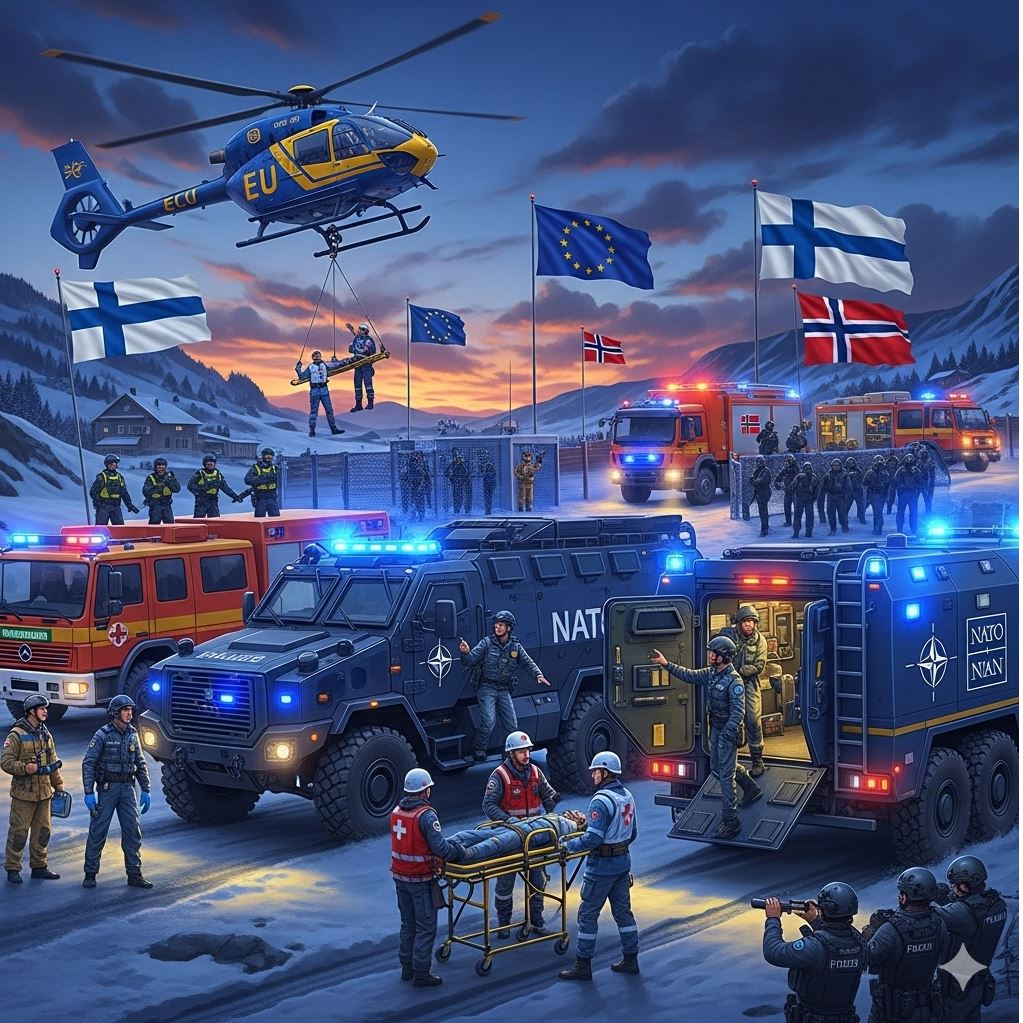
A Shift in NATO’s Strategy
This reorganization reflects NATO’s broader shift toward what planners call a “forward land forces” model. Instead of small symbolic deployments meant to trigger reinforcement later, the alliance now wants robust, ready-to-fight formations able to defend immediately. Up to 100,000 troops could be mobilized within ten days along NATO’s eastern and northern frontiers.
The goal isn’t just deterrence—it’s denial. Joint exercises across the region are already testing how quickly Nordic and Baltic forces can coordinate if Russia attempts destabilizing moves in the High North or Baltic Sea.
Why It Matters
Analysts like Jakob Gustafsson point out that full Nordic membership ends decades of partial cooperation under neutrality. With all Nordic countries inside NATO, intelligence, logistics, and operational planning now flow freely. Sweden and Finland are not just participants—they’re helping shape how NATO fights and reinforces across its northern flank.
Long-Term Impact
For Nordic defence chiefs, integration is now the guiding principle. Shared exercises, infrastructure, and logistics are becoming routine. The combined command system gives the region a single operational rhythm, making it harder for Russia to exploit gaps between national defences.
Officials across the alliance describe the change as transformative. It signals that NATO can act swiftly in the High North, not just plan from afar. More allied presence, tighter coordination, and constant readiness are reshaping the security map from the Arctic to the Baltic Sea.
Bottom line: NATO’s Nordic command structure doesn’t just deter threats—it rewires how the alliance defends its northern frontier.