
In a sweeping strategic overhaul aimed at restoring financial stability and sharpening its competitive edge, Danish renewable energy giant Ørsted has announced plans to reduce its global workforce by 2,000 employees—25% of its current headcount—by the end of 2027. The company confirmed in a stock exchange announcement today that it will shrink from approximately 8,000 employees to around 6,000 over the next three years.
The first wave of layoffs, affecting roughly 500 staff members—including 235 in Denmark—is set to take effect at the turn of the year. CEO Rasmus Errboe emphasized that the decision, though painful, is a necessary consequence of the company’s strategic pivot and the natural wind-down of its large-scale construction projects.
“Today we informed our employees that, by the end of 2027, we will be saying goodbye to many talented and valued colleagues who have made exceptional contributions to Ørsted,” Errboe said. “This reduction is driven by our decision to focus our business, complete our current construction portfolio, and operate with a leaner organization as those projects come online.”
The restructuring is expected to generate annual cost savings of DKK 2 billion (approximately $285 million), reinforcing Ørsted’s path toward a more financially resilient future. Errboe added that the streamlined organization will position Ørsted as “a significantly stronger, more focused, and competitive company”—a transformation he credited to the dedication of its workforce.
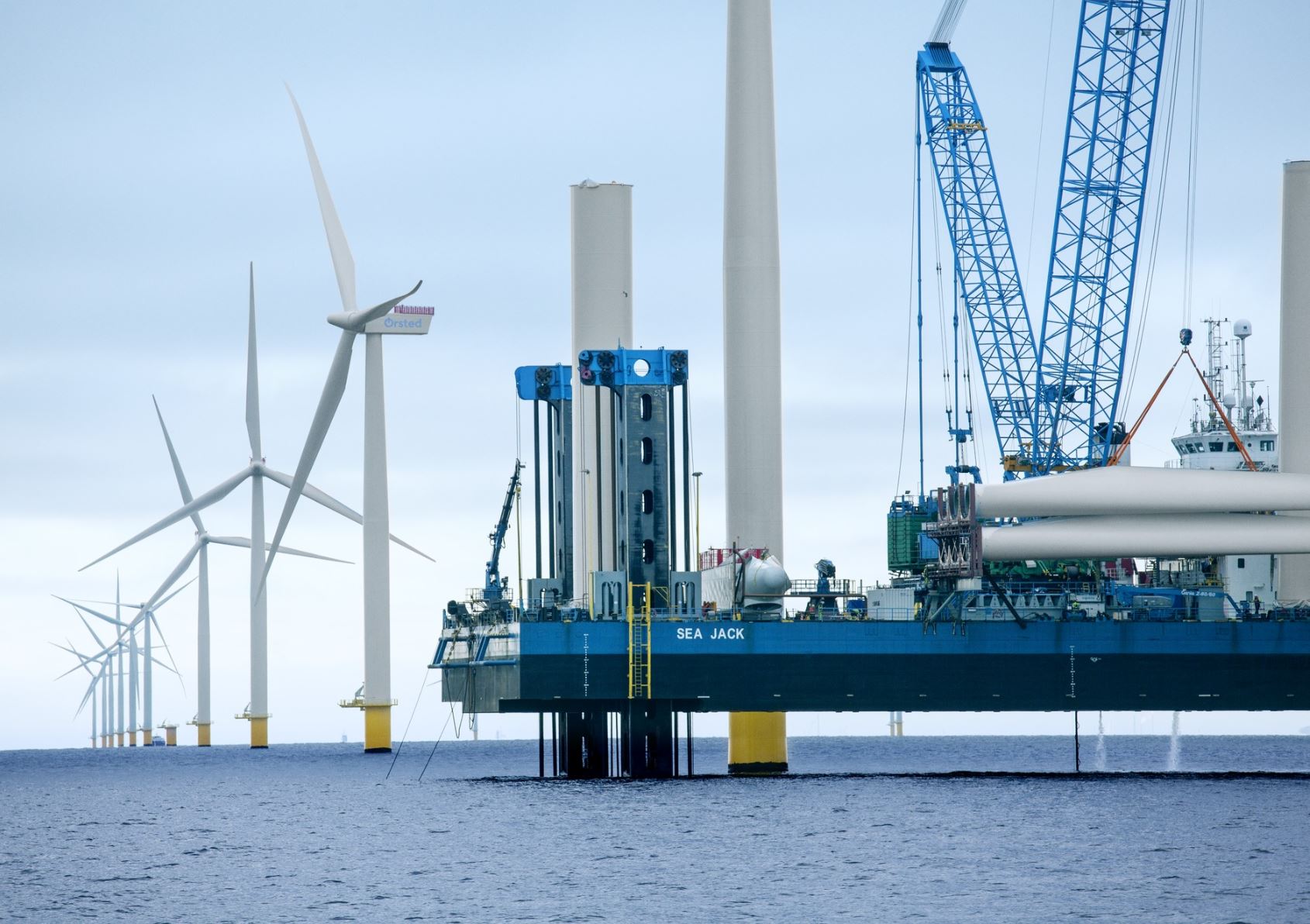
Capital Infusion Amid U.S. Market Turmoil
The workforce reduction follows an emergency capital raise finalized just days earlier: Ørsted completed Denmark’s largest-ever share issuance, securing DKK 60 billion (roughly $8.5 billion) to shore up its balance sheet. The move came in response to mounting financial pressure stemming from setbacks in the U.S. offshore wind sector.
Most notably, Ørsted’s plan to bring in a partner for its flagship Sunrise Wind project—set to power 630,000 homes in New York—collapsed unexpectedly. With no buyer stepping in, the company must now fund the entire project alone, requiring an estimated DKK 40 billion in additional capital.
The capital increase diluted existing shareholders’ stakes unless they participated in the new share offering—a point underscored by Jacob Pedersen, chief analyst at Sydbank:
“Existing shareholders had the right to subscribe to new shares, but those who chose not to contribute fresh capital saw their ownership percentage reduced.”
A Strategic Reset for Long-Term Viability
Once a symbol of the global green energy transition, Ørsted has faced significant headwinds in recent years due to inflation, rising interest rates, and regulatory delays—particularly in the U.S., where offshore wind economics have deteriorated sharply. The company has already written down billions in asset values and exited or paused several international projects.
The dual strategy of aggressive cost-cutting and massive capital injection signals Ørsted’s commitment to weathering the storm and emerging as a more agile, financially sound player in the renewable energy space. While the human cost is substantial, leadership insists the measures are essential to secure the company’s—and the industry’s— long-term sustainability.
As Errboe concluded:
“These decisions are not taken lightly, but they are necessary to ensure Ørsted remains a leader in the global energy transition for decades to come.”