
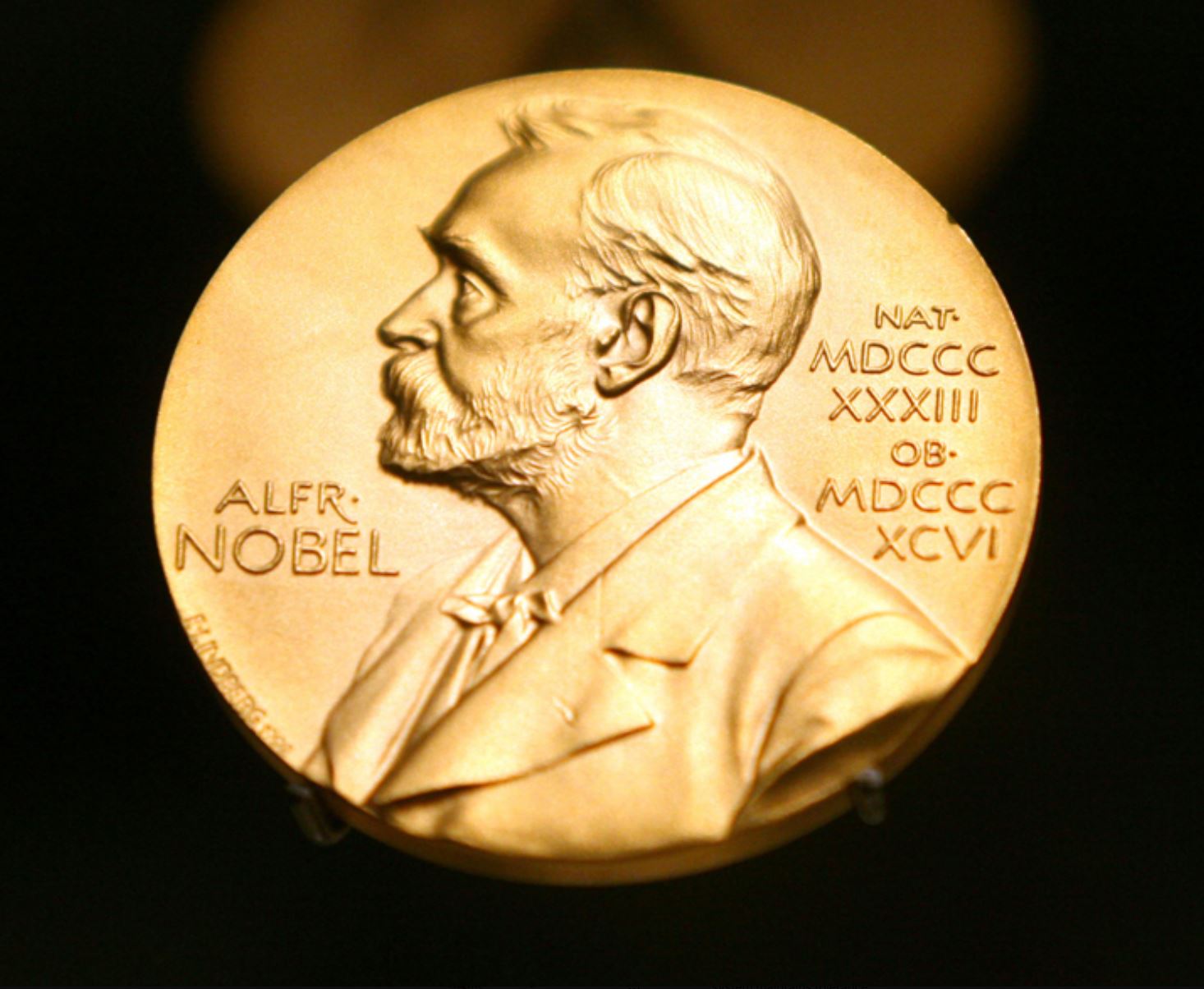
The 2025 Sveriges Riksbank Prize in Economic Sciences in Memory of Alfred Nobel has been awarded to Joel Mokyr, Philippe Aghion, and Peter Howitt, recognizing their transformative contributions to understanding economic growth and technological progress.
Announced on Monday in Stockholm, the award celebrates research that has reshaped how economists and policymakers view innovation, competition, and sustained prosperity. One half goes to American economic historian Joel Mokyr “for identifying the conditions for sustained growth through technological development.” The other half is shared by French economist Philippe Aghion and Canadian-American Peter Howitt “for the theory of sustained growth through creative destruction.”
Joel Mokyr: The Historian of Innovation
Dutch-born American-Israeli scholar Joel Mokyr is Professor of Economics and History at Northwestern University and Sackler Professorial Fellow at Tel Aviv University. His work bridges history, technology, and economic theory, exploring how the exchange of “useful knowledge” propelled Europe’s industrial transformation.
Mokyr has shown that modern growth stems from cultural and institutional support for innovation. His books — notably The Lever of Riches and A Culture of Growth — detail how intellectual curiosity and the spread of scientific thinking laid the foundations for industrial progress. The Nobel committee emphasized his role in explaining how industrial take-offs transform productivity and living standards.
With decades of research into Europe’s industrial evolution (1750–1914), Mokyr’s historical insights continue to inform modern debates on innovation policy, education, and technological diffusion — central concerns for today’s Nordic economies.
Philippe Aghion: The Architect of Schumpeterian Growth
Philippe Aghion, Professor at the Collège de France and INSEAD, is renowned for pioneering the Schumpeterian Growth paradigm alongside Howitt. Their model, first published in 1992, explained how new ideas and firms challenge incumbents, producing waves of creative destruction that drive long-term prosperity.
Aghion’s research links competition, innovation, and institutions. His more recent work explores inequality, green transition economics, and the impacts of AI and automation — issues highly relevant to the Nordic region’s innovation-led economies. His book The Power of Creative Destruction (Harvard University Press) offers a blueprint for balancing progress with inclusiveness and sustainability.
Peter Howitt: Bridging Theory and Policy
Canadian economist Peter Howitt, Professor Emeritus at Brown University, has spent decades connecting growth theory with policy design. His collaboration with Aghion reframed how economists understand innovation, showing that dynamic competition — rather than perfect equilibrium — is the true driver of prosperity.
Howitt’s influence extends into real-world policymaking, informing strategies on R&D, education, and startup ecosystems — particularly in knowledge-based economies like those of Scandinavia. His co-authored book The Economics of Growth remains a cornerstone of modern economic teaching.
Nordic Relevance and Broader Impact
This year’s laureates underscore the global and historical dimensions of growth — providing lessons directly applicable to Nordic countries investing in green transition, AI innovation, and digital industries. Their research illuminates how institutions that reward innovation and tolerate disruption are essential to maintaining competitive and sustainable growth.
Established by Sweden’s central bank in 1968, the Riksbank Prize in Economic Sciences continues to reflect the Nordic tradition of linking academic inquiry with societal progress. The 2025 award reaffirms that enduring prosperity depends not only on capital or resources, but on the cultivation of knowledge, discovery, and renewal.