
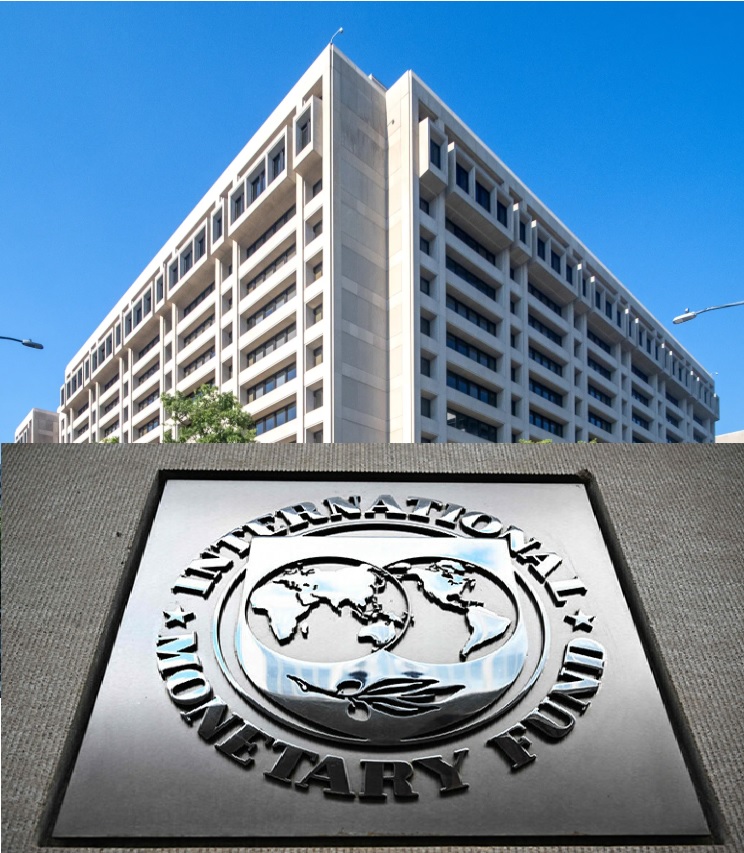
While the International Monetary Fund (IMF) has modestly upgraded its global growth forecast for 2025, it is issuing a stark warning: unchecked enthusiasm around artificial intelligence (AI) could spark a severe correction in equity markets—one potentially more damaging than the dot-com crash of the early 2000s.
In its latest World Economic Outlook, the IMF cautions that “overly optimistic growth expectations for AI may be revised in light of incoming data from early adopters,” which could trigger a sharp market downturn. “Such a correction could wipe out household assets and dampen consumption,” the report states, underscoring the systemic risks posed by today’s AI-driven market valuations.
Systemic Risks Amplified by Market Concentration
Unlike the broad-based tech bubble two decades ago, today’s risk is magnified by the outsized influence of a handful of dominant tech firms that anchor major stock indices. Compounding the danger, the IMF notes, is the growing role of less-regulated private credit markets in financing AI-related expansion—a combination that could transmit shocks far beyond the technology sector.
“The risks to the forecast remain tilted to the downside,” the IMF emphasizes, citing not only AI-related market froth but also escalating trade tensions, tightening migration policies, fiscal strains in key economies, and persistent financial vulnerabilities.
Protectionism and Labor Market Pressures
The report highlights that U.S. tariff rates—now standing at 10–20% for most trading partners—have surged well above the low single-digit levels seen in 2024. While these protectionist measures, including those introduced during the Trump administration, have so far had limited macroeconomic impact, the IMF warns they could disrupt global supply chains and weigh on growth if sustained or expanded.
At the same time, tighter immigration controls worldwide are constraining labour supply just as aging populations and technological shifts increase demand for skilled workers. This mismatch, the IMF argues, threatens productivity and could exacerbate wage-driven inflationary pressures.
Monetary Policy Outlook: Rate Cuts Ahead
Despite lingering inflation and a fragile global backdrop, the IMF expects the U.S. Federal Reserve to begin an easing cycle this year, cutting its policy rate by 50 basis points to a target range of 3.50–3.75%. Further reductions are projected over the next three years, bringing rates down to 2.75–3.00% by 2028.
In contrast, the European Central Bank is forecast to stabilize its key rate around 2%, while Japan is expected to pivot toward modest tightening—a notable shift for a country long anchored in ultra-loose monetary policy.
A Bleak Horizon
“The outlook for the global economy remains subdued, both in the near and longer term,” the IMF concludes. While AI holds transformative potential, the Fund urges policymakers and investors alike to temper exuberance with prudence. Without careful oversight, the very technologies heralded as engines of future growth could become catalysts for financial instability.
For Nordic economies—deeply integrated into global trade and investment flows—the IMF’s warning carries particular weight. As regional leaders navigate the dual challenges of technological disruption and geopolitical uncertainty, the call for resilient, forward-looking economic policies has never been more urgent.
The Nordic Business Journal provides independent economic and business analysis across the Nordic region. For daily updates and in-depth reports, visit nordicbusinessjournal.com.