
In the face of escalating digital threats, Sweden is turning its attention eastward—not for technology, but for strategy. A high-level meeting in Stockholm this week brought together Swedish and Ukrainian cybersecurity experts to deepen bilateral cooperation on protecting critical infrastructure. The gathering underscored a growing consensus among Nordic security professionals: Ukraine, despite being under relentless cyber and kinetic assault since 2014—and especially since Russia’s full-scale invasion in 2022—has developed a globally respected, society-wide cyber resilience model that Sweden would do well to emulate.
Ukraine’s Cyber Resilience: From Target to Teacher
Once seen primarily as a victim of state-sponsored cyber warfare—most notably the 2015 and 2016 attacks on its power grid that left hundreds of thousands without electricity—Ukraine has transformed itself into a de facto laboratory for cyber defence under fire. Today, its approach is widely regarded as world-class, not because it possesses the most advanced tools, but because it has mastered integration, agility, and public-private synergy under extreme duress.
“They’ve built capacity across the whole of society, especially to protect critical infrastructure,” said Andreas Aurelius, a senior cybersecurity strategist at RISE, Sweden’s state-owned research institute. “What’s striking is how they’ve embedded cyber readiness into every layer—from government ministries and energy providers to local municipalities and even civil society.”
This “whole-of-nation” doctrine has enabled Ukraine to repeatedly fend off sophisticated attacks targeting its financial systems, energy networks, and communications infrastructure. In 2022 alone, Microsoft reported helping Ukraine neutralize over 2,000 cyber incidents linked to Russian actors. The country’s Computer Emergency Response Team (CERT-UA), bolstered by partnerships with NATO, the EU, and private tech firms like Google and Palo Alto Networks, now operates with a speed and coordination that many Western nations envy.
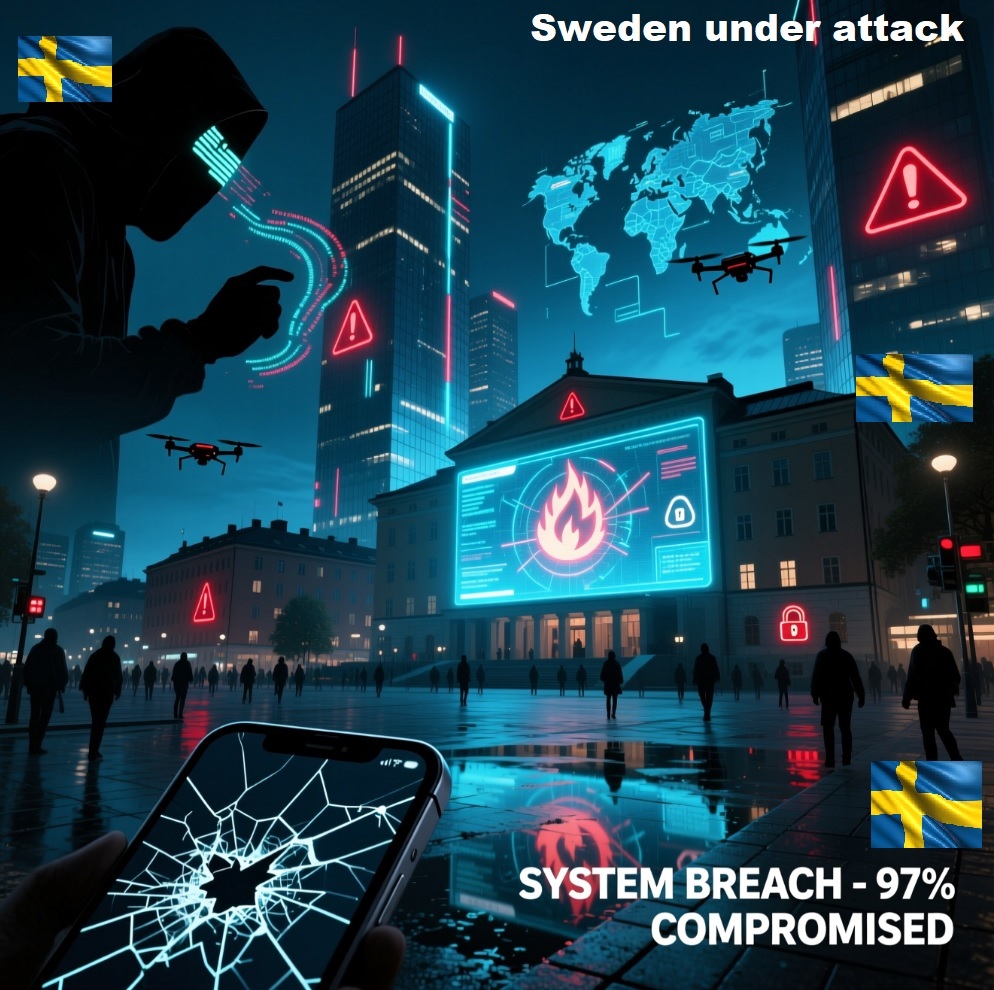
Sweden’s Cyber Vulnerabilities: A Wake-Up Call
By contrast, Sweden’s cyber posture has come under increasing scrutiny. Despite its reputation for technological sophistication, the country has suffered a string of high-profile breaches and disruptions in recent years. In 2023, a ransomware attacks paralyzed parts of the national healthcare system; in 2024, coordinated DDoS attacks temporarily disrupted government e-services during a period of heightened geopolitical tension. Most alarmingly, a 2025 incident involving the compromise of a major telecom provider exposed systemic gaps in supply chain security and incident response coordination.
Swedish authorities have often appeared reactive rather than proactive. A 2024 report by the Swedish Civil Contingencies Agency (MSB) acknowledged that “fragmented responsibilities and weak information-sharing mechanisms between public agencies and private operators” continue to hinder national cyber resilience.
“Ukraine shows what’s possible when you treat cyber defence not just as a technical issue, but as a matter of national survival,” said Dr. Lena Forsberg, a cybersecurity policy analyst at Uppsala University who attended the Stockholm forum. “Sweden still operates in silos. We need to break those down—fast.”
Key Lessons for Sweden
The Stockholm dialogue highlighted three actionable lessons Sweden can draw from Ukraine’s experience:
1. Unified Command and Rapid Response
Ukraine’s centralised cyber coordination—led by CERT-UA with real-time input from military, intelligence, and private-sector partners—enables faster threat detection and mitigation. Sweden, by comparison, lacks a single authoritative body with cross-sectoral mandate and operational teeth.
2. Mandatory Public-Private Collaboration
Ukrainian law now requires critical infrastructure operators to share threat intelligence and participate in national cyber drills. Sweden’s voluntary approach has yielded inconsistent results. Experts at the forum urged the Swedish government to consider legislative measures to formalize cooperation, especially in energy, transport, and healthcare.
3. Societal Cyber Hygiene and Preparedness
Ukraine has invested heavily in public awareness campaigns and decentralized “cyber volunteer” networks—comprising IT professionals, students, and even retirees—who assist during crises. Sweden’s focus remains largely institutional, with limited civic engagement in digital defence.
Expectations of a Nordic Cyber Shield?
The Stockholm meeting marks the beginning of a broader strategic shift. Sweden is now exploring the creation of a Nordic Cyber Resilience Hub, modelled in part on Ukraine’s collaborative playbook, with participation from Finland, Norway, and Denmark. Such an initiative could pool regional resources, standardize response protocols, and create a shared early-warning system.
As geopolitical tensions simmer and hybrid warfare becomes the norm, Sweden’s ability to defend its digital backbone will define its national security posture in the 21st century. Ukraine’s hard-won experience offers not just inspiration—but a practical roadmap.
“Their battlefield is our classroom,” Aurelius concluded. “If we learn from it, we won’t have to pay the same price.”