
In a major shift in EU migration policy, the bloc’s migration ministers have formally approved the establishment of asylum processing centres outside the European Union—a move aligned with strategies already trialled by Italy and Denmark. The agreement, reached in Brussels, paves the way for accelerated deportations, externalised asylum procedures, and a novel “solidarity mechanism” that allows member states like Sweden to contribute financially rather than accept asylum seekers on their soil.
Key Elements of the New EU Migration Framework
1. External Asylum Processing in “Safe Third Countries”
The EU has endorsed the use of so-called “safe third countries” to process asylum claims offshore—effectively shifting responsibility for refugee protection beyond EU borders. This echoes Italy’s controversial 2023 agreement with Albania, which established reception and processing centres in that Balkan nation, and Denmark’s long-standing plans (though never fully realised) to outsource asylum processing to countries like Rwanda.
Sweden’s Migration Minister, Johan Forssell (Moderate Party), welcomed the move, emphasizing its dual objectives:
“It is very important, both to reduce asylum immigration and to reduce the tragic deaths in the Mediterranean we continue to see,” Forssell told SVt.
Under the new rules, individuals who have transited through a designated “safe country” may be returned there to have their asylum claims adjudicated—bypassing EU territory entirely.
However, the final legal framework must still be negotiated with the European Parliament. In a committee vote last week, MEPs narrowly backed a position largely in line with the Council’s stance, though fierce opposition remains—particularly from the left.
The Socialists & Democrats (S&D) group condemned the approach:
“As a union, we can do better than the failed Rwanda and Albania models. It is unacceptable,” the group asserted in a public statement.
Critics argue that such arrangements risk undermining international refugee law, particularly the principle of non-refoulement, and may expose asylum seekers to unsafe or inadequate conditions.
2. Solidarity Pools: Sweden Pays, Doesn’t Receive
In parallel, ministers agreed to activate the EU’s “solidarity pools”—a key component of the 2024 New Pact on Migration and Asylum. These pools are designed to support frontline states—Greece, Cyprus, Italy, and Spain—that face disproportionate migratory pressures.
Member states can contribute through:
– Relocation of asylum seekers,
– Deployment of personnel (e.g., border guards or case workers),
– Financial contributions.
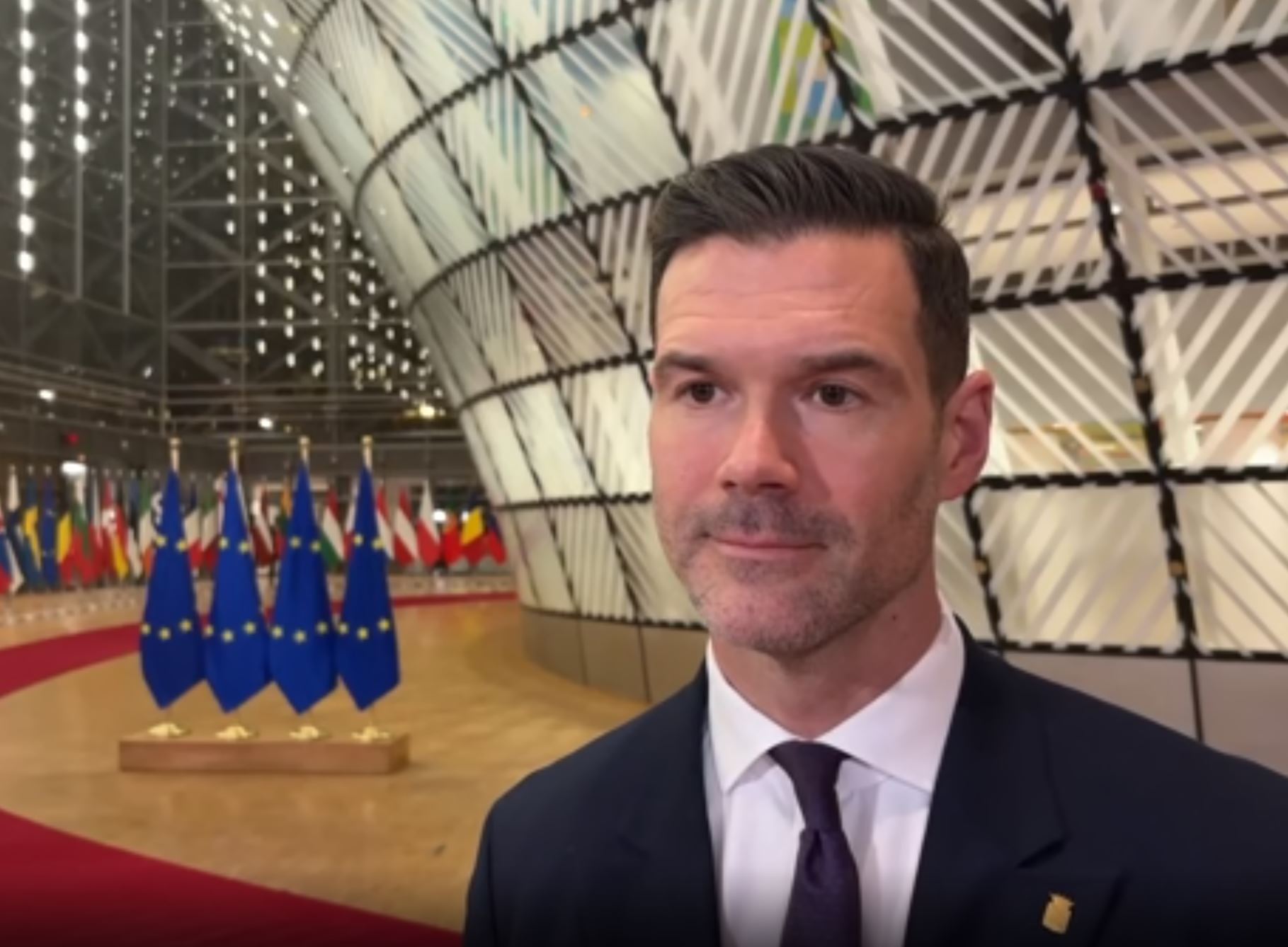
Sweden has opted exclusively for the financial route.
Forssell confirmed that the government will not accept any relocated asylum seekers in 2026 but will instead provide a contribution of just over SEK 100 million (approximately €8.5 million). This aligns with Sweden’s broader strategy of reducing in-country asylum intake while maintaining its international obligations through fiscal means.
The EU-wide solidarity mechanism aims to redistribute 21,000 asylum seekers in 2026 or provide €420 million in alternative support. Sweden’s contribution is modest in absolute terms but symbolically significant, reflecting a growing trend among Nordic and Central European states to decouple financial solidarity from physical reception.
3. “Return Hubs” for Faster Deportations
A third agreement greenlights the creation of “return hubs” outside the EU to facilitate the rapid deportation of individuals whose asylum claims are rejected or who have no legal basis to remain. These hubs—potentially located in North Africa or the Western Balkans—would serve as logistical staging areas for charter flights and administrative processing, aiming to overcome current bottlenecks in repatriation.
While details remain scarce, such hubs raise legal and humanitarian concerns, particularly regarding detention conditions, access to legal counsel, and voluntary return safeguards.
Strategic Context: Why This Matters for the Nordics
Sweden’s decision underscores a broader recalibration of Nordic migration policy:
– Denmark has long championed external processing and has invested heavily in border control partnerships with non-EU states.
– Finland and Norway (though not an EU member) are closely monitoring developments, with both expressing interest in financial solidarity options.
– Public opinion across the region increasingly supports controlled migration and burden-sharing that does not involve domestic resettlement.
From a business perspective, this shift may:
– Reduce pressure on public services and housing markets in urban centres like Stockholm and Malmö.
– Encourage investment in migration-related tech sectors (e.g., biometric screening, digital case management).
– Impact labour markets, as restricted asylum pathways could intensify skilled labour shortages—already a concern for Nordic industries.
Looking Ahead: Implementation Challenges
While politically expedient, the new framework faces significant hurdles:
– Legal scrutiny: The European Court of Justice may be asked to rule on the compatibility of external processing with the EU Charter of Fundamental Rights.
– Partner country reliability: Albania’s centres have faced criticism over overcrowding and procedural fairness; similar issues could arise elsewhere.
– Parliamentary approval: The European Parliament’s final consent is not guaranteed, especially if civil society groups and left-wing MEPs mobilize greater opposition.
Moreover, early data from Italy’s Albanian centres suggest limited deterrent effect—many migrants still attempt the Central Mediterranean route, indicating that externalisation alone may not stem flows without addressing root causes like conflict and climate displacement.
Conclusion
The EU’s move toward externalised asylum processing and flexible solidarity marks a pragmatic—but contentious—turn in migration governance. For Sweden, contributing SEK 100 million in lieu of resettlement reflects a calculated balance between humanitarian responsibility and domestic political realities. Yet the long-term viability of this model hinges on its ethical implementation, legal defensibility, and effectiveness in saving lives—not just shifting them out of sight.
— Nordic Business Journal Analysis Team
December 9, 2025